


Ethnobotanical study on herbal tea drinks in Guangxi, China
- PMID: 37004116
- PMCID: PMC10064729
- DOI: 10.1186/s13002-023-00579-3
Ethnobotanical study on herbal tea drinks in Guangxi, China
Abstract
Background: Herbal tea drinks, different from classical Camellia beverages, are a wide variety of herbal drinks consumed for therapeutic purposes or health promotion. Herbal tea is widely consumed in Guangxi. However, the documentation on the plants for herbal tea and their related health benefits is still limited.
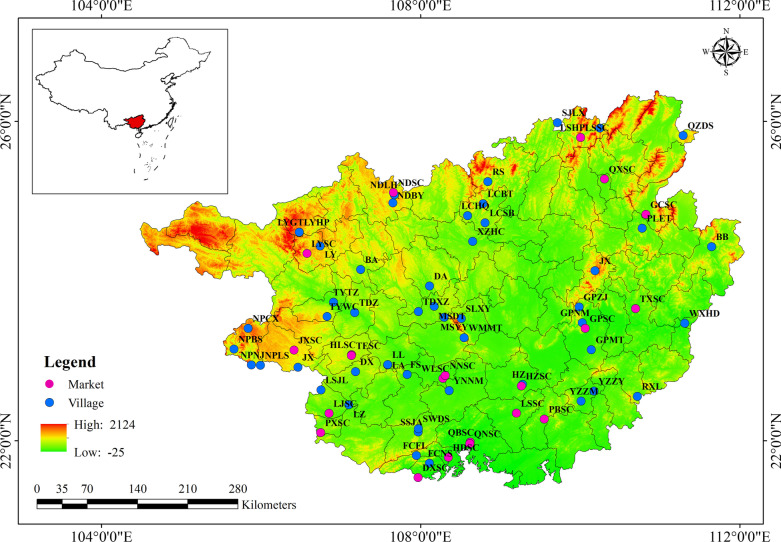
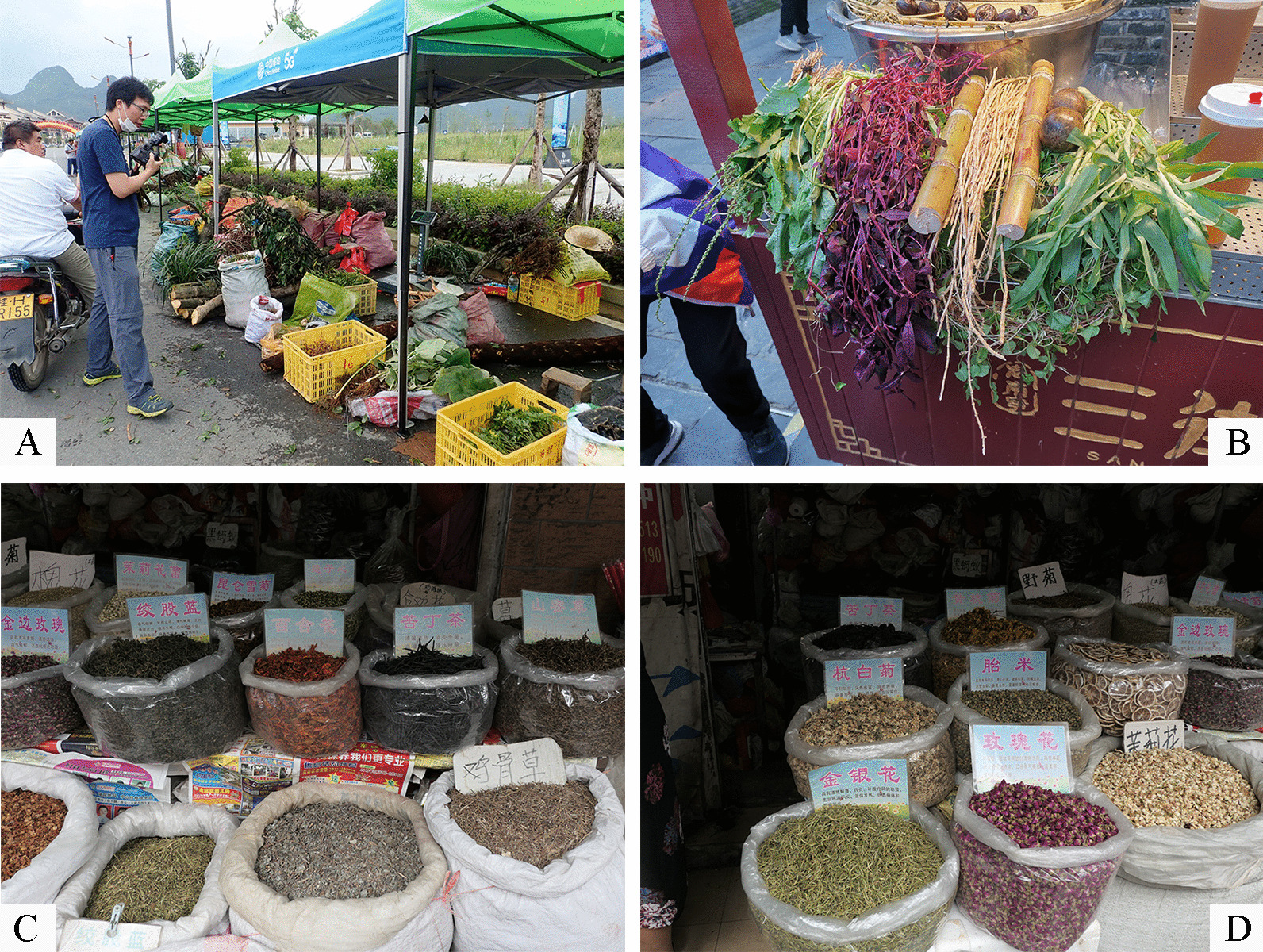
Methods: An ethnobotanical survey was conducted in 52 villages and 21 traditional markets in Guangxi from 2016 to 2021. Semi-structured interviews, key informant interviews, and structured questionnaires were applied to obtain ethnobotanical information of herbal tea, in which 463 informants had participated. Relative frequency of citation (RFC) and cultural food significance index (CFSI) were used to evaluate the most culturally significant herbal tea plants, and informant consensus factor (ICF) was applied to assess the agreement among informants.
Results: This study recorded 155 herbal tea species belonging to 49 families. The most commonly used parts included leaf (27.61%), whole plant (22.09%), branch and leaf (19.02%), and flower (13.50%). The most frequent preparation method of herbal tea was decoction. Herbal tea was very popular in Guangxi, attributing to its therapeutic value, special odor, and good taste. There are 41 health benefits classified into eight categories. Among them, clearing heat was the most medicinal effects. Local people had high consistency in tonic, removing cold and cough, improving blood circulation, and clearing heat away. Based on CFSI values of each species, the most culturally significant herbal tea species were Siraitia grosvenorii (Swingle) C. Jeffrey ex A. M. Lu & Zhi Y. Zhang, Plantago asiatica L., Gynostemma pentaphyllum (Thunb.) Makino, Zingiber officinale Roscoe, Pholidota chinensis Lindl., and Morus alba L.
Conclusion: Herbal tea is a valuable heritage that carries the local people's traditional knowledge, like health care and religious belief. The recorded herbal tea species in this study possess tremendous potential for local economic development in the future. Further research on efficacy evaluation and product development of herbal tea species is necessary.
Keywords: Ethnobotany; Guangxi; Herbal tea; Medicinal effects; Traditional knowledge.
© 2023. The Author(s).
Conflict of interest statement
All authors declared that they have no competing interests.
Figures


References
-
- Chen L, Zhao LP, Gao QK. Generation and analysis of expressed sequence tags from the tender shoots cDNA library of tea plant (Camellia sinensis) Plant Sci. 2005;168(2):359–363. doi: 10.1016/j.plantsci.2004.08.009. - DOI
MeSH terms
Substances
Supplementary concepts
Grants and funding
- 32000264/National Natural Science Foundation of China
- 2018GXNSFBA281162/Natural Science Foundation of Guangxi Province
- Gui Da Te Gang He Zi (2020)03, and Gui Da Pei Yu (2019)39/Guizhou University Fundings
- GKN14123006-37/Guangxi Scientific R & T Development Project
- GXFS-2021-34/Survey and Collection of Germplasm Resources of Woody & Herbaceous Plants in Guangxi
LinkOut - more resources
Full Text Sources
Miscellaneous
