


Cultivating a healthy neuro-immune network: A health psychology approach
- PMID: 37008404
- PMCID: PMC10062207
- DOI: 10.1111/spc3.12498
Cultivating a healthy neuro-immune network: A health psychology approach
Abstract
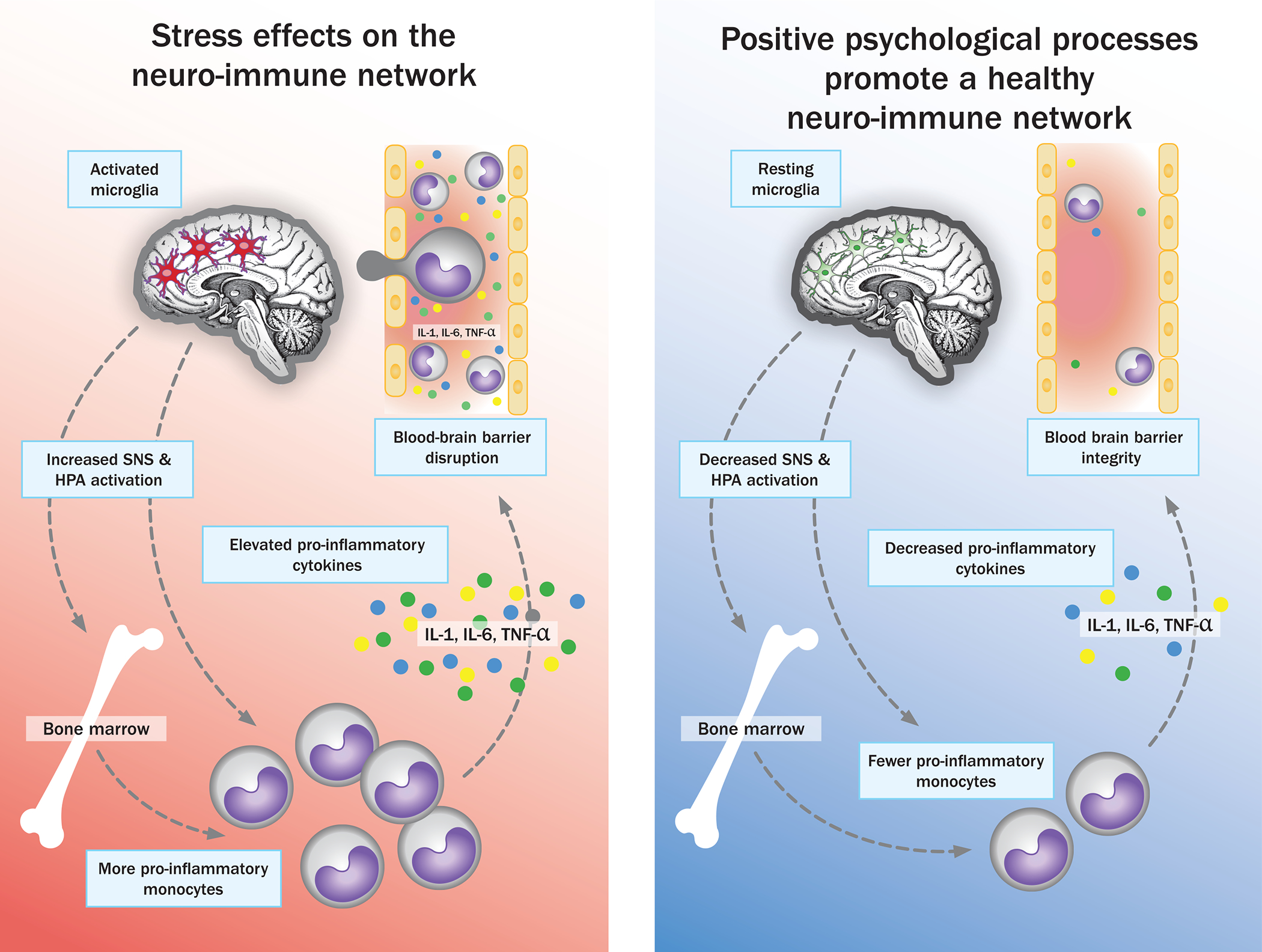
The field of psychoneuroimmunology (PNI) examines interactions among psychological and behavioral states, the brain, and the immune system. Research in PNI has elegantly documented effects of stress at multiple levels of the neuro-immune network, with profound implications for both physical and mental health. In this review, we consider how the neuro-immune network might be influenced by "positive" psychological and behavioral states, focusing on positive affect, eudaimonic well-being, physical activity, and sleep. There is compelling evidence that these positive states and behaviors are associated with changes in immune activity in the body, including reductions in peripheral inflammatory processes relevant for physical health. Growing evidence from animal models also suggests effects of positive states on immune cells in the brain and the blood-brain barrier, which then impact critical aspects of mood, cognition, and behavior. Tremendous advances are being made in our understanding of neuro-immune dynamics; one of the central goals of this review is to highlight recent preclinical research in this area and consider how we can leverage these findings to investigate and cultivate a healthy neuro-immune network in humans.
Keywords: blood brain barrier; eudaimonic well-being; inflammation; microglia; neuro-immune; physical activity; positive affect; sleep.
Figures
References
-
- Avitsur R, Stark JL, & Sheridan JF (2001). Social stress induces glucocorticoid resistance in subordinate animals. Horm. Behav., 39(4), 247–257. - PubMed
-
- Barcelos RP, Bresciani G, Cuevas MJ, Martínez-Flórez S, Soares FAA, & González-Gallego J (2017). Diclofenac pretreatment modulates exercise-induced inflammation in skeletal muscle of rats through the TLR4/NF-κB pathway. Applied Physiology, Nutrition, and Metabolism, 42(7), 757–764. doi:10.1139/apnm-2016-0593 - DOI - PubMed
Grants and funding
LinkOut - more resources
Full Text Sources