


Comparison of full-endoscopic and tubular-based microscopic decompression in patients with lumbar spinal stenosis: a randomized controlled trial
- PMID: 37010607
- PMCID: PMC10068229
- DOI: 10.1007/s00586-023-07678-5
Comparison of full-endoscopic and tubular-based microscopic decompression in patients with lumbar spinal stenosis: a randomized controlled trial
Abstract
Purpose: We aimed to demonstrate non-inferiority in terms of functional outcomes in patients with lumbar spinal stenosis who underwent full-endoscopic decompression compared with tubular-based microscopic decompression.
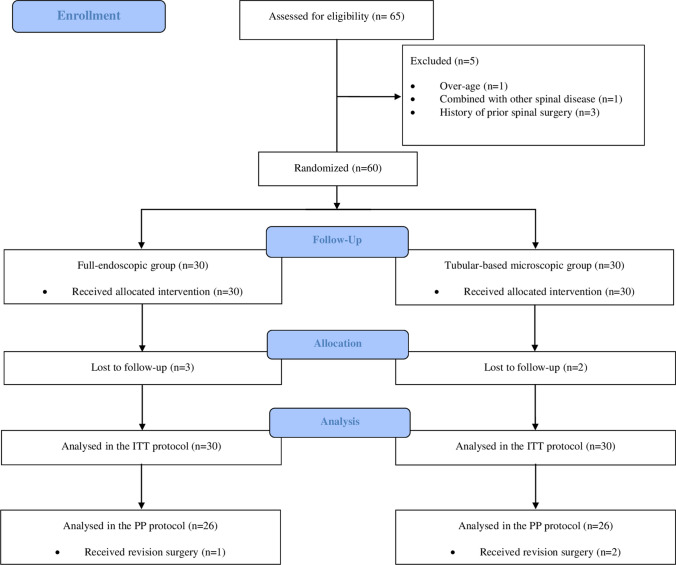
Methods: This prospective, randomized controlled, non-inferiority trial included 60 patients with single-level lumbar spinal stenosis who required decompression surgery. The patients were randomly assigned in a 1:1 ratio to the full-endoscopic group (FE group) or the tubular-based microscopic group (TM group). Based on intention-to-treat analysis, the primary outcome was the Oswestry Disability Index score at 24 months postoperative. The secondary outcomes included the visual analog scale (VAS) score for back and leg pain, European Quality of Life-5 Dimensions (EQ-5D) score, walking time, and patient satisfaction rate according to the modified MacNab criteria. Surgery-related outcomes were also analyzed.
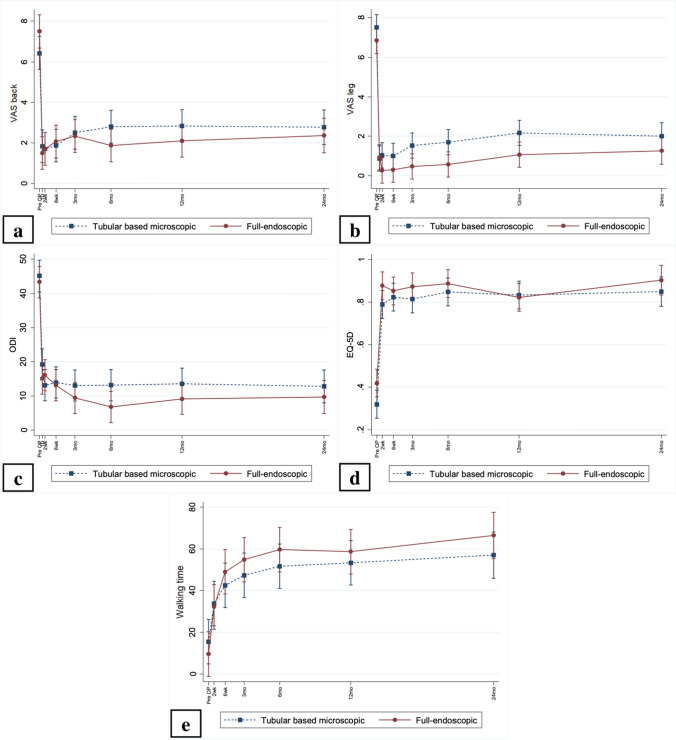
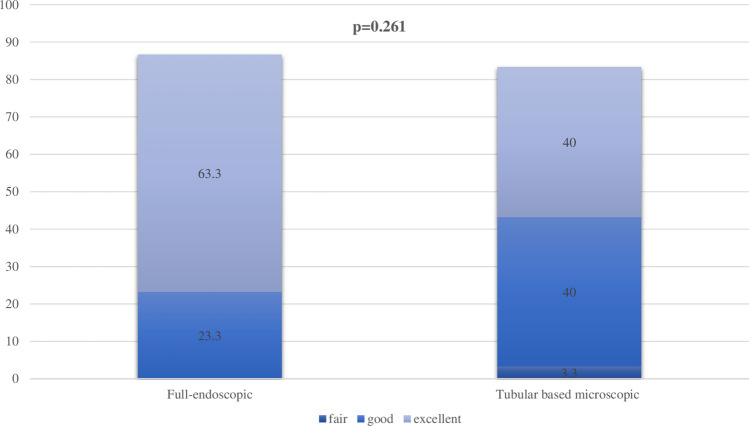
Results: Of the total patients, 92% (n = 55) completed a 24-month follow-up. The primary outcomes were comparable between the two groups (p = 0.748). However, the FE group showed a statistically significant improvement in the mean VAS score for back pain at day 1 and at 6, 12, and 24 months after surgery (p < 0.05). No significant difference was observed in the VAS score for leg pain, EQ-5D score, or walking time (p > 0.05). Regarding the modified MacNab criteria, 86.7% of patients in the FE group and 83.3% in the TM group had excellent or good results at 24 months after surgery (p = 0.261). Despite the similar results in surgery-related outcomes, including operative time, radiation exposure, revision rate, and complication rate, between the two groups (p > 0.05), less blood loss and shorter length of hospital stay were observed in the FE group (p ≤ 0.001 and 0.011, respectively).
Conclusion: This study suggests that full-endoscopic decompression is an alternative treatment for patients with lumbar spinal stenosis because it provides non-inferior clinical efficacy and safety compared with tubular-based microscopic surgery. In addition, it offers advantages in terms of less invasive surgery. Trial registration number (TRN): TCTR20191217001.
Keywords: Decompression; Full-endoscopic spine surgery; Lumbar spinal stenosis; Microsurgery; Minimally invasive spine surgery; Randomized controlled trial; Tubular based.
© 2023. The Author(s), under exclusive licence to Springer-Verlag GmbH Germany, part of Springer Nature.
Conflict of interest statement
JSK is currently a consultant for RIWOSpine, GmbH, Germany, and Elliquence, LLC, USA. WS and WL are currently speakers for Medtronic company. For the remaining authors, none were declared.
Figures
References
Publication types
MeSH terms
Associated data
LinkOut - more resources
Full Text Sources
Medical
