


Virtual Reality Intervention for Patients With Neck Pain: Systematic Review and Meta-analysis of Randomized Controlled Trials
- PMID: 37010891
- PMCID: PMC10131665
- DOI: 10.2196/38256
Virtual Reality Intervention for Patients With Neck Pain: Systematic Review and Meta-analysis of Randomized Controlled Trials
Abstract
Background: Neck pain is a prevalent condition that causes an enormous health care burden due to the lack of efficient therapies. As a promising technology, virtual reality (VR) has shown advantages in orthopedic rehabilitation. However, there is no meta-analysis evaluating the effectiveness of VR in neck pain management.
Objective: This study aims to review original randomized controlled trials (RCTs) evaluating the effectiveness of VR for neck pain and to provide evidence for the clinical application of a new alternative approach for pain management.
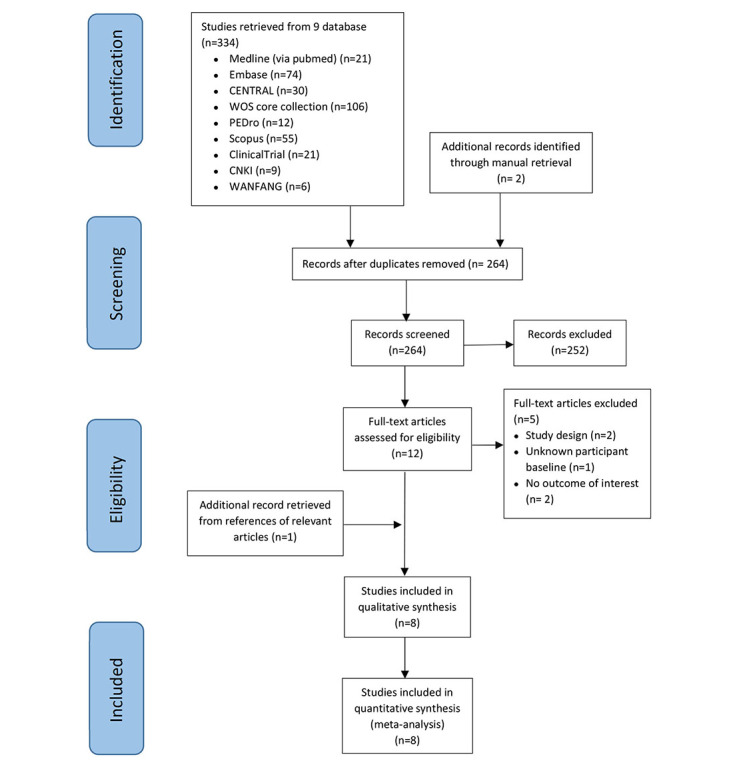
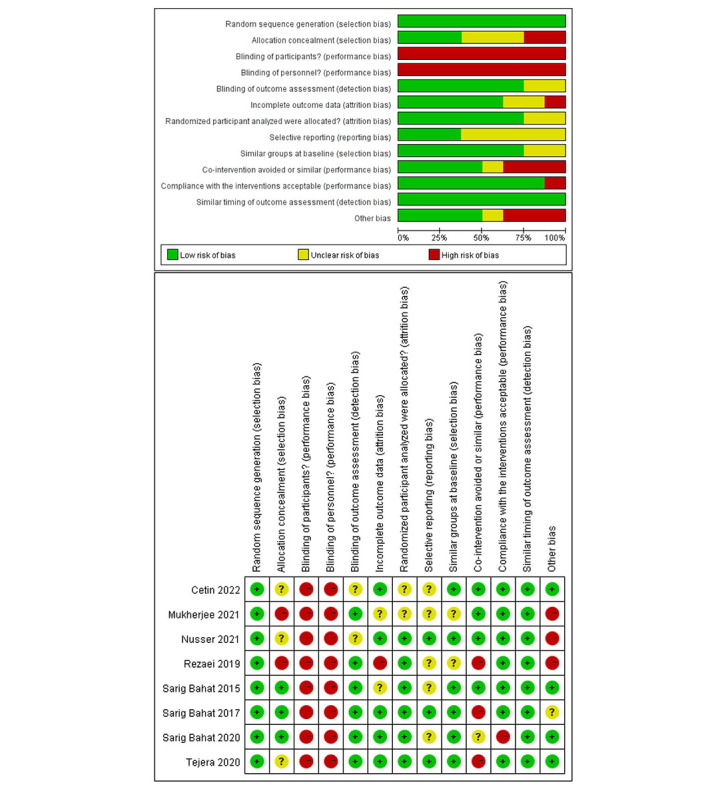
Methods: A total of 9 electronic databases were systematically searched for relevant articles published from inception to October 2022. RCTs in English or Chinese that investigated VR therapy for participants with neck pain were included. The methodological quality and the evidence level were assessed using the Cochrane Back and Neck Risk of Bias tool and the Grading of Recommendations Assessment, Development, and Evaluation (GRADE) guideline, respectively.
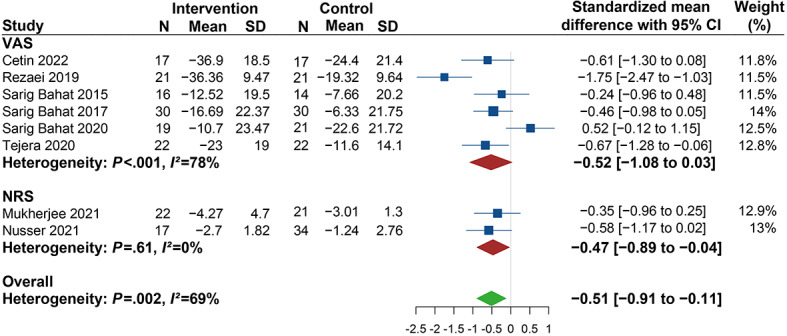
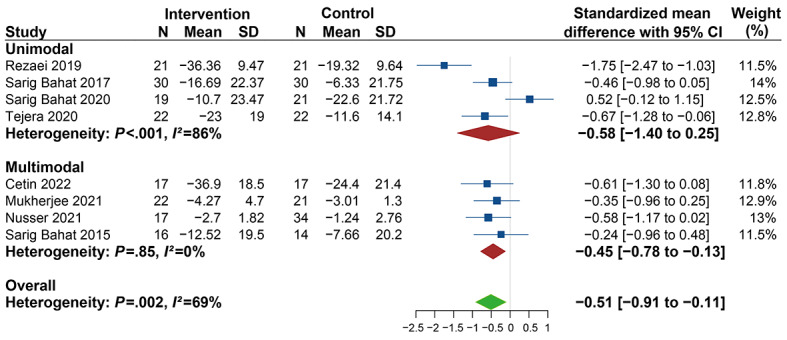
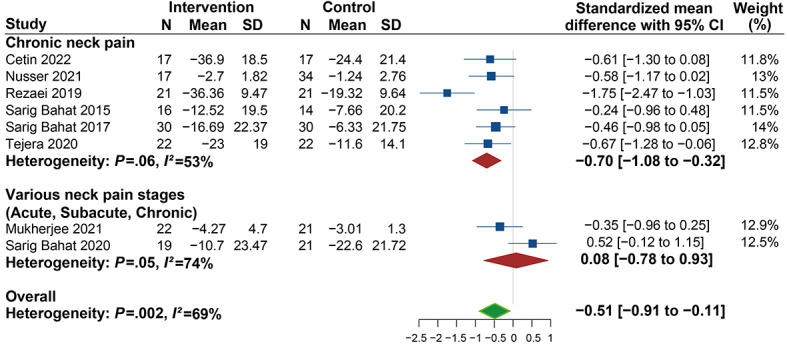
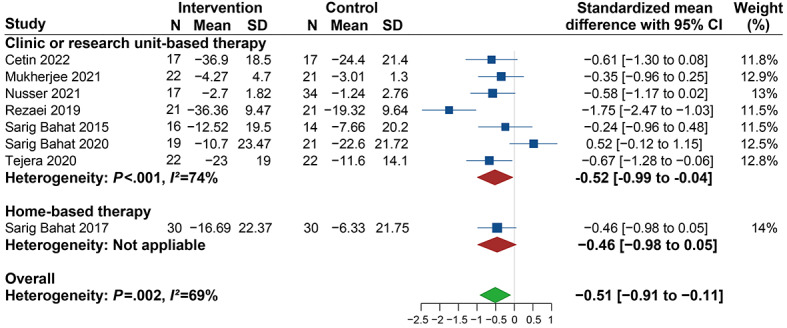
Results: A total of 8 studies with 382 participants were included for the final analysis. For the pain intensity, the overall pooled effect size was 0.51, with a standardized mean difference (SMD) of -0.51 (95% CI -0.91 to -0.11; GRADE: moderate), favoring VR therapy compared with controls. Subgroups analyses revealed that significant differences in pain intensity were found in the multimodal intervention (VR in combination with other therapies) than in other interventions (SMD -0.45, 95% CI -0.78 to -0.13; GRADE: moderate), and better analgesic effects were also observed in patients with chronic neck pain receiving VR intervention (SMD -0.70, 95% CI -1.08 to -0.32; GRADE: moderate) and patients treated in the clinic or research unit (SMD -0.52, 95% CI -0.99 to -0.05; GRADE: moderate) than controls. Regarding other health outcomes, the VR experienced less disability, lower kinesiophobia, and greater kinematic function (cervical range of motion, mean and peak velocity). Nevertheless, the follow-up effects of VR therapy on pain intensity and disability were not found.
Conclusions: Existing moderate evidence support VR as a beneficial nonpharmacological approach to improve pain intensity in patients with neck pain, with advantages to multimodal intervention, people with chronic neck pain, and clinic or research unit-based VR therapy. However, the limited quantity and high heterogeneity of the articles limit our findings.
Trial registration: PROSPERO CRD42020188635; https://tinyurl.com/2839jh8w.
Keywords: disability; meta-analysis; neck pain; systematic review; virtual reality.
©Qifan Guo, LIMing Zhang, Chenfan Gui, Guanghui Chen, Yi Chen, Huixin Tan, Wei Su, Ruishi Zhang, Qiang Gao. Originally published in the Journal of Medical Internet Research (https://www.jmir.org), 03.04.2023.
Conflict of interest statement
Conflicts of Interest: None declared.
Figures

References
-
- Safiri S, Kolahi A, Hoy D, Buchbinder R, Mansournia MA, Bettampadi D, Ashrafi-Asgarabad A, Almasi-Hashiani A, Smith E, Sepidarkish M, Cross M, Qorbani M, Moradi-Lakeh M, Woolf AD, March L, Collins G, Ferreira ML. Global, regional, and national burden of neck pain in the general population, 1990-2017: systematic analysis of the Global Burden of Disease Study 2017. BMJ. 2020 Mar 26;368:m791. doi: 10.1136/bmj.m791. http://www.bmj.com/lookup/pmidlookup?view=long&pmid=32217608 - DOI - PMC - PubMed
-
- Stanton TR, Leake HB, Chalmers KJ, Moseley GL. Evidence of impaired proprioception in chronic, idiopathic neck pain: systematic review and meta-analysis. Phys Ther. 2016 Jun;96(6):876–87. doi: 10.2522/ptj.20150241. http://europepmc.org/abstract/MED/26472296 ptj.20150241 - DOI - PMC - PubMed
-
- Sarig Bahat H, Chen X, Reznik D, Kodesh E, Treleaven J. Interactive cervical motion kinematics: sensitivity, specificity and clinically significant values for identifying kinematic impairments in patients with chronic neck pain. Man Ther. 2015 Apr;20(2):295–302. doi: 10.1016/j.math.2014.10.002.S1356-689X(14)00184-2 - DOI - PubMed
Publication types
MeSH terms
LinkOut - more resources
Full Text Sources
Medical
Research Materials
