


Environmental contamination and evaluation of healthcare-associated SARS-CoV-2 transmission risk in temporary isolation wards during the COVID-19 pandemic
- PMID: 37010998
- PMCID: PMC9613445
- DOI: 10.1016/j.ajic.2022.09.004
Environmental contamination and evaluation of healthcare-associated SARS-CoV-2 transmission risk in temporary isolation wards during the COVID-19 pandemic
Abstract
Background: Temporary isolation wards have been introduced to meet demands for airborne-infection-isolation-rooms (AIIRs) during the COVID-19 pandemic. Environmental sampling and outbreak investigation was conducted in temporary isolation wards converted from general wards and/or prefabricated containers, in order to evaluate the ability of such temporary isolation wards to safely manage COVID-19 cases over a period of sustained use.
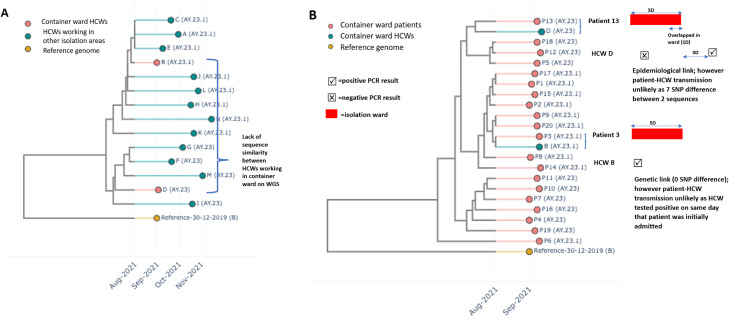
Methods: Environmental sampling for SARS-CoV-2 RNA was conducted in temporary isolation ward rooms constructed from pre-fabricated containers (N = 20) or converted from normal-pressure general wards (N = 47). Whole genome sequencing (WGS) was utilized to ascertain health care-associated transmission when clusters were reported amongst HCWs working in isolation areas from July 2020 to December 2021.
Results: A total of 355 environmental swabs were collected; 22.4% (15/67) of patients had at least one positive environmental sample. Patients housed in temporary isolation ward rooms constructed from pre-fabricated containers (adjusted-odds-ratio, aOR = 10.46, 95% CI = 3.89-58.91, P = .008) had greater odds of detectable environmental contamination, with positive environmental samples obtained from the toilet area (60.0%, 12/20) and patient equipment, including electronic devices used for patient communication (8/20, 40.0%). A single HCW cluster was reported amongst staff working in the temporary isolation ward constructed from pre-fabricated containers; however, health care-associated transmission was deemed unlikely based on WGS and/or epidemiological investigations.
Conclusion: Environmental contamination with SARS-CoV-2 RNA was observed in temporary isolation wards, particularly from the toilet area and smartphones used for patient communication. However, despite intensive surveillance, no healthcare-associated transmission was detected in temporary isolation wards over 18 months of prolonged usage, demonstrating their capacity for sustained use during succeeding pandemic waves.
Keywords: COVID-19; Environmental contamination; Fomites; Health care-associated; Hospitals; SARS-CoV-2.
Copyright © 2022 Association for Professionals in Infection Control and Epidemiology, Inc. Published by Elsevier Inc. All rights reserved.
Figures
References
Publication types
MeSH terms
Substances
LinkOut - more resources
Full Text Sources
Medical
Miscellaneous
