


Differential Risk of SARS-CoV-2 Infection by Occupation: Evidence from the Virus Watch prospective cohort study in England and Wales
- PMID: 37013634
- PMCID: PMC10068189
- DOI: 10.1186/s12995-023-00371-9
Differential Risk of SARS-CoV-2 Infection by Occupation: Evidence from the Virus Watch prospective cohort study in England and Wales
Abstract
Background: Workers across different occupations vary in their risk of SARS-CoV-2 infection, but the direct contribution of occupation to this relationship is unclear. This study aimed to investigate how infection risk differed across occupational groups in England and Wales up to April 2022, after adjustment for potential confounding and stratification by pandemic phase.
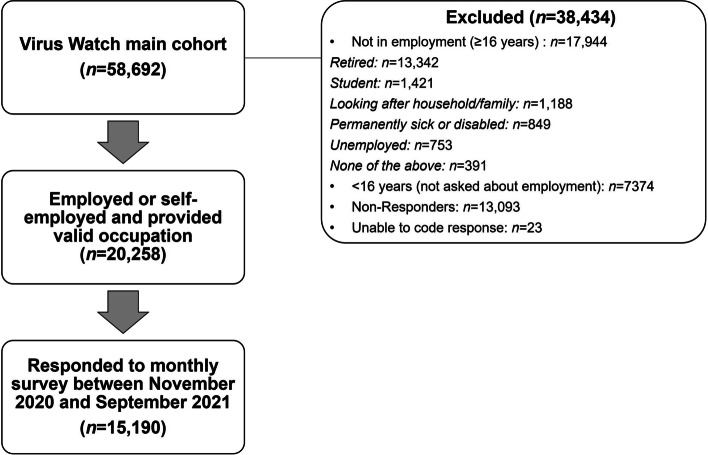
Methods: Data from 15,190 employed/self-employed participants in the Virus Watch prospective cohort study were used to generate risk ratios for virologically- or serologically-confirmed SARS-CoV-2 infection using robust Poisson regression, adjusting for socio-demographic and health-related factors and non-work public activities. We calculated attributable fractions (AF) amongst the exposed for belonging to each occupational group based on adjusted risk ratios (aRR).
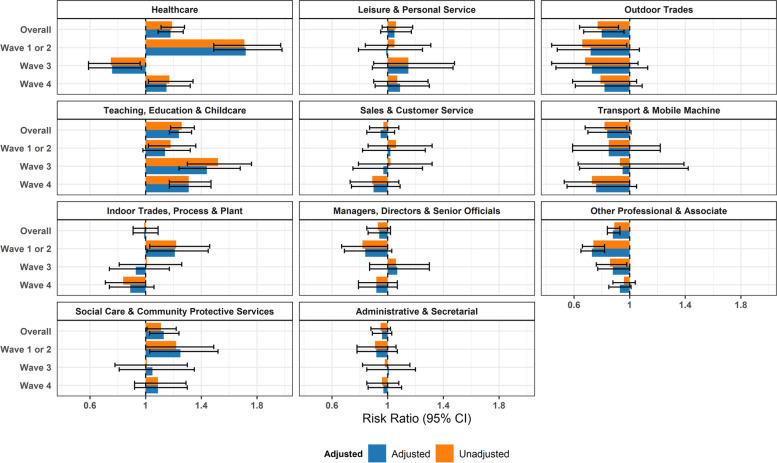
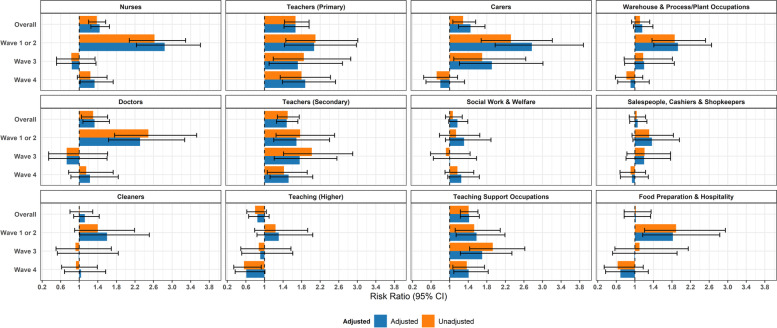
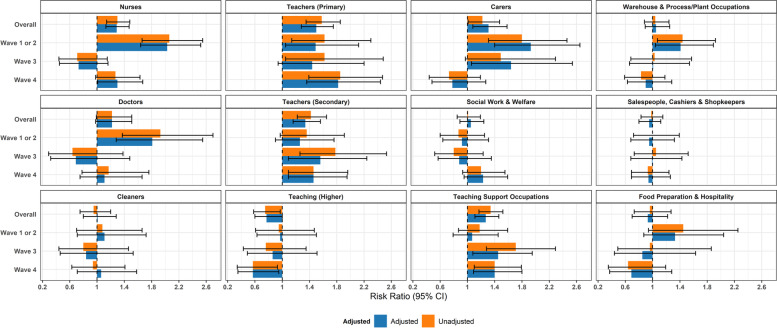
Results: Increased risk was seen in nurses (aRR = 1.44, 1.25-1.65; AF = 30%, 20-39%), doctors (aRR = 1.33, 1.08-1.65; AF = 25%, 7-39%), carers (1.45, 1.19-1.76; AF = 31%, 16-43%), primary school teachers (aRR = 1.67, 1.42- 1.96; AF = 40%, 30-49%), secondary school teachers (aRR = 1.48, 1.26-1.72; AF = 32%, 21-42%), and teaching support occupations (aRR = 1.42, 1.23-1.64; AF = 29%, 18-39%) compared to office-based professional occupations. Differential risk was apparent in the earlier phases (Feb 2020-May 2021) and attenuated later (June-October 2021) for most groups, although teachers and teaching support workers demonstrated persistently elevated risk across waves.
Conclusions: Occupational differences in SARS-CoV-2 infection risk vary over time and are robust to adjustment for socio-demographic, health-related, and non-workplace activity-related potential confounders. Direct investigation into workplace factors underlying elevated risk and how these change over time is needed to inform occupational health interventions.
Keywords: Infection; Occupational health; Pandemic; SARS-CoV-2.
© 2023. The Author(s).
Conflict of interest statement
AH serves on the UK New and Emerging Respiratory Virus Threats Advisory Group. AJ and AH are members of the COVID-19 transmission sub-group of the Scientific Advisory Group for Emergencies (SAGE). AJ is Chair of the UK Strategic Coordination of Health of the Public Research board and is a member of COVID National Core studies oversight group. The other authors declare no competing interests.
Figures

References
-
- Biarnés-Martínez M, Fàbregas M, Coma E, et al. SARS-CoV-2 infection in occupational settings in Catalonia. Rev Esp Salud Publica 2022;96:e202205040. - PubMed
Grants and funding
LinkOut - more resources
Full Text Sources
Miscellaneous
