


Interventions for reducing violence against children in low- and middle-income countries: An evidence and gap map
- PMID: 37016609
- PMCID: PMC8356324
- DOI: 10.1002/cl2.1120
Interventions for reducing violence against children in low- and middle-income countries: An evidence and gap map
Abstract
Background: More than half of the children in the world experience some form of interpersonal violence every year. As compared with high-income countries, policy responses in low- and middle-income countries (LMICs) are limited due to resource constraints and paucity of evidence for effective interventions to reduce violence against children in their own contexts, amongst other factors.
Objectives: The aim of this evidence and gap map (EGM) is to provide an overview of the existing evidence available and to identify gaps in the evidence base on the effectiveness of interventions to reduce violence against children in LMICs. This report covers evidence published in English; a follow-up study is under preparation focusing on evidence in five additional languages-Arabic, Chinese, French, Portuguese and Spanish.
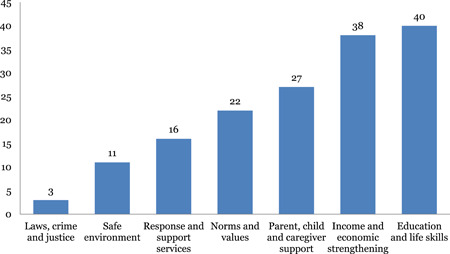
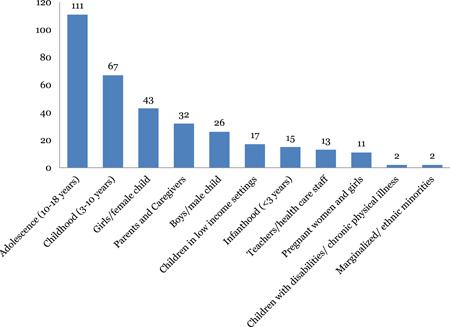
Methods: The intervention-outcome framework for this EGM is based on INSPIRE-Seven Strategies for Ending Violence against Children, published by WHO and other partners in 2016. The seven strategies include implementation and enforcement of laws; norms and values, safe environment; parent-child and caregiver support; income and economic strengthening; response and support services; education and life skills. The search included both academic and grey literature available online. We included impact evaluations and systematic reviews that assessed the effectiveness of interventions to reduce interpersonal violence against children (0-18 years) in LMICs (World Bank, 2018b). Interventions targeting subpopulation of parents, teachers and caregivers of 0-18 years' age group were also included. A critical appraisal of all included studies was carried out using standardised tools.
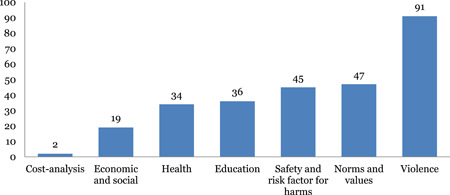
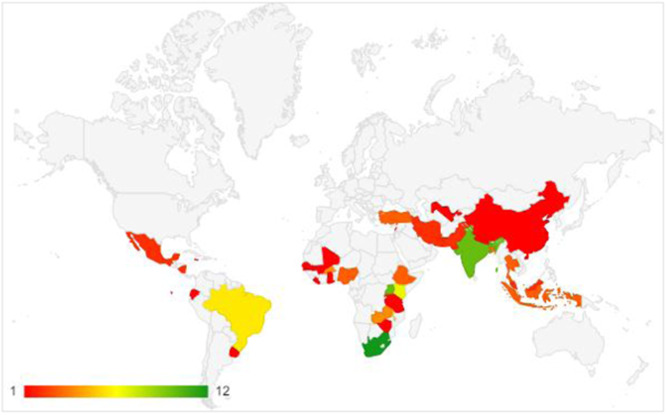
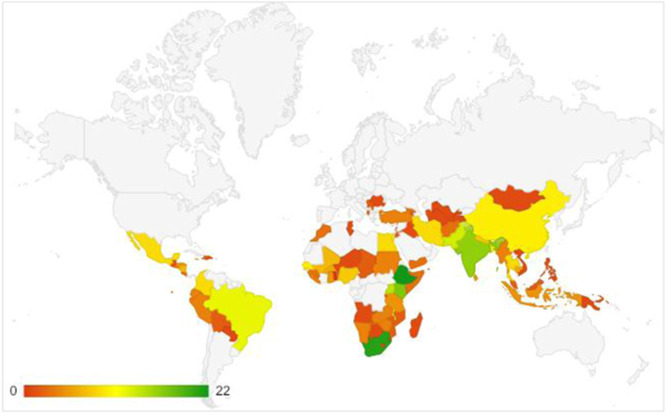
Results: The map includes 152 studies published in English of which 55 are systematic reviews and 97 are impact evaluations. Most studies in the map are from Sub-Saharan Africa. Education and life skills are the most widely populated intervention area of the map followed by income and economic strengthening interventions. Very few studies measure impact on economic and social outcomes, and few conduct cost-analysis.
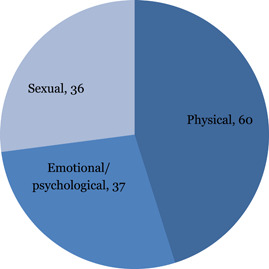
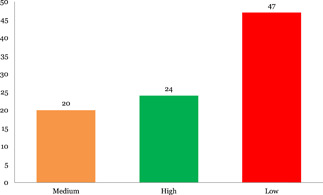
Conclusion: More studies focusing on low-income and fragile and conflict-affected settings (FCS) and studying and reporting on cost-analysis are required to address gaps in the evidence. Most interventions covered in the literature focused on addressing a wide range of forms of violence and harm, which limited understanding of how and for whom the interventions work in a given context, for specific forms of violence. More impact evaluation studies are required that assess specific forms of violence, gendered effects of interventions and on diverse social groups in a given context, utilising mixed methods.
© 2020 The Authors. Campbell Systematic Reviews published by John Wiley & Sons Ltd on behalf of The Campbell Collaboration.
Conflict of interest statement
One of the co‐authors is an Innocenti staff member who commissioned the study, helped shape the search strategy, and worked with the Campbell Collaboration team to coordinate internal and external review processes and to contextualise findings and recommendations. The main search, screening, coding and analysis were independently conducted by Campbell Collaboration staff independently.
Figures







Update of
- Protocol doi: 10.1002/cl2.1040
References
References to included studies
-
- Adelufosi, A. , Arikpo, D. , Aquaisua, E. , & Meremikwu, M. L. (2017). Cognitive behavioural therapy (CBT) for depression or anxiety disorders in women and girls living with female genital mutilation. International Journal of Gynecology & Obstetrics, 136, 56–59. - PubMed
-
- Alam, A. , Baez, J. , & Del Carpio, X. (2011). Does cash for school influence young women's behavior in the longer term? Evidence from Pakistan. World Bank. Retrieved from https://elibrary.worldbank.org/doi/abs/10.1596/1813-9450-5669 - DOI
-
- Alatas, V. (2011). Program Keluarga Harapan: Impact evaluation of Indonesias Pilot Household Conditional Cash Transfer Program. World Bank. Retrieved from https://documents.worldbank.org/en/publication/documents-reports/documen...
ADDITIONAL REFERENCES
-
- Adelufosi, A. , Arikpo, D. , Aquaisua, E. , … Meremikwu, M. L. (2017). Cognitive behavioural therapy (CBT) for depression or anxiety disorders in women and girls living with female genital mutilation. Pub Med [Internet], 56–9. Retrieved from https://www.ncbi.nlm.nih.gov/pubmed/28164288 - PubMed
-
- Amisi, M. , Tshabalala, N. , Cooke, M. , Molebatsi, M. , Mulondo, M. , Mufamadi, D. , … Langer, L. (2019). Mapping the evidence South African interventions to prevent violence against women and children. Centre of Learning on Evaluation and Results (CLEAR‐AA) at University of Witwatersrand, ACE at the University of Johannesburg, and the Institute of Security Studies (ISS).
-
- Article 19, paragraph 1, of the Convention . (1989). Assembly, U.G., 1989. Convention on the Rights of the Child. United Nations, Treaty Series.
-
- Axelsdottir B., Biedilæ, S. , & Albers, B. (2018). Interventions for child abuse and neglect: Title registration for an evidence and gap map. Campbell Wiley Systematic reviews. Retrieved from https://campbellcollaboration.org/media/k2/attachments/SWCG_Kornor_EGM_T...
LinkOut - more resources
Full Text Sources
Research Materials
Miscellaneous