


Effects of prenatal pesticide exposure on the fetal brain and placenta transcriptomes in a rodent model
- PMID: 37019170
- PMCID: PMC10152924
- DOI: 10.1016/j.tox.2023.153498
Effects of prenatal pesticide exposure on the fetal brain and placenta transcriptomes in a rodent model
Abstract
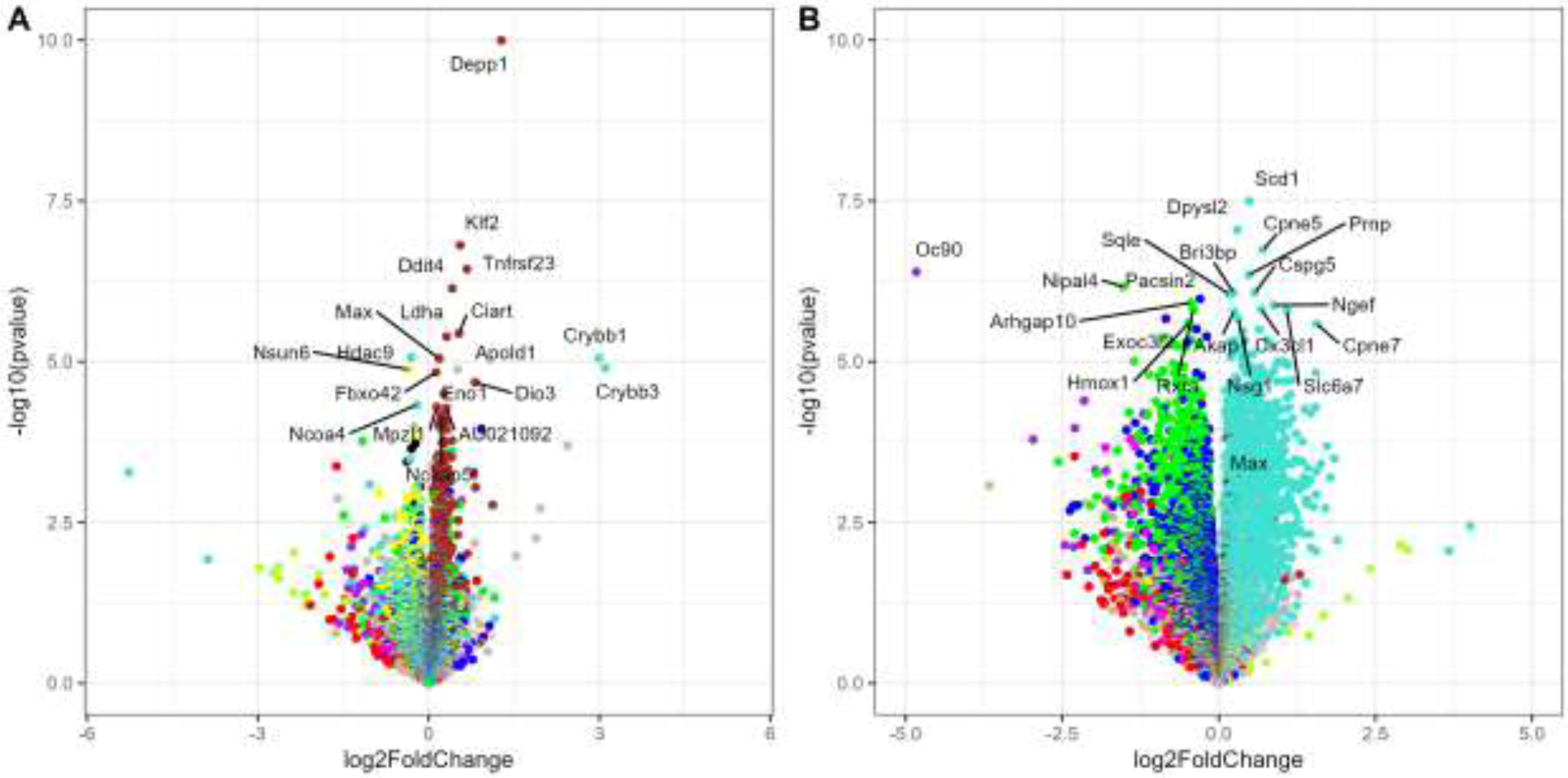
Organophosphate and pyrethroid pesticides are among the most extensively used insecticides worldwide. Prenatal exposures to both classes of pesticides have been linked to a wide range of neurobehavioral deficits in the offspring. The placenta is a neuroendocrine organ and the crucial regulator of the intrauterine environment; early-life toxicant exposures could impact neurobehavior by disrupting placental processes. Female C57BL/6 J mice were exposed via oral gavage to an organophosphate, chlorpyrifos (CPF) at 5 mg/kg, a pyrethroid, deltamethrin (DM), at 3 mg/kg, or vehicle only control (CTL). Exposure began two weeks before breeding and continued every three days until euthanasia at gestational day 17. The transcriptomes of fetal brain (CTL n = 18, CPF n = 6, DM n = 8) and placenta (CTL n = 19, CPF n = 16, DM n = 12) were obtained through RNA sequencing, and resulting data was evaluated using weighted gene co-expression networks, differential expression, and pathway analyses. Fourteen brain gene co-expression modules were identified; CPF exposure disrupted the module related to ribosome and oxidative phosphorylation, whereas DM disrupted the modules related to extracellular matrix and calcium signaling. In the placenta, network analyses revealed 12 gene co-expression modules. While CPF exposure disrupted modules related to endocytosis, Notch and Mapk signaling, DM exposure dysregulated modules linked to spliceosome, lysosome and Mapk signaling pathways. Overall, in both tissues, CPF exposure impacted oxidative phosphorylation, while DM was linked to genes involved in spliceosome and cell cycle. The transcription factor Max involved in cell proliferation was overexpressed by both pesticides in both tissues. In summary, gestational exposure to two different classes of pesticide can induce similar pathway-level transcriptome changes in the placenta and the brain; further studies should investigate if these changes are linked to neurobehavioral impairments.
Keywords: Chlorpyrifos; Deltamethrin; Organophosphate; Pyrethroid; Weighted gene co-expression network analysis (WGCNA).
Copyright © 2023 Elsevier B.V. All rights reserved.
Conflict of interest statement
Declaration of Competing Interest The authors declare that they have no known competing financial interests or personal relationships that could have appeared to influence the work reported in this paper.
Figures




References
-
- Aldridge JE, Levin ED, Seidler FJ, & Slotkin TA (2005). Developmental exposure of rats to chlorpyrifos leads to behavioral alterations in adulthood, involving serotonergic mechanisms and resembling animal models of depression. Environ Health Perspect, 113(5), 527–531. doi: 10.1289/ehp.7867 - DOI - PMC - PubMed
-
- Aznar-Alemany Ò, & Eljarrat E (2020). Bioavailability and bioaccumulation of pyrethroid insecticides in wildlife and humans. In Pyrethroid Insecticides (pp. 205–225): Springer.
-
- Barr DB, Ananth CV, Yan X, Lashley S, Smulian JC, Ledoux TA, … Robson MG (2010). Pesticide concentrations in maternal and umbilical cord sera and their relation to birth outcomes in a population of pregnant women and newborns in New Jersey. Sci Total Environ, 408(4), 790–795. doi: 10.1016/j.scitotenv.2009.10.007 - DOI - PubMed
-
- Barr DB, Olsson AO, Wong LY, Udunka S, Baker SE, Whitehead RD, … Needham LL (2010). Urinary concentrations of metabolites of pyrethroid insecticides in the general U.S. population: National Health and Nutrition Examination Survey 1999–2002. Environ Health Perspect, 118(6), 742–748. doi: 10.1289/ehp.0901275 - DOI - PMC - PubMed
Publication types
MeSH terms
Substances
Grants and funding
LinkOut - more resources
Full Text Sources
Medical
Molecular Biology Databases
