


Molecular biomarkers predicting newly detected atrial fibrillation after ischaemic stroke or TIA: A systematic review
- PMID: 37021168
- PMCID: PMC10069198
- DOI: 10.1177/23969873221136927
Molecular biomarkers predicting newly detected atrial fibrillation after ischaemic stroke or TIA: A systematic review
Abstract
Background: Several molecular biomarkers are available that predict newly detected atrial fibrillation (NDAF). We aimed to identify such biomarkers that predict NDAF after an Ischaemic stroke (IS)/Transient Ischaemic Attack (TIA) and evaluate their performance.
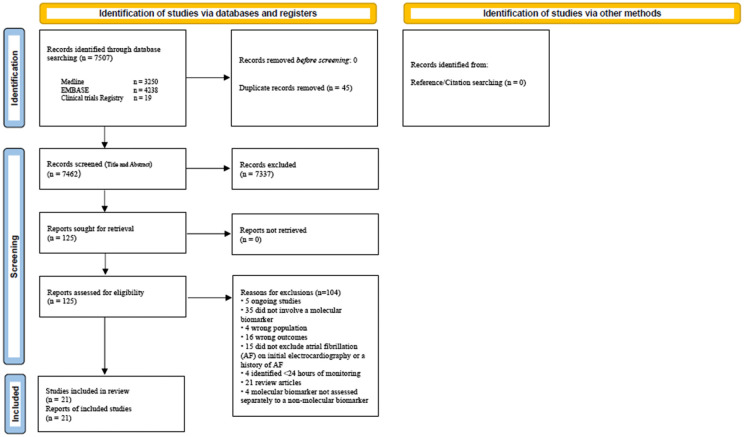
Methods: A systematic review was undertaken in accordance with the Preferred Reporting Items for Systematic Reviews and Meta-Analyses (PRISMA) statement. Studies of patients with IS, TIA, or both, who underwent ECG monitoring for ⩾24 h, which reported molecular biomarkers and frequency of NDAF after electronic searches of multiple databases were included.
Results: Twenty-one studies (76% IS, 24% IS and TIA) involving 4640 patients were included. Twelve biomarkers were identified, with cardiac biomarkers evaluated in the majority (75%) of patients. Performance measures were inconsistently reported. Among cohorts selecting high-risk individuals (12 studies), the most studied biomarkers were N-Terminal-Pro Brain Natriuretic Peptide (NT-ProBNP, five studies; C-statistics reported by three studies, 0.69-0.88) and Brain Natriuretic Peptide (BNP, two studies; C-statistics reported in two studies, 0.68-0.77). Among unselected cohorts (nine studies), the most studied biomarker was BNP (six studies; C-statistics reported in five studies, 0.75-0.88). Only BNP was externally validated (two studies) but using different thresholds to categorise risk of NDAF.
Conclusion: Cardiac biomarkers appear to have modest to good discrimination for predicting NDAF, although most analyses were limited by small, heterogeneous study populations. Their clinical utility should be explored further, and this review supports the need to assess the role of molecular biomarkers in large prospective studies with standardised selection criteria, definition of clinically significant NDAF and laboratory assays.
Keywords: Ischaemic stroke; atrial fibrillation; molecular biomarker; transient ischaemic attack.
© European Stroke Organisation 2022.
Conflict of interest statement
The author(s) declared the following potential conflicts of interest with respect to the research, authorship, and/or publication of this article: JD has obtained honoraria from Medtronic, BI, BMS, Diaicchi Sankyo, Bayer, Pfizer. In addition, research support was also obtained from Pfizer and BMS. AK has obtained honoraria from Medtronic, Bayer and Abbott Inc. AC has received honoraria from BMS, Pfizer, AstraZeneca and Boeringher Ingelheim and research grants from Pfizer.
References
-
- Murtagh B, Smalling RW. Cardioembolic stroke. Curr Atheroscler Rep 2006; 8: 310–316. - PubMed
-
- Arboix A, Vericat MC, Pujades R, et al. Cardioembolic infarction in the sagrat cor-Alianza hospital of Barcelona stroke registry. Acta Neurol Scand 1997; 96: 407–412. - PubMed
-
- Achanta SS, Chicago I. Risk of stroke with paroxysmal and permanent atrial fibrillation is the same. BMJ 2015; 335: 383–386.
-
- Sposato LA, Cipriano LE, Saposnik G, et al. Diagnosis of atrial fibrillation after stroke and transient ischaemic attack: a systematic review and meta-analysis. Lancet Neurol 2015; 14: 377–387. - PubMed
-
- Hart RG, Diener H-C, Coutts SB, et al. Embolic strokes of undetermined source: the case for a new clinical construct. Lancet Neurol 2014; 13: 429–438. - PubMed
Publication types
MeSH terms
Substances
LinkOut - more resources
Full Text Sources
Medical
Research Materials
