Haemorrhage-related maternal mortality in Bangladesh: Levels, trends, time of death, and care-seeking practices based on nationally representative population-based surveys
- PMID: 37022713
- PMCID: PMC10080499
- DOI: 10.7189/jogh.13.07001
Haemorrhage-related maternal mortality in Bangladesh: Levels, trends, time of death, and care-seeking practices based on nationally representative population-based surveys
Abstract
Background: Haemorrhage is a major cause of maternal deaths globally, most of which are preventable and predominantly happen in low and middle-income countries, including Bangladesh. We examine the current levels, trends, time of death, and care-seeking practices for haemorrhage-related maternal deaths in Bangladesh.
Methods: We conducted a secondary analysis with data from the nationally representative 2001, 2010, and 2016 Bangladesh Maternal Mortality Surveys (BMMS). The cause of death information was collected through verbal autopsy (VA) interviews using a country-adapted version of the standard World Health Organization VA questionnaire. Trained physicians reviewed the VA questionnaire and assigned the cause of death using the International Classification of Diseases (ICD) codes.
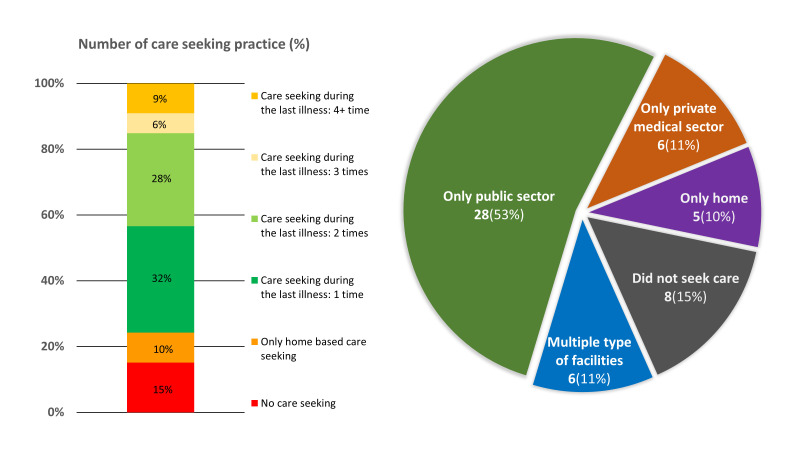
Results: Haemorrhage accounted for 31% (95% confidence interval (CI) = 24-38) of all maternal deaths in 2016 BMMS, which was 31% (95% CI = 25-41) in 2010 BMMS and 29% (95% CI = 23-36) in 2001 BMMS. The haemorrhage-specific mortality rate remained unchanged between 2010 BMMS (60 per 100 000 live births, uncertainty range (UR) = 37-82) and 2016 BMMS (53 per 100 000 live births, UR = 36-71). Around 70% of haemorrhage-related maternal deaths took place within 24 hours of delivery. Of those who died, 24% did not seek health care outside the home and 15% sought care from more than three places. Approximately two-thirds of the mothers who died due to haemorrhage gave birth at home.
Conclusions: Postpartum haemorrhage remains the primary cause of maternal mortality in Bangladesh. To reduce these preventable deaths, the Government of Bangladesh and stakeholders should take steps to ensure community awareness about care-seeking during delivery.
Copyright © 2023 by the Journal of Global Health. All rights reserved.
Conflict of interest statement
Disclosure of interest: The authors completed the ICMJE Disclosure of Interest Form (available upon request from the corresponding authors) and disclose no relevant interest.
Figures



References
-
- Royal College of Obstetricians & Gynaecologists. Antepartum Haemorrhage, Green-top Guideline No.63. Available: https://www.rcog.org.uk/media/pwdi1tef/gtg_63.pdf. Accessed: 18 January 2023.
-
- GBD 2015 Disease and Injury Incidence and Prevalence Collaborators Global, regional, and national incidence, prevalence, and years lived with disability for 310 diseases and injuries, 1990–2015: a systematic analysis for the Global Burden of Disease Study 2015. Lancet. 2016;388:1545-602. 10.1016/S0140-6736(16)31678-6 - DOI - PMC - PubMed
-
- World Health Organization. WHO recommendations for the prevention and treatment of postpartum haemorrhage 2012. Available: https://apps.who.int/iris/bitstream/handle/10665/75411/9789241548502_eng.... Accessed: 18 January 2023. - PubMed
-
- Dolea C, AbouZahr C. Global burden of maternal haemorrhage in the year 2000. Geneva: World Health Organization; 2003.