. 2023 May;55(5):852-860.
doi: 10.1038/s41588-023-01340-y. Epub 2023 Apr 6.

Super-pangenome analyses highlight genomic diversity and structural variation across wild and cultivated tomato species

Affiliations

Super-pangenome analyses highlight genomic diversity and structural variation across wild and cultivated tomato species

Ning Li et al. Nat Genet. 2023 May.

Abstract

Effective utilization of wild relatives is key to overcoming challenges in genetic improvement of cultivated tomato, which has a narrow genetic basis; however, current efforts to decipher high-quality genomes for tomato wild species are insufficient. Here, we report chromosome-scale tomato genomes from nine wild species and two cultivated accessions, representative of Solanum section Lycopersicon, the tomato clade. Together with two previously released genomes, we elucidate the phylogeny of Lycopersicon and construct a section-wide gene repertoire. We reveal the landscape of structural variants and provide entry to the genomic diversity among tomato wild relatives, enabling the discovery of a wild tomato gene with the potential to increase yields of modern cultivated tomatoes. Construction of a graph-based genome enables structural-variant-based genome-wide association studies, identifying numerous signals associated with tomato flavor-related traits and fruit metabolites. The tomato super-pangenome resources will expedite biological studies and breeding of this globally important crop.


Conflict of interest statement

N.L., Q.H., B.W., J.W., Q.Y., T.Y. and P.A. have filed patent applications on technology related to the processes described in this article (Chinese patent application number CN202111231381.0; ‘Application of the BFNE gene in improvement of plant architecture and biomass in tomato’). The other authors declare no competing interests.

Figures

Fig. 1
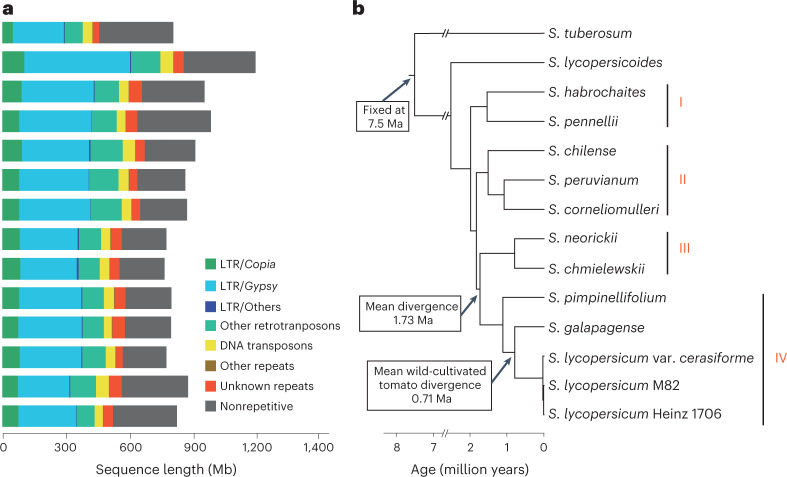
Fig. 1. Phylogenetic relationships and genomic components of wild and domesticated tomatoes.
a, TE content in genomes of potato and the 13 wild and cultivated tomatoes. The order of species is corresponding to the phylogeny shown in b. b, Species phylogeny of ten species (13 genomes) from Solanum sect. Lycopersicon and Solanum sect. Lycopersicoides using S. tuberosum as the outgroup. The 12 Lycopersicon genomes are clustered into four clades. Source data
Fig. 2
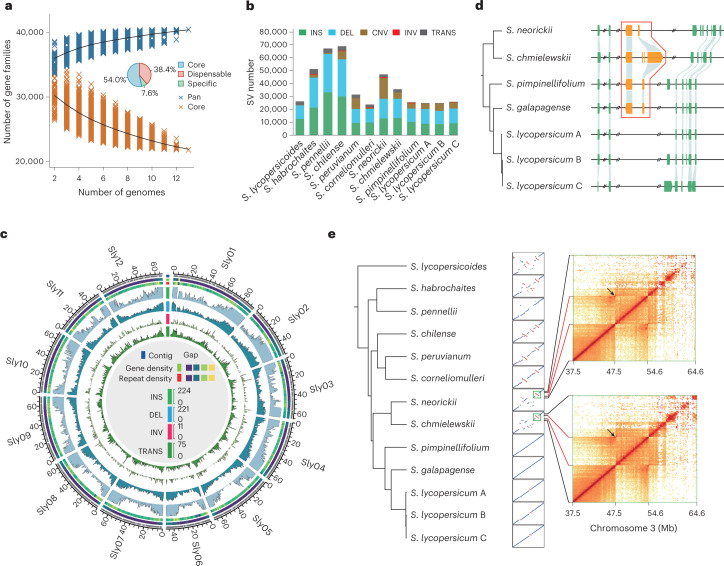
Fig. 2. Super-pangenome and the landscape of structural variation among wild and cultivated tomatoes.
a, Modeling of pangenome and core-genome sizes when incorporating additional genomes into clustering and composition of the tomato super-pangenome (pie chart). b, Number of different types of structural variants within each genome compared with the S. galapagense reference genome. c, Distribution of structural variants from the 12 tomato genomes across the 12 chromosomes. d, A wild-specific genomic fragment on chromosome 1. An 8-kb sequence was present in genomes of all nine wild tomatoes but absent from the three domesticated tomatoes. The 8-kb wild-specific region harboring two genes is outlined in red. e, Dot plots display the alignments of chromosome 3 between the 12 tomato genomes and the S. galapagense genome. A clade IV-specific inversion on chromosome 3 from 47.5 Mb to 54.6 Mb is shown, as evidenced by abnormally strong interactions around the inversion breakpoints in Hi-C heat maps. In b, d and e, S. lycopersicum A, S. lycopersicum var. cerasiforme. S. lycopersicum B, S. lycopersicum var. lycopersicum cv. M82. S. lycopersicum C, S. lycopersicum var. lycopersicum cv. Heinz 1706. DEL, deletion; INS, insertion; INV, inversion; TRANS, translocation. Source data
Fig. 3
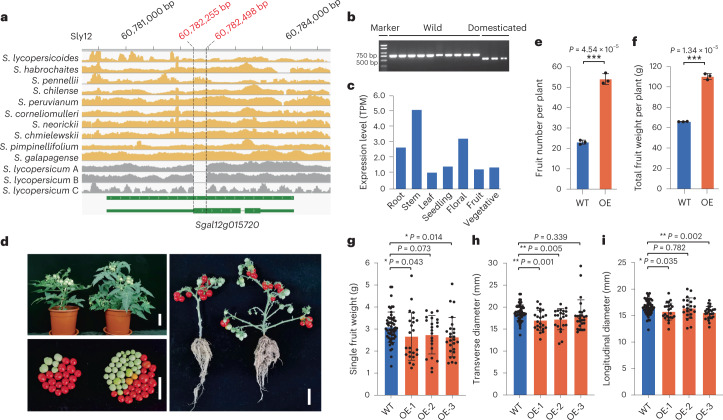
Fig. 3. Characterization of a wild tomato cytochrome P450 gene, Sgal12g015720.
a, A 244-bp deletion in the first exon of Sgal12g015720 in the three domesticated tomatoes. Genome coverages when mapping Illumina reads against the S. galapagense reference genome are illustrated by yellow (ten wild species) and gray (three cultivated accessions) histograms. Green lines, 5′ and 3′ UTRs; bold green lines with white arrows inside, exons; light green lines, introns; S. lycopersicum A, S. lycopersicum var. cerasiforme; S. lycopersicum B, S. lycopersicum var. lycopersicum cv. M82; S. lycopersicum C, S. lycopersicum var. lycopersicum cv. Heinz 1706. b, PCR validation of the 244-bp deletion in ten wild and three domesticated tomatoes. Three experiments were independently conducted with similar results. c, Expression levels (transcripts per million (TPM)) of Sgal12g015720 in different tissues of wild tomato S. pennellii. d, Comparison of phenotypes of the WT Micro-Tom (left panel) plant and the T2 generation of the Sgal12g015720-OE transgenic plant (right panel). Scale bar, 5 cm. ei, Fruit number per plants (e), total fruit weight per plant (f), single fruit weight for red fruits (g), transverse diameter for red fruits (h) and longitudinal diameter for red fruits (i) in WT and T2 transgenic plants. For e and f, three independent WT and OE plants are used. In gi, the number of fruit samples for WT is 55 and numbers of fruits for OE-1, OE-2 and OE-3 are 23, 22 and 26, respectively. Data are presented as mean ± s.d.; ***P < 0.001; **P < 0.01; *P < 0.05 in two-tailed Student’s t test. Source data
Fig. 4
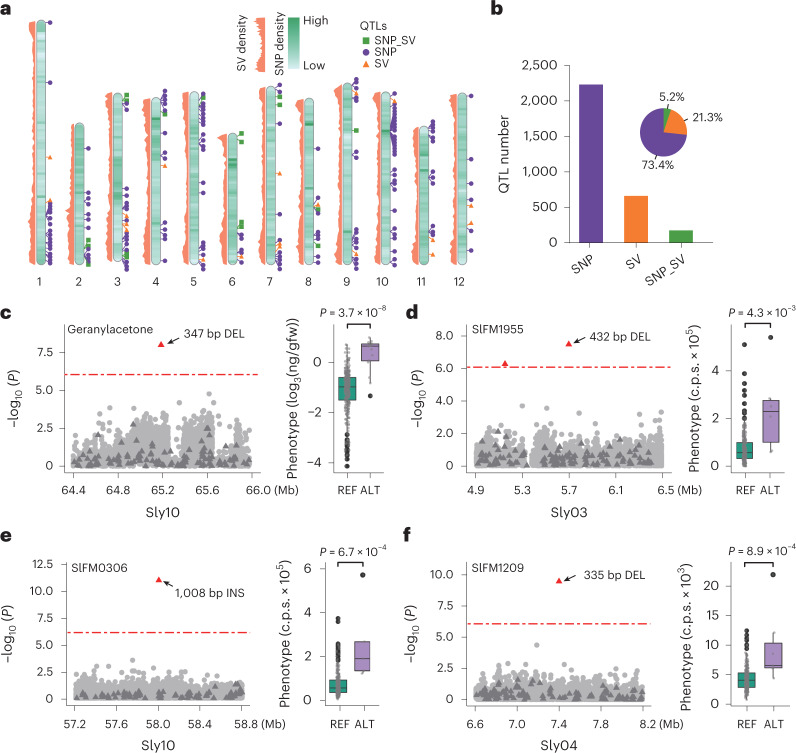
Fig. 4. SV-based GWAS identify additional association signals for tomato fruit flavor.
a, Density of SNPs and SVs used in GWAS and genome-wide distribution of quantitative trait loci (QTLs) with top 200 PVE. b, Number of QTLs detected by different categories of markers. SNP, QTLs that could only be identified by SNPs; SV, QTLs that could only be identified by SVs; SNP_SV, QTLs detected by both SNPs and SVs. cf, Local Manhattan plots for geranylacetone content (c), SlFM1955 (kaempferol-sinapylglucosyl-xylosylrhamnoside (d), SlFM0306 (2′-deoxyadenosine monohydrate (e) and SlFM1209 (tricin 7-O-hexoside) (f) (left panel), and corresponding box plots in accessions carrying distinct alleles (right panel). In Manhattan plots, triangles denote SVs and points illustrate SNPs. Genome-wide threshold for GWAS (7.58 × 10−7) is marked using red dashed lines. In box plots, the 25% and 75% quartiles are shown as lower and upper edges of boxes, respectively, and central lines denote the median. The whiskers extend to 1.5 times the interquartile range. Data beyond the end of the whiskers are displayed as black dots. P-values were computed from two-tailed Student’s t test. ng/gfw, nanograms per gram of fresh weight; c.p.s., counts per second; REF, accessions with homozygous reference (S. galapagense) type of allele; ALT, accessions possessing homozygous alternative allele. Numbers of samples for REF in box plots in c, d, e and f are 305, 288, 290 and 280, respectively. Numbers of samples for ALT in box plots in c, d, e and f are 16, 5, 5 and 7, respectively. Source data

References

    1. Giovannoni JJ. Genetic regulation of fruit development and ripening. Plant Cell. 2004;16:S170–S180. - PMC - PubMed
    1. Tieman D, et al. A chemical genetic roadmap to improved tomato flavor. Science. 2017;355:391–394. - PubMed
    1. Peralta IE, Spooner DM, Knapp S. Taxonomy of wild tomatoes and their relatives (Solanum sect. Lycopersicoides, sect. Juglandifolia, sect. Lycopersicon; Solanaceae) Syst. Bot. Monogr. 2008;84:1–186.
    1. Rick, C. M. Perspectives from plant genetics: the Tomato Genetics Stock Center. In Genetic resources at risk: scientific issues, technologies, and funding policies. Proceedings of a symposium, American Association for the Advancement of Science annual meeting, San Francisco, California, USA, 16 January 1989 (Eds McGuire, P. E. & Qualset, C. O.) 11–19 (Genetic Resources Conservation Program, University of California, 1990).
    1. Mutschler MA, et al. QTL analysis of pest resistance in the wild tomato Lycopersicon pennellii: QTLs controlling acylsugar level and composition. Theor. Appl. Genet. 1996;92:709–718. - PubMed

Publication types