


Chronic Obstructive Pulmonary Disease with Frequent Exacerbator Phenotype: What is Different in these Patients?
- PMID: 37025319
- PMCID: PMC10073954
Chronic Obstructive Pulmonary Disease with Frequent Exacerbator Phenotype: What is Different in these Patients?
Abstract
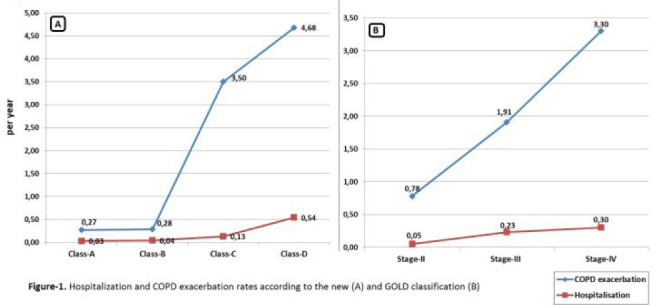
Background: Acute exacerbation events, which can develop during the natural course of chronic obstructive pulmonary disease (COPD) can lead to worsening quality of life, increased hospital costs, and higher rates of morbidity and mortality. In recent years, individuals at heightened risk of COPD exacerbations have been said to display a so-called "frequent exacerbator (FE)" phenotype, defined as having two or more exacerbation events (or ≥ 1 exacerbation with a hospitalization) within 1 year.
Materials and methods: We conducted a retrospective study involving 299 patients with COPD. Patients were divided into 2 groups as non-exacerbator phenotype (group-1, n=195) and FE phenotype (group-2, n=104).
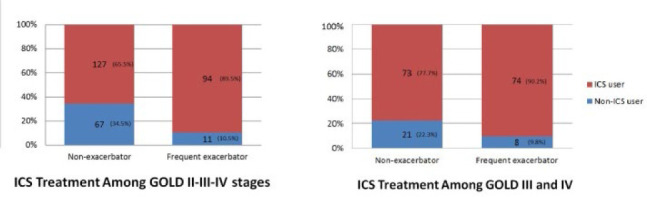
Results: FE phenotype was identified in 35.1% of patients. There were no significant differences between these two phenotypes in terms of gender, smoking status, or leukocyte count. However, FEs were found to be older (p=0.04), with more frequent detection of emphysema (p=0.02) and lower eosinophil levels (p=0.02). FEs also demonstrated worse pulmonary function parameters.
Conclusion: COPD patients with the FE phenotype likely require a different treatment algorithm due to differing clinical features such as poorer respiratory function, lower eosinophil levels, and more frequent emphysema.
Keywords: COPD; Clinical characteristic; Frequent exacerbator; Hospitalization; Phenotype.
Copyright© 2022 National Research Institute of Tuberculosis and Lung Disease.
Figures
References
-
- Global Strategy for the Diagnosis, Management and Prevention of COPD, Global Initiative for Chronic Obstructive Lung Disease (GOLD) 2020. Available from: https://goldcopd.org/wp-content/uploads/2019/11/GOLD-2020-REPORT-ver1.0w... (Accessed on Januar 30, 2021)
-
- Labaki WW, Martinez FJ. Time to Understand the Infrequency of the Frequent Exacerbator Phenotype in COPD. Chest 2018;153(5):1087–8. - PubMed
-
- Hurst JR, Vestbo J, Anzueto A, Locantore N, Müllerova H, Tal-Singer R, et al. . Evaluation of COPD Longitudinally to Identify Predictive Surrogate Endpoints (ECLIPSE) Investigators. Susceptibility to exacerbation in chronic obstructive pulmonary disease. N Engl J Med 2010;363(12):1128–38. - PubMed
-
- Capozzolo A, Carratù P, Dragonieri S, Falcone VA, Quaranta VN, Liotino V, et al. . Clinical and Functional Lung Parameters Associated With Frequent Exacerbator Phenotype in Subjects With Severe COPD. Respir Care 2017;62(5):572–8. - PubMed
LinkOut - more resources
Full Text Sources
Miscellaneous