


Next Generation Sequencing for miRNA Detection on the Exhaled Breath Condensate: A Pilot Study
- PMID: 37025420
- PMCID: PMC10070752
- DOI: 10.1177/25168657231160985
Next Generation Sequencing for miRNA Detection on the Exhaled Breath Condensate: A Pilot Study
Abstract
Introduction: Exhaled breath condensate (EBC) sampling has been suggested as a less-invasive and cost-effective method to detect biological macromolecules, including miRNA. To explore the feasibility of its use as a biomarker of early effects of asbestos exposure, we conducted a preliminary test on male volunteers by comparing the miRNA profile in the EBC and the plasma using 2 different sequencing platforms.
Methods: Six male volunteers, all retired and unexposed to dust or fumes, participated in the test. RNA was extracted from 200 μL EBC samples and same-size plasma samples. Sample aliquots were processed in 2 laboratories using 2 different sequencing platforms: a MiSeq Illumina® platform and a more performing HiSeq Illumina® platform.
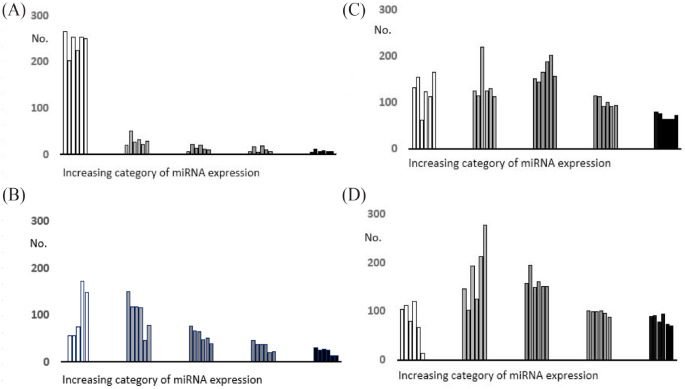
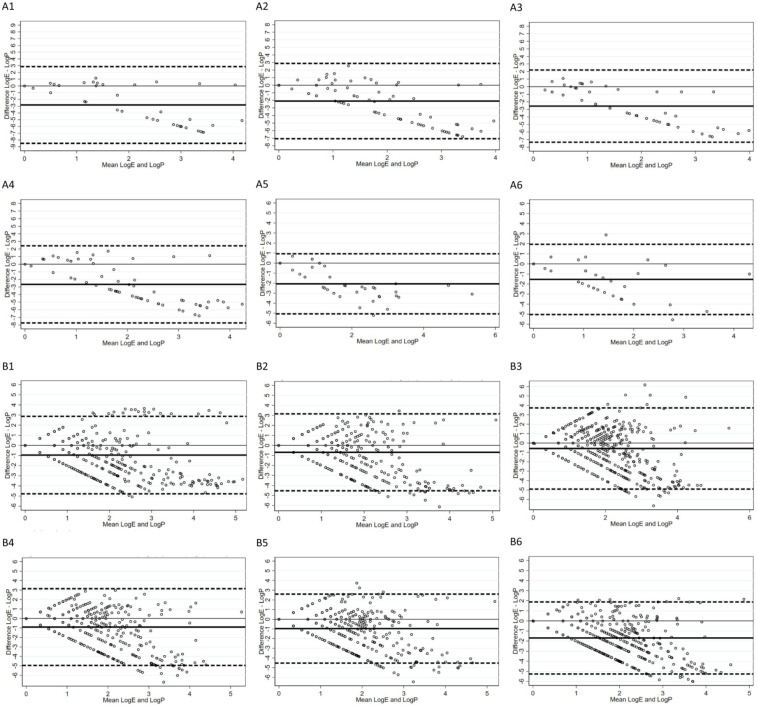
Results: The HiSeq3000® sequencing platform identified twice as many unique molecular indexes (UMI)-validated miRNA as the MiSeq® platform. The Spearman's correlation coefficient between EBC counts and plasma counts was significant in 5/6 subjects with either platform (MiSeq® = 0.128-0.508, P = .026-<.001; HiSeq® = 0.156-0.412, P = .001-<.001). The intraclass correlation coefficient confirmed the consistency of the miRNA profile over the 6 participants with both biospecimens. Exploring the agreement between the EBC and plasma samples with Bland-Altman plots showed that using the HiSeq3000® platform substantially improved the EBC miRNA detection rate.
Conclusion: Our preliminary study confirms that, when using the HiSeq® sequencing platform, EBC sampling is a suitable, non-invasive method to detect the miRNA profile in healthy subjects.
Keywords: biomarkers; exhaled breath condensate; miRNA; next generation sequencing.
© The Author(s) 2023.
Conflict of interest statement
The author(s) declared no potential conflicts of interest with respect to the research, authorship, and/or publication of this article.
Figures
References
-
- Pal M, Muinao T, Boruah HPD, Mahindroo N. Current advances in prognostic and diagnostic biomarkers for solid cancers: detection techniques and future challenges. Biomed Pharmacother. 2022;146:112488. - PubMed
-
- Lee RC, Feinbaum RL, Ambros V. The C. elegans heterochronic gene lin-4 encodes small RNAs with antisense complementarity to lin-14. Cell. 1993;75:843-854. - PubMed
-
- Singh DK, Bose S, Kumar S. Role of microRNA in regulating cell signaling pathways, cell cycle, and apoptosis in non-small cell lung cancer. Curr Mol Med. 2016;16:474-486. - PubMed
LinkOut - more resources
Full Text Sources
Miscellaneous
