


Seminal plasma metabolomics signatures of normosmic congenital hypogonadotropic hypogonadism
- PMID: 37025907
- PMCID: PMC10070097
- DOI: 10.1016/j.heliyon.2023.e14779
Seminal plasma metabolomics signatures of normosmic congenital hypogonadotropic hypogonadism
Erratum in
-
Corrigendum to "Seminal plasma metabolomics signatures of normosmic congenital hypogonadotropic hypogonadism" [Heliyon 9(4) (March 2023) e14779].Heliyon. 2023 Apr 25;9(5):e15657. doi: 10.1016/j.heliyon.2023.e15657. eCollection 2023 May. Heliyon. 2023. PMID: 37305512 Free PMC article.
Abstract
Background: Normosmic congenital hypogonadotropic hypogonadism (nCHH) is a rare disease, whose pathogenesis remains unclear. Here, we conducted untargeted metabolomics and lipidomics to identify seminal plasma signatures of nCHH, and to study the effect of LH and FSH deficiency on semen.
Methods: Twenty-five diagnosed patients with nCHH (HH group) and twenty-three healthy participants (HC group) were enrolled. Laboratory parameters, seminal plasma samples and patients' medical data were collected. Untargeted metabolomics and lipidomic profiling were performed using mass spectrometry (MS).
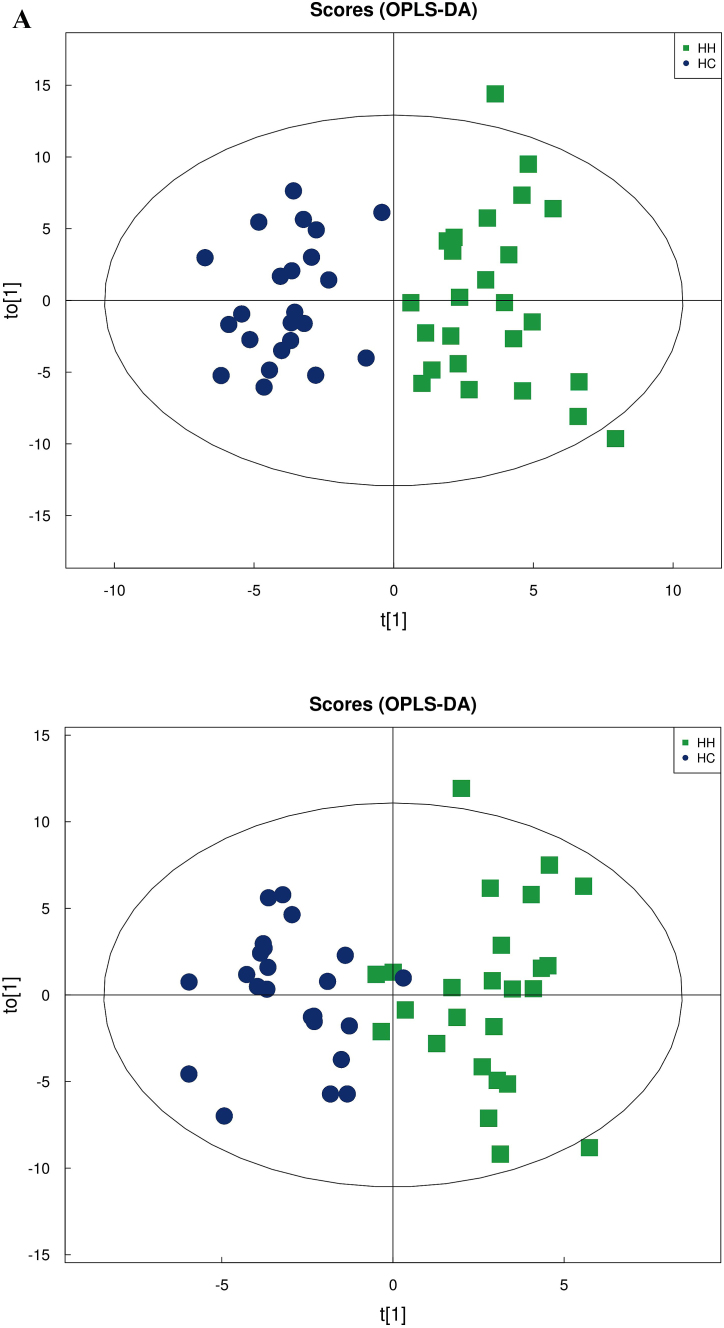
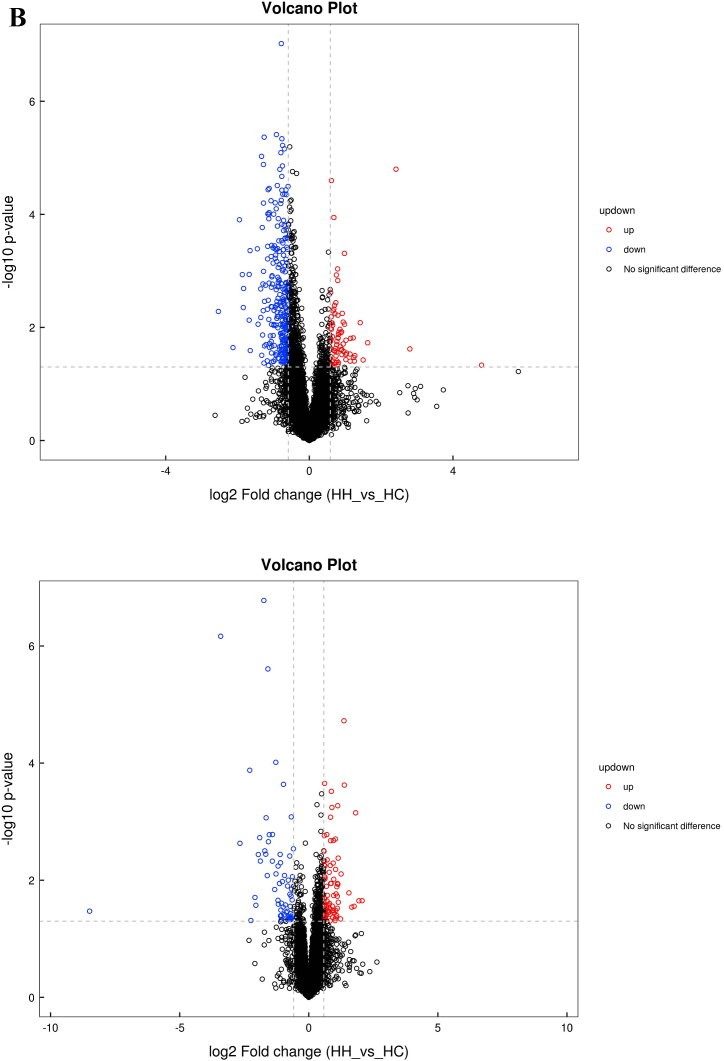
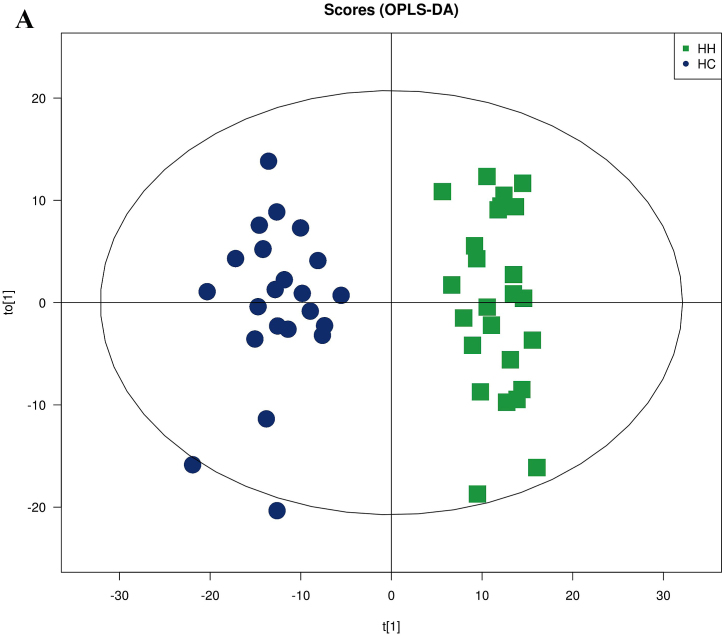
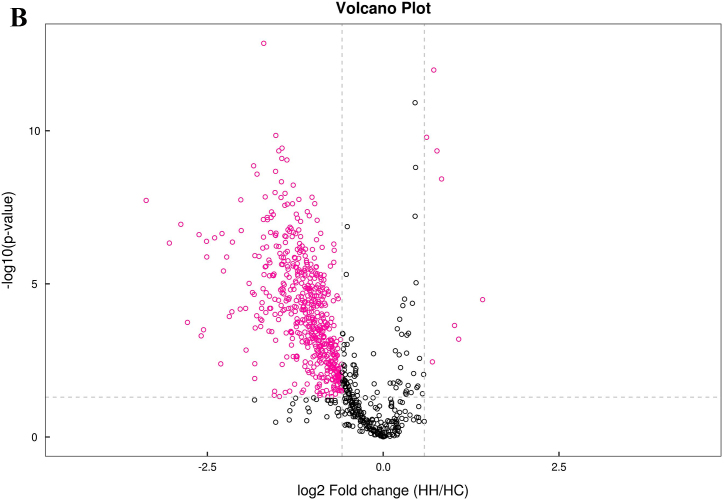
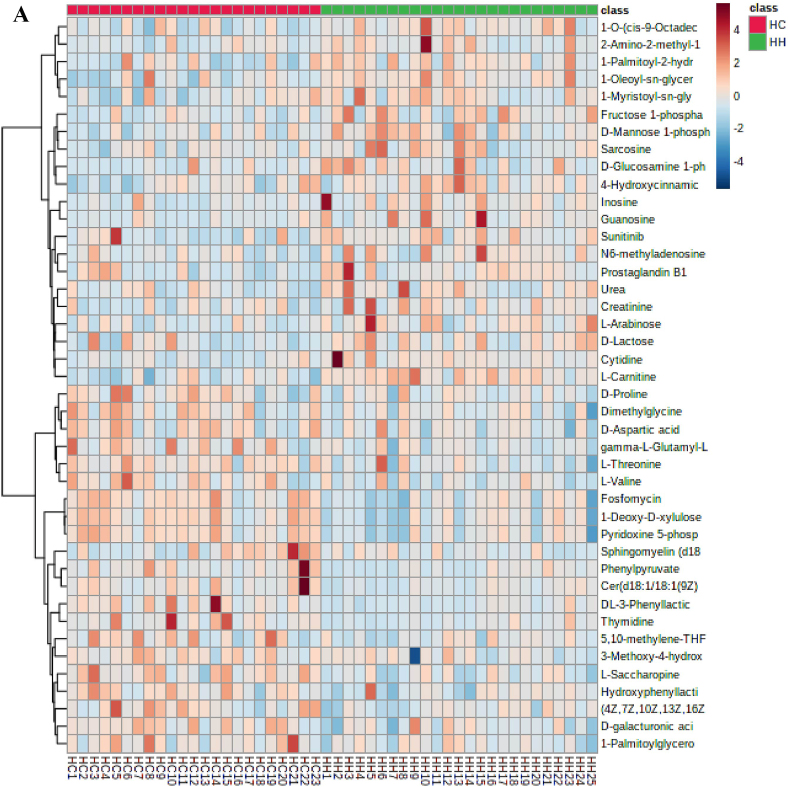
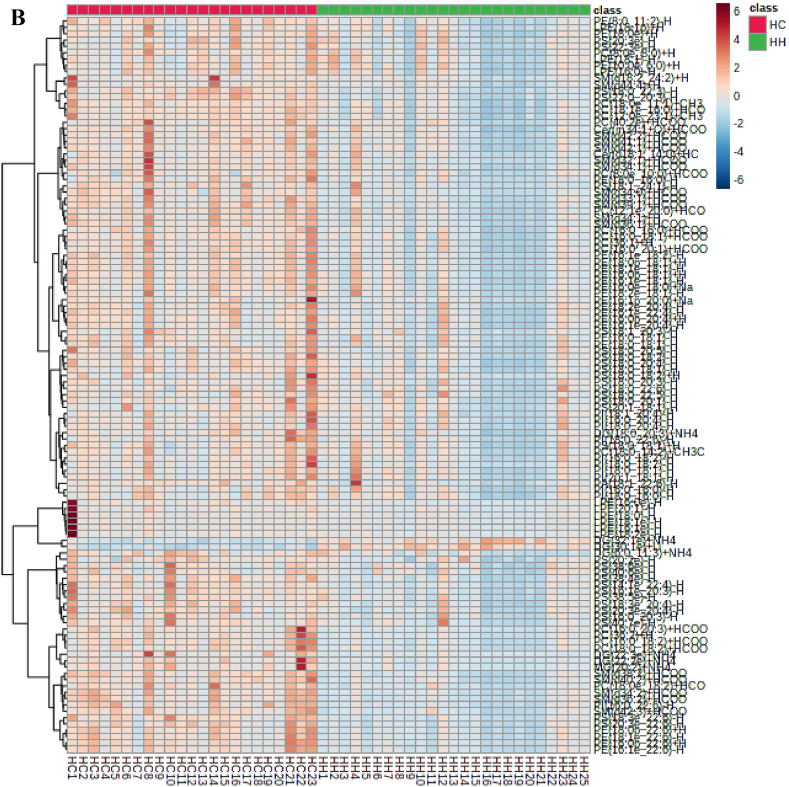
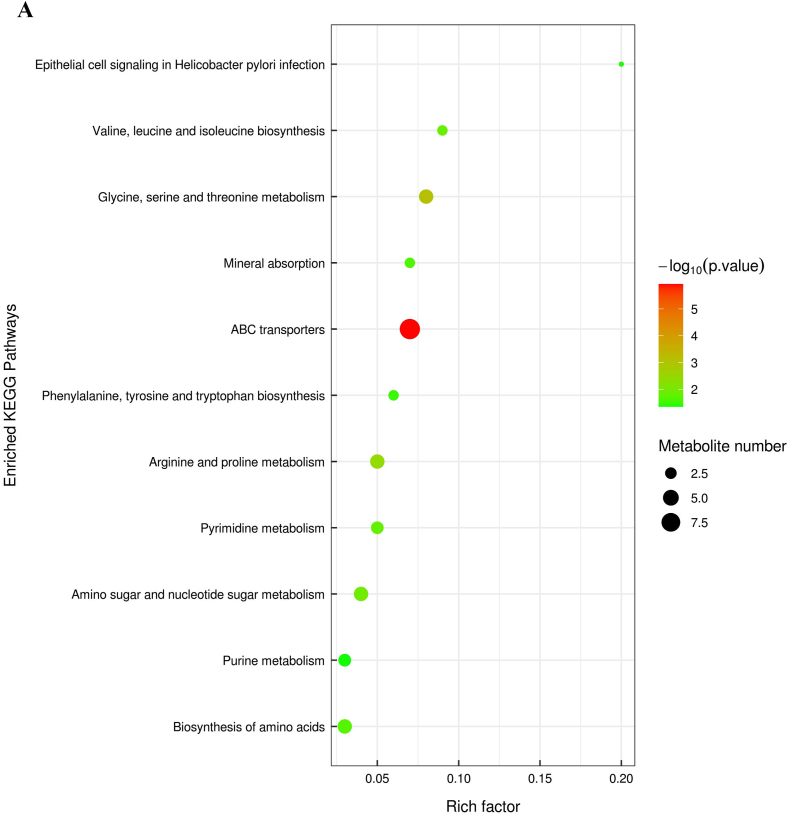
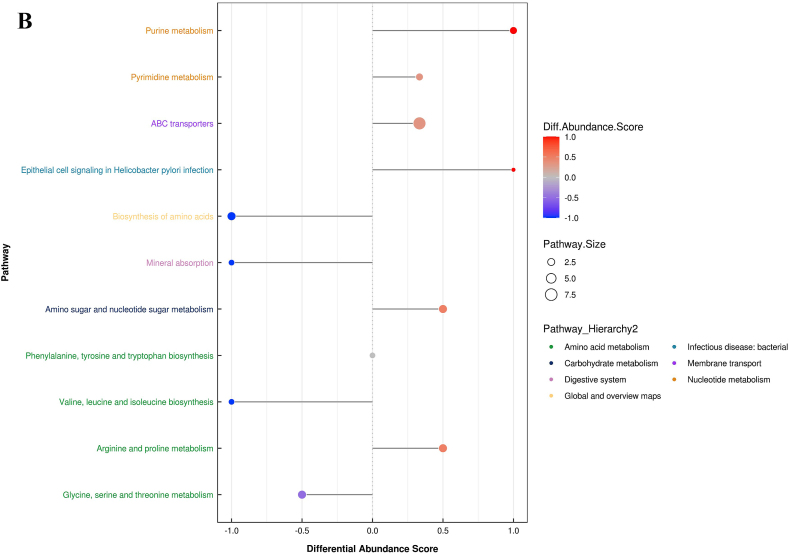
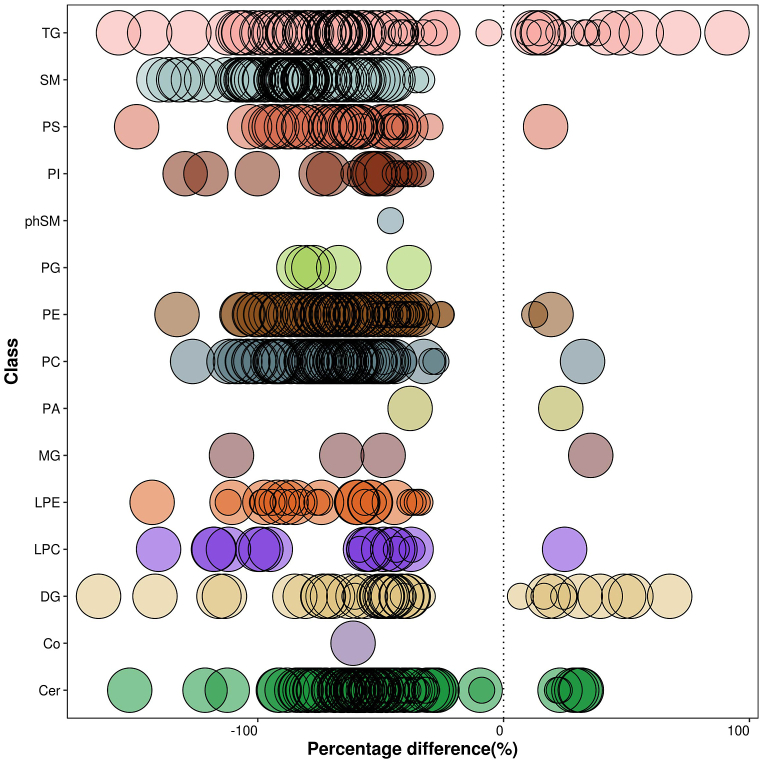
Results: The metabolomics profiling are altered among patients with nCHH and healthy controls. There are 160 kinds of differential metabolites and the main different lipid species are TAG, PC, SM and PE.
Conclusions: The metabolomics profiles in patients with nCHH changed. We hope that this work provides important insights into the pathophysiology of nCHH.
Keywords: Lipidomics; Metabolomics; Normosmic congenital hypogonadotropic hypogonadism; Rare disease.
© 2023 The Authors.
Conflict of interest statement
The authors declare no competing interests.
Figures
References
-
- Young J., Xu C., Papadakis G.E., Acierno J.S., Maione L., Hietamäki J., Raivio T., Pitteloud N. Clinical management of congenital hypogonadotropic hypogonadism. Endocr. Rev. 2019;40(2):669–710. - PubMed
-
- Boehm U., Bouloux P.M., Dattani M.T., de Roux N., Dodé C., Dunkel L., Dwyer A.A., Giacobini P., Hardelin J.P., Juul A., Maghnie M., Pitteloud N., Prevot V., Raivio T., Tena-Sempere M., Quinton R., Young J. Expert consensus document: European Consensus Statement on congenital hypogonadotropic hypogonadism--pathogenesis, diagnosis and treatment. Nat. Rev. Endocrinol. 2015;11(9):547–564. - PubMed
-
- Cangiano B., Swee D.S., Quinton R., Bonomi M. Genetics of congenital hypogonadotropic hypogonadism: peculiarities and phenotype of an oligogenic disease. Hum. Genet. 2021;140(1):77–111. - PubMed
-
- Miraoui H., Dwyer A.A., Sykiotis G.P., Plummer L., Chung W., Feng B., Beenken A., Clarke J., Pers T.H., Dworzynski P., Keefe K., Niedziela M., Raivio T., Crowley W.F., Jr., Seminara S.B., Quinton R., Hughes V.A., Kumanov P., Young J., Yialamas M.A., Hall J.E., Van Vliet G., Chanoine J.P., Rubenstein J., Mohammadi M., Tsai P.S., Sidis Y., Lage K., Pitteloud N. Mutations in FGF17, IL17RD, DUSP6, SPRY4, and FLRT3 are identified in individuals with congenital hypogonadotropic hypogonadism. Am. J. Hum. Genet. 2013;92(5):725–743. - PMC - PubMed
-
- Raivio T., Falardeau J., Dwyer A., Quinton R., Hayes F.J., Hughes V.A., Cole L.W., Pearce S.H., Lee H., Boepple P., Crowley W.F., Jr., Pitteloud N. Reversal of idiopathic hypogonadotropic hypogonadism. N. Engl. J. Med. 2007;357(9):863–873. - PubMed
LinkOut - more resources
Full Text Sources
