


Aqueous deficiency dry eye in post conjunctivitis cicatrization - Effect of deep thermal punctal cautery
- PMID: 37026314
- PMCID: PMC10276737
- DOI: 10.4103/IJO.IJO_2572_22
Aqueous deficiency dry eye in post conjunctivitis cicatrization - Effect of deep thermal punctal cautery
Abstract
Purpose: To evaluate the effect of deep thermal punctal cautery in eyes with post-conjunctivitis cicatrization.
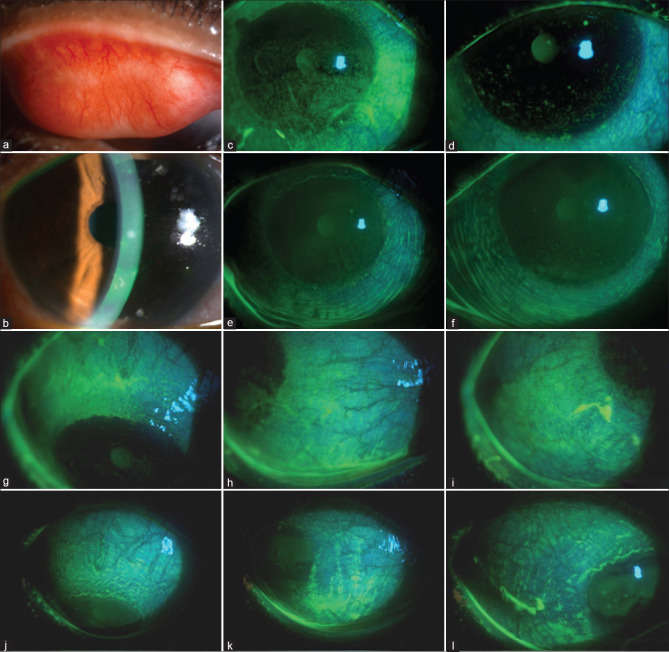
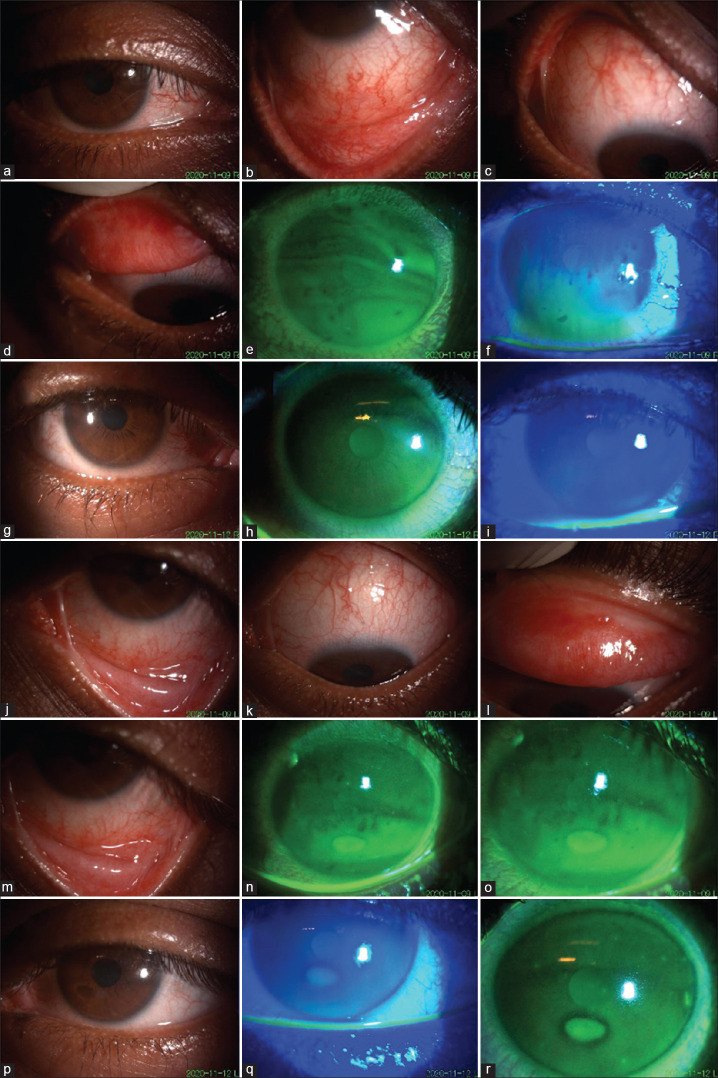
Methods: This retrospective study consisted of patients who underwent deep thermal punctal cautery for post-conjunctivitis dry eye (PCDE). The diagnosis was based on a history suggestive of viral conjunctivitis in past followed by the onset of present clinical features of aqueous deficiency dry eye (ATD). All patients underwent a rheumatological evaluation to rule out underlying systemic collagen vascular disease as a cause for dry eye. The extent of cicatricial changes was noted. Best-corrected visual acuity (BCVA), Schirmer's test, and fluorescein staining score (FSS; total score of 9) were analyzed pre- and post-cautery.
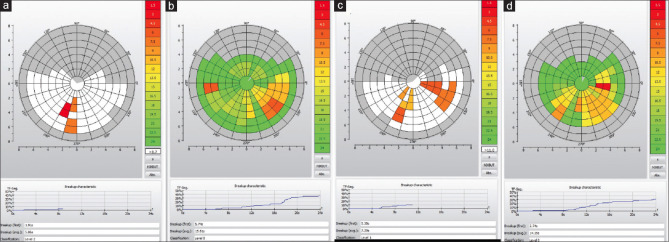
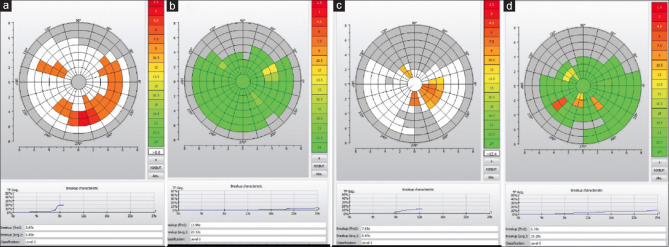
Results: Out of 65 patients (117 eyes), 42 were males. The mean age at presentation was 25.769 ± 12.03 years. Thirteen patients presented with unilateral dry eye. Pre-cautery BCVA (logarithm of the minimum angle of resolution [logMAR]) and Schirmer's test (mm) improved from 0.5251 ± 0.662 to 0.372 ± 0.595 (P value = 0.000, 95% confidence interval [CI]: 0.09-0.22), and 1.952 ± 2.763 to 4.929 ± 4.338 (P value = 0.000, 95% CI: -3.79--2.17); post-cautery, respectively. The pre-cautery FSS of 5.9 ± 2.82 reduced to 1.58 ± 2.38 (P value = 0.000, 95% CI: 3.46-5.17) post-cautery. The mean follow-up was 11.22 ± 13.32 months. No progression in cicatricial changes was noted in any eye during the follow-up. Re-canalization rate was 10.64%, and repeat cautery was performed with successful closure of puncta.
Conclusion: Symptoms and clinical signs of ATD in PCDE patients improve with punctal cautery.
Keywords: Conjunctival cicatricial disease; dry eye; post-conjunctivitis dry eye; punctal cautery.
Conflict of interest statement
None
Figures
References
-
- Rajaiya J, Chodosh J. New paradigms in infectious eye disease: adenoviral keratoconjunctivitis. Arch Soc Esp de Oftalmol. 2006;81:493–8. - PubMed
-
- Butt AL, Chodosh J. Adenoviral keratoconjunctivitis in a tertiary care eye clinic. Cornea. 2006;25:199–202. - PubMed
-
- Chiou AG, Florakis GJ, Kazim M. Management of conjunctival cicatrizing diseases and severe ocular surface dysfunction. SurvOphthalmol. 1998;43:19–46. - PubMed
-
- Bron AJ, Abelson MB, Ousler G, Pearce E, Tomlinson A, Yokoi N, et al. Methodologies to diagnose and monitor dry eye disease: Report of the Diagnostic Methodology Subcommittee of the International Dry Eye WorkShop (2007) Ocul Surf. 2007;5:108–52. - PubMed
-
- Ohba E, Dogru M, Hosaka E, Yamazaki A, Asaga R, Tatematsu Y, et al. Surgical punctal occlusion with a high heat-energy releasing cautery device for severe dry eye with recurrent punctal plug extrusion. Am J Ophthalmol. 2011;151:483–7. - PubMed
MeSH terms
Substances
LinkOut - more resources
Full Text Sources
Medical
Research Materials
Miscellaneous
