


Use of the visual analogue scale for health state valuation: a scoping review
- PMID: 37029258
- PMCID: PMC10474194
- DOI: 10.1007/s11136-023-03411-3
Use of the visual analogue scale for health state valuation: a scoping review
Abstract
Objectives: The visual analogue scale (VAS) has been used in the context of health and healthcare for various purposes, for example, to measure pain and to provide a single-index measure of health-related quality of life (HRQoL). This scoping review aims to describe how the VAS has been used for health state valuation in the published literature.
Methods: The search was carried out in Medline, Web of Science and PsycInfo. The findings of the included articles were tabulated and presented descriptively using frequencies and proportions.
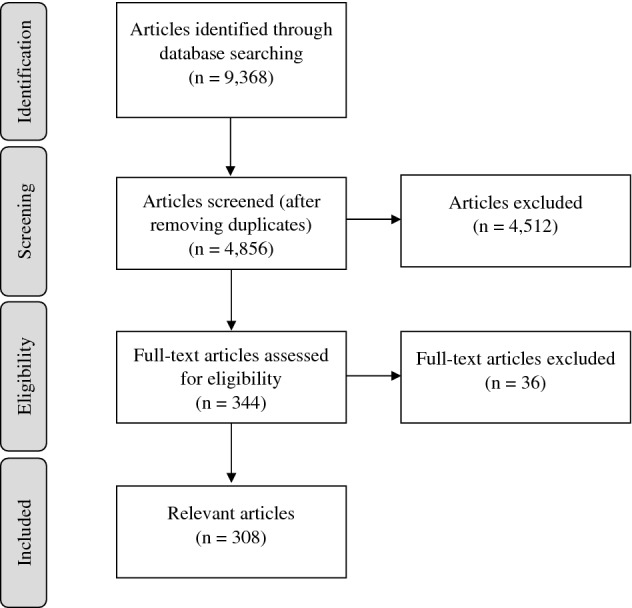
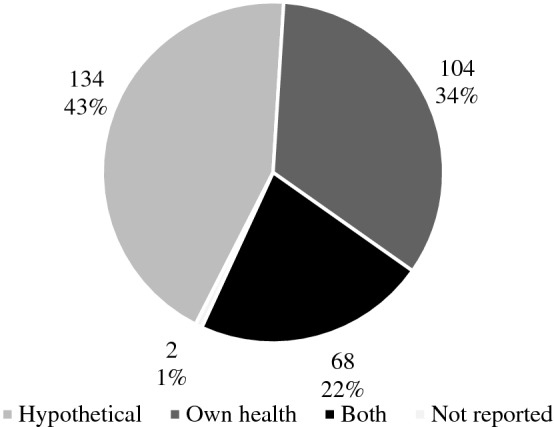
Results: The database search yielded 4856 unique articles, out of these, 308 were included. In 83% of the articles, the main purpose for using a VAS was to value health states. The two most common perspectives when valuing health states with a VAS were hypothetical (44%) and own health (34%). Some (n = 14) articles used the VAS in the context of economic evaluations, including calculating quality-adjusted life years (QALYs). A large variation in the design of the VAS was found, including the description of the lower and upper anchors. Advantages and disadvantages with using a VAS were mentioned in 14% of the included articles.
Conclusion: The VAS has been a common method for valuing health states, both as a stand-alone method and in combination with other valuation methods. Despite its widespread use, the design of the VAS has been inconsistent which makes comparison of results across studies challenging. Further research on the role of using the VAS in economic evaluations is warranted.
Keywords: Anchoring; Economic evaluation; Health state valuation; Health-related quality of life; Scoping review; Visual analogue scale.
© 2023. The Author(s).
Conflict of interest statement
The authors Mimmi Åström and Kristina Burström are members of the EuroQol Group. The authors Zin Min Thet Lwin, Fitsum Sebsibe Teni and Jenny Berg have no conflict of interest to declare that are relevant to the content of this article.
Figures
References
-
- Brazier, J., Ratcliffe, J., Tsuchiya, A., & Salomon, J. (2007). Measuring and valuing health benefits for economic evaluation. Oxford University Press.
-
- Morris, S., Delvin, N., Parkin, D., & Spencer, A. (2012). Economic analysis in health care. Wiley.
-
- Drummond MF, Sculpher MJ, Claxton K, Stoddart GL, Torrance GW. Methods for the economic evaluation of health care programmes. 4. Oxford University Press; 2015.
Publication types
MeSH terms
LinkOut - more resources
Full Text Sources
