


Buprenorphine treatment receipt characteristics and retention among people who inject drugs at Integrated Care Centers in India
- PMID: 37031487
- PMCID: PMC10416117
- DOI: 10.1016/j.drugalcdep.2023.109839
Buprenorphine treatment receipt characteristics and retention among people who inject drugs at Integrated Care Centers in India
Abstract
Background: India is facing overlapping opioid injection and HIV epidemics among people who inject drugs (PWID) in several cities. Integrated Care Centers (ICCs) provide single-venue HIV and substance use services to PWID. We evaluated PWID engagement in daily observed buprenorphine treatment at 7 ICCs to inform interventions.
Methods: We analyzed 1-year follow-up data for PWID initiating buprenorphine between 1 January - 31 December 2018, evaluating receipt frequency, treatment interruptions (no buprenorphine receipt for 60 consecutive days with subsequent re-engagement), and drop-out (no buprenorphine receipt for 60 consecutive days without re-engagement). Using descriptive statistics, we explored differences between ICCs in the opioid-endemic Northeast region and ICCs in the emerging opioid epidemic North/Central region. We used a multivariable logistic regression model to determine predictors of treatment drop-out by 6 months.
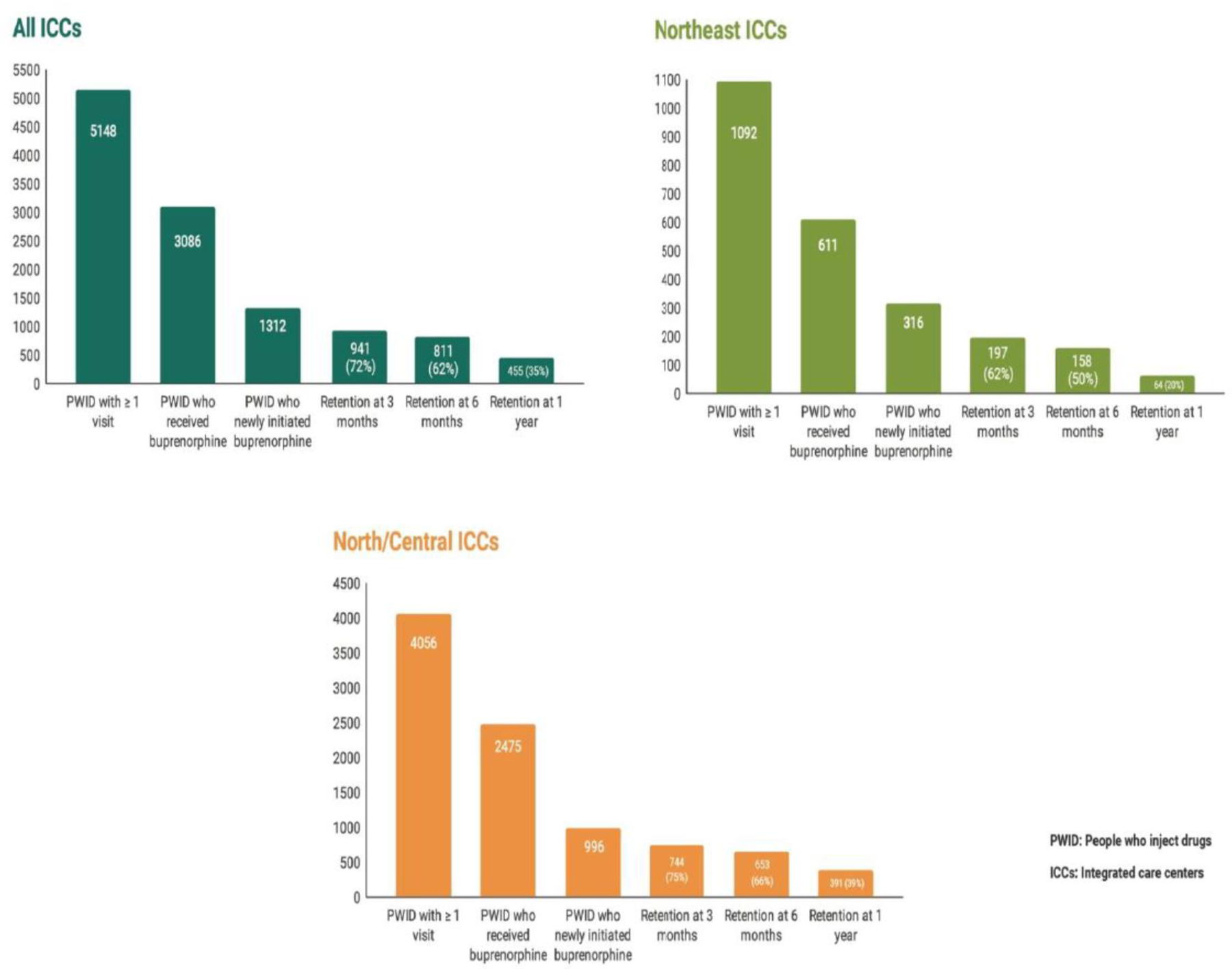
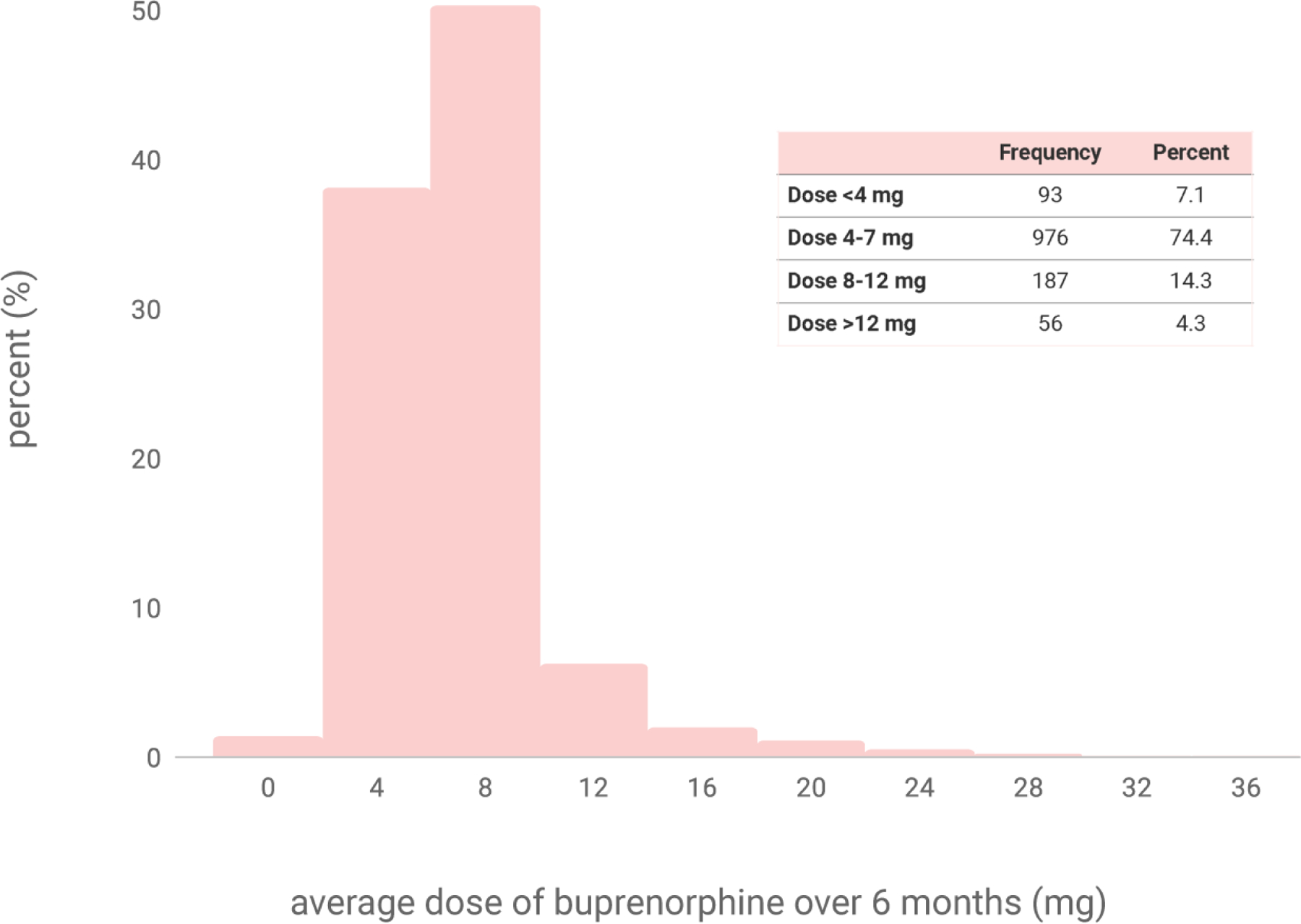
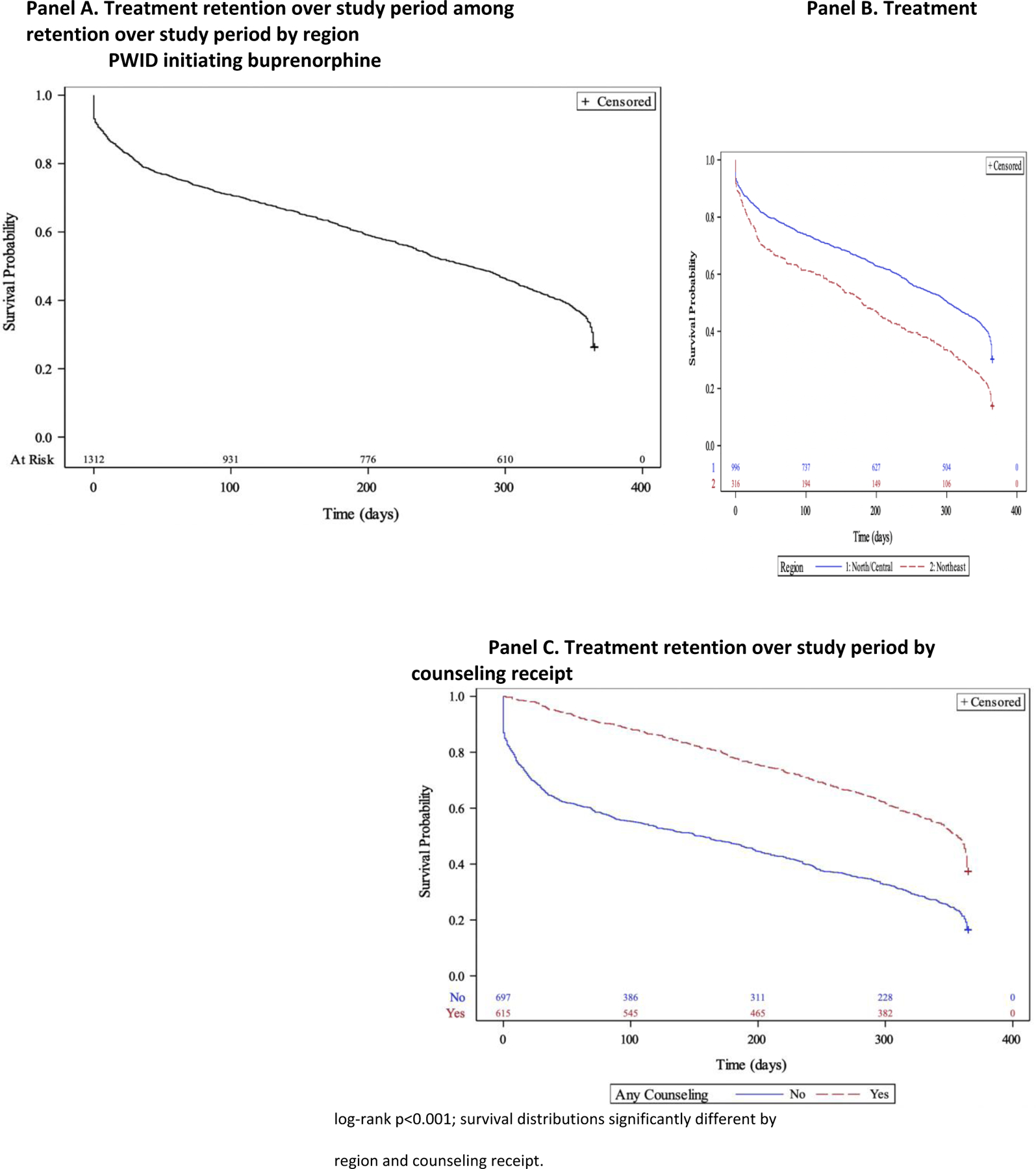
Results: 1312 PWID initiated buprenorphine (76% North/Central ICCs vs. 24% Northeast ICCs). 31% of PWID in North/Central, and 25% in Northeast ICCs experienced ≥ 1 treatment interruption in 1 year. Over 6 months, 48% of PWID in North/Central vs. 60% in Northeast ICCs received buprenorphine ≤ 2 times/week (p < 0.0001). A third of PWID in North/Central vs. half in Northeast ICCs experienced treatment drop-out by 6 months (p < 0.001). In the multivariable model, living in Northeast cities was associated with increased odds of drop-out while counseling receipt was associated with decreased odds.
Conclusions: Retention among PWID initiating buprenorphine at ICCs was comparable to global reports. However, regional heterogeneity in retention, and low daily buprenorphine receipt suggest patient-centered interventions adapted to regional contexts are urgently needed.
Keywords: Buprenorphine; India; Opioid use; People who inject drugs; Retention; Treatment.
Copyright © 2023 The Authors. Published by Elsevier B.V. All rights reserved.
Conflict of interest statement
Conflicts of interest The authors have no conflicts of interest to declare.
Figures
References
-
- Ambekar A, Agrawal A, Rao R, Mishra AK, Khandelwal SK, and Chadda RK (2019). “Magnitude of Substance Use in India.” Ministry of Social Justice and Empowerment, Government of India https://pib.gov.in/newsite/PrintRelease.aspx?relid=188688&fbclid=IwAR1Rx....
-
- Ambekar A, Rao R, Agrawal A, and Mishra A (2018). “Punjab Opioid Dependence Survey: A Brief Report.” Ministry of Social Justice and Empowerment, Government of India
Publication types
MeSH terms
Substances
Grants and funding
LinkOut - more resources
Full Text Sources
Medical
