


Elevated LDL-C, high blood pressure, and low peak O2 associate with platelet mitochondria function in children-The Arkansas Active Kids Study
- PMID: 37033448
- PMCID: PMC10073692
- DOI: 10.3389/fmolb.2023.1136975
Elevated LDL-C, high blood pressure, and low peak O2 associate with platelet mitochondria function in children-The Arkansas Active Kids Study
Abstract
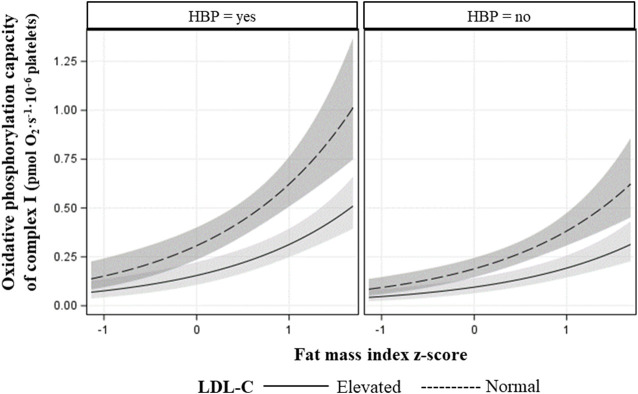
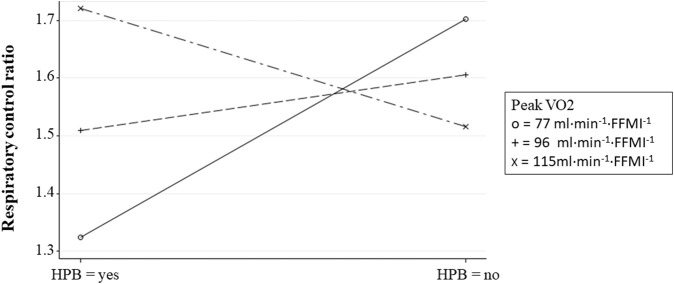
Purpose: To evaluate the association of platelet (PL) mitochondria respiration with markers of cardiovascular health in children ages 7-10 years. Methods: PL mitochondrial respiration (n = 91) was assessed by high resolution respirometry (HRR): Routine (R) respiration, complex (C) I linked respiration (CI), and maximal uncoupled electron transport capacity of CII (CIIE) were measured. The respiratory control ratio (RCR) was calculated as the ratio of maximal oxidative phosphorylation capacity of CI and CI leak respiration (PCI/LCI). Peak O2 (incremental bike test) and body composition (dual-energy X-ray absorptiometry) were measured. Multiple generalized linear regression analysis was used to model the association of measures by HRR with variables of interest: adiposity, low-density lipoprotein (LDL-C) and triglyceride (TG) status (normal vs. elevated) HOMA2-IR, blood pressure status (normal vs. high), and demographics. Results: R and CI-linked respiration positively associated with adiposity, high blood pressure (HBP), and peak O2. R and CI-linked respiration had inverse association with age and elevated LDL-C. CIIE was higher in children with elevated LDL-C (log-β = -0.54, p = 0.010). HBP and peak O2 interacted in relation to RCR (log-β = -0.01, p = 0.028). Specifically, RCR was lowest among children with HBP and low aerobic capacity (i.e., mean peak O2 -1SD). HOMA2-IR did not associate with measures of PL mitochondria respiration. Conclusion: In PL, R and CI-linked mitochondrial respiration directly associate with adiposity, peak O2 and HBP. Elevated LDL-C associates with lower CI-linked respiration which is compensated by increasing CII respiration. PL bioenergetics phenotypes in children associate with whole-body metabolic health status.
Keywords: aerobic capacity; blood platelets; body composition; cardiometabolic risk (factors); mitochondria.
Copyright © 2023 Diaz, Adams, Weber, Cotter and Børsheim.
Conflict of interest statement
The authors declare that the research was conducted in the absence of any commercial or financial relationships that could be construed as a potential conflict of interest.
Figures
References
-
- Ahmad M., Wolberg A., Kahwaji C. I. (2021). “Biochemistry, electron transport chain [online],” in StatPearls [internet] (Treasure Island, FL: StatPearls Publishing; ). Available at: https://www.ncbi.nlm.nih.gov/books/NBK526105/ (Accessed Nov 15, 2021). - PubMed
-
- Assinger A., Wang Y., Butler L. M., Hansson G. K., Yan Z. Q., Soderberg-Naucler C., et al. (2014). Apolipoprotein B100 danger-associated signal 1 (ApoBDS-1) triggers platelet activation and boosts platelet-leukocyte proinflammatory responses. Thromb. Haemost. 112, 332–341. 10.1160/TH13-12-1026 - DOI - PubMed
LinkOut - more resources
Full Text Sources
Miscellaneous
