


Indexing hematological and serum biochemical reference intervals of Himalayan snow trout, Schizothorax esocinus to instrument in health assessment
- PMID: 37035664
- PMCID: PMC10079988
- DOI: 10.3389/fphys.2023.989442
Indexing hematological and serum biochemical reference intervals of Himalayan snow trout, Schizothorax esocinus to instrument in health assessment
Abstract
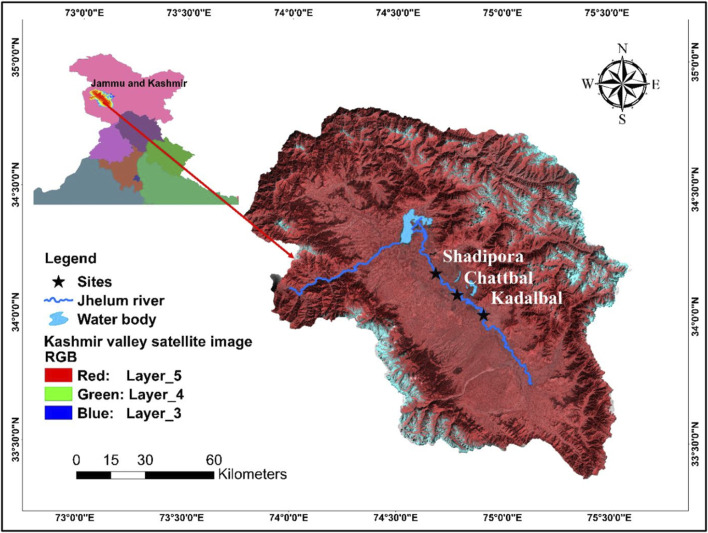
Schizothorax esocinus, commonly known as snow trout, is one of the main contributors of food and livelihood in the colder zone of Himalayan region. The comprehensive information on its hematological and serum biochemical reference intervals is not reported yet. In the present study an attempt has been made to elucidate the hematological and serum biochemical reference intervals of S. esocinus from River Jhelum using protocols of the American Society of Veterinary Clinical Pathology (ASVCP). Wild fish were sampled over a period of 2 years from the pollution free sites of river Jhelum. Fish blood was harvested through caudal venipuncture and hemato-biochemical analysis performed thereof. Data values from a total of healthy 432 adult fish specimens (216 male, 216 female) were systematically recorded. The reference intervals for hematological and serum biochemical parameters of S. esocinus were established using Reference Value Advisor software v 2.1. RIs for hematological and serum analytes ranged as: hemoglobin (Hb) 78.38-116.35 (g/L); white blood cells (WBC) 10-20 (×109/L); red blood cells (RBC) 1.30-2.15 (×1012/L); packed cell volume 27.00-39.45 (%); total protein 39.21-61.62 (g/L); albumin 8.20-22.02 (g/L); globulin 27.58-49.55 (g/L); glucose 3.25-7.18 (mmol/L); urea 0.96-2.38 (mmol/L); cholesterol 3.80-6.90 (mmol/L). The study also depicted that certain blood measurands were influenced with respect to sex. Significantly (p < 0.05) higher values of Hb, red blood cells count and serum glucose were noted in male as compared to female which, on the other hand, registered higher white blood cells count and serum cholesterol level (Mann Whitney U test, p < 0.05). The work, therefore, provides baseline information on hematological and serum biochemical analytes of this species which holds high commercial importance. RIs reported here can help monitor the health status of fish by improving the use of non-lethal diagnostic methods in piscine medicine.
Keywords: Schizothorax; fish; hematology; reference intervals; serum biochemistry.
Copyright © 2023 Reshi, Ahmed, Al-Anazi and Farah.
Conflict of interest statement
The authors declare that the research was conducted in the absence of any commercial or financial relationships that could be construed as a potential conflict of interest.
Figures


References
-
- Ahmad I., Ahmed I., Fatma S., Peres H. (2021a). Role of branched‐chain amino acids on growth, physiology and metabolism of different fish species: A review. Aquac. Nutr. 27, 1270–1289. 10.1111/anu.13267 - DOI
-
- Ahmad I., Ahmed I., Reshi Q. M., Jan K., Gupta A., Dar S. A., Molnar K., Kaur H., Malla B. A., Andrabi S.M. (2021b). Morphological, histopathological and molecular characterization of Myxobolus szekelyianus n. sp.(Cnidaria: Myxosporea: Myxobolidae) causing acute gill disease in Schizothorax esocinus (Heckel, 1838) from River Jhelum of Kashmir Himalayan region, India. Aquac. Res. 52, 6537–6549. 10.1111/are.15524 - DOI
-
- Ahmadifar E., Moghadam M. S., Dawood M. A., Hoseinifar S. H. (2019). Lactobacillus fermentum and/or ferulic acid improved the immune responses, antioxidative defence and resistance against Aeromonas hydrophila in common carp (Cyprinus carpio) fingerlings. Fish Shellfish Immunol 94, 916–923. 10.1016/j.fsi.2019.10.019 - DOI - PubMed
-
- Ahmed I. (2018). “Nutritional status of some commercially important food fish species of Kashmir Valley,” in Aquaculture for Nutritional and Livelihood Security. Editors Ninwae A.S., Dhanze J. R., Dhanze R. (Narendra Publishing House Pvt. Ltd.), 124–134. ISBN: 978-93-86110-74-9.
-
- Ahmed I., Reshi Q. M., Fazio F. (2020). The influence of the endogenous and exogenous factors on hematological parameters in different fish species: a review. Aquacult. Int. 28, 869–899. 10.1007/s10499-019-00501-3 - DOI
LinkOut - more resources
Full Text Sources
