


Impact of COVID-19 on adolescent health and use of social media
- PMID: 37036294
- PMCID: PMC10155612
- DOI: 10.1097/MOP.0000000000001248
Impact of COVID-19 on adolescent health and use of social media
Abstract
Purpose of review: The coronavirus disease 2019 (COVID-19) pandemic changed access to healthcare and decreased mental and physical wellbeing. It also significantly altered teens' relationship with social media. This article is a current review of the literature on the impact of COVID-19 on adolescent health overall. In addition, how social media use has both improved and worsened the impact of COVID-19, along with strategies providers should consider in wanting to address social media use with teens.
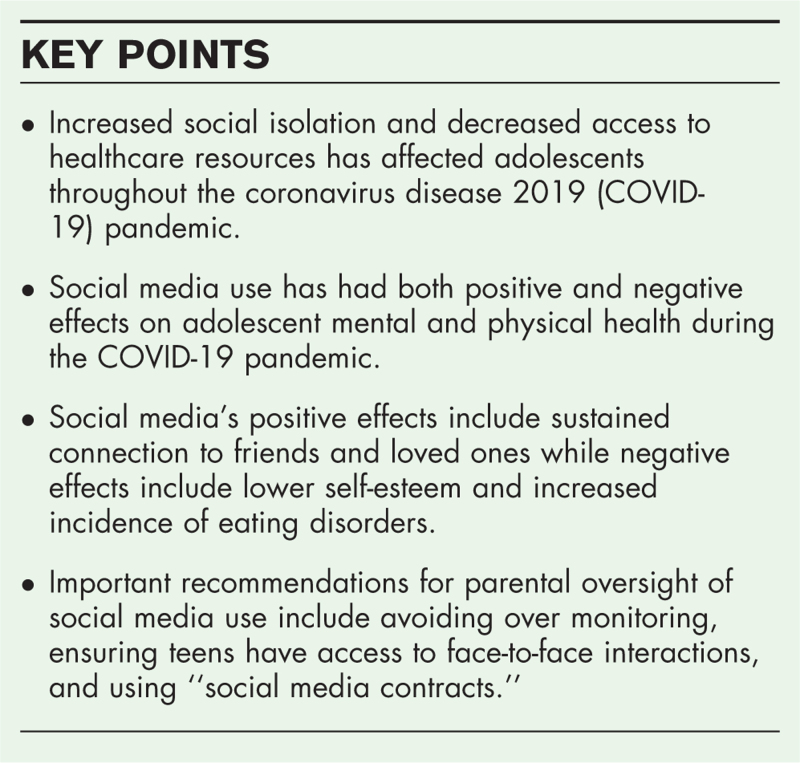
Recent findings: The COVID-19 pandemic has affected adolescents through increased social isolation and decreased access to healthcare resources. Social media use has both positive and negative effects on adolescent health. Positive effects include sustained connection to friends, family and community while negative effects include lower self-esteem and increased incidence of eating disorders.
Summary: Our findings underscore the multifaceted impact of social media on adolescent mental health, physical wellbeing, and healthcare access. Of particular relevance to the physician is the potential of leveraging social media to promote healthy behaviors in vulnerable age groups and populations. Social media can be used to connect teens with reputable websites where they can seek medical or health information that would otherwise not readily be available.
Copyright © 2023 Wolters Kluwer Health, Inc. All rights reserved.
Conflict of interest statement
References
-
- Ahmed Z, Sonfield A. Guttmacher Institute. The COVID-19 outbreak: potential fallout for sexual and reproductive health and rights 2020; Available at: https://www.guttmacher.org/article/2020/03/covid-19-outbreak-potential-f... [cited 2022 Jun 29].
-
- Bonett S, Petsis D, Dowshen N, et al. The impact of the COVID-19 pandemic on sexually transmitted infection/human immunodeficiency virus testing among adolescents in a large pediatric primary care network. Sex Transm Dis 2021; 48:e91–e93. - PMC - PubMed
-
Bonett et al. present evidence that the volume of STI tests decreased among adolescents and young adults and that STI test positivity simultaneously increased during the COVID-19 pandemic. The findings suggest that limited testing capacity resulted in a hierarchy of prioritization with symptomatic patients at the top. Given that the majority of 15−21 year-olds with STIs present without symptoms, it is likely that many asymptomatic cases remained undetected and untreated. This study offers the first estimates of STI testing counts, case counts, and positivity rates in the eight months before and after the onset of the COVID-19 pandemic.
-
- Jones EAK, Mitra AK, Bhuiyan AR. Impact of covid-19 on mental health in adolescents: a systematic review. Int J Environ Res Public Health 2021; 18:1–9. - PMC - PubMed
-
Jones et al. aim to bridge the information gap on the toll of the COVID-19 pandemic on adolescent mental health globally. They conducted a systematic review of quantitative studies on COVID-related mental health among individuals aged 13-17 years. The results indicate a general association between the COVID-19 pandemic and depression, anxiety, and other psychological disorders. The authors suggest that negative coping skills, perceptions of low social support, and engagement in alcohol and drug use are primary contributors to pandemic-related psychological distress among adolescents around the world.
Publication types
MeSH terms
LinkOut - more resources
Full Text Sources
Medical
Research Materials
