


Does Employment Complexity Promote Healthy Cognitive Aging in Down Syndrome?
- PMID: 37040598
- PMCID: PMC10564966
- DOI: 10.1177/17446295231169379
Does Employment Complexity Promote Healthy Cognitive Aging in Down Syndrome?
Abstract
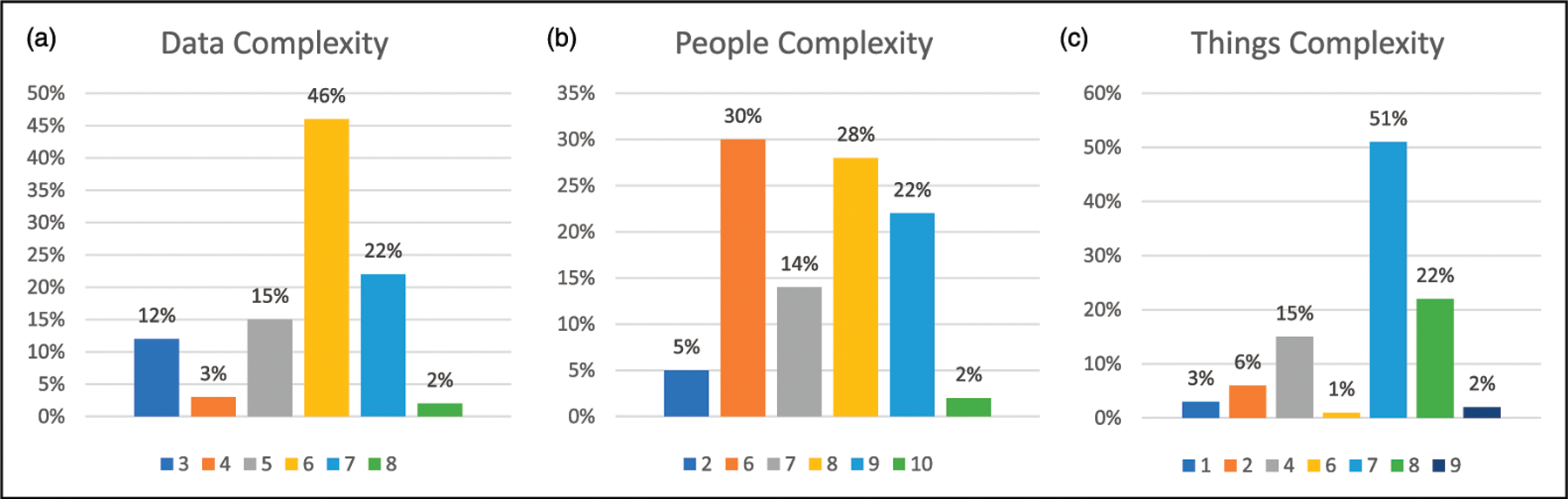
Adults with Down syndrome (DS) experience high risk for Alzheimer's disease (AD), but there is variability in the timing of transition from a cognitively stable state to prodromal AD and dementia. The present study examined the association between a modifiable lifestyle factor, employment complexity, and cognitive decline across two time points in adults with DS. Employment complexity, defined as the degree of problem-solving or critical thinking required for employment activities, was operationalized using the Dictionary of Occupational Titles, a system which classifies occupations based on three categories: Data, People, and Things. Eighty-seven adults with DS (M = 36.28 years, SD = 6.90 years) were included in analyses. Partial correlations revealed that lower employment complexity involving People and Things were associated with increased dementia symptoms. Lower employment complexity involving Things was also associated with memory decline. These findings have implications for vocational programs focused on job training and placement for adults with DS.
Keywords: Alzheimer’s disease; cognition; dementia; down syndrome; employment.
Conflict of interest statement
Declaration of conflicting interests
The author(s) declared no potential conflicts of interest with respect to the research, authorship, and/or publication of this article.
Figures
References
-
- Aguirre-Acevedo DC, Lopera F, Henao E, Tirado V, Muñoz C, Giraldo M, Bangdiwala SI, Reiman EM, Tariot PN, Langbaum JB, Quiroz YT and Jaimes F. Cognitive Decline in a Colombian Kindred With Autosomal Dominant Alzheimer Disease: A Retrospective Cohort Study. JAMA Neurol 2016;73(4): 431–438. doi: 10.1001/jamaneurol.2015.4851 - DOI - PMC - PubMed
-
- Boots EA, Schultz SA, Almeida RP, Oh JM, Koscik RL, Dowling MN, Gallagher CL, Carlsson CM, Rowley HA, Bendlin BB, Asthana S, Sager MA, Hermann BP, Johnson SC and Okonkwo OC (2015). Occupational complexity and cognitive reserve in a middle-aged cohort at risk for Alzheimer’s disease. Archives of Clinical Neuropsychology, 30, 634–642. doi: 10.1093/arclin/acv041 - DOI - PMC - PubMed
-
- Browder DM and Cooper KJ (1994). Inclusion of older adults with mental retardation in leisure opportunities. Mental Retardation, 32(2), 91–99. - PubMed
-
- Centers for Disease Control and Prevention (2022). Down syndrome Available at: https://www.cdc.gov/ncbddd/birthdefects/downsyndrome.html
MeSH terms
Grants and funding
LinkOut - more resources
Full Text Sources
Medical
