


The P2X3 receptor antagonist filapixant in patients with refractory chronic cough: a randomized controlled trial
- PMID: 37041539
- PMCID: PMC10088222
- DOI: 10.1186/s12931-023-02384-8
The P2X3 receptor antagonist filapixant in patients with refractory chronic cough: a randomized controlled trial
Abstract
Background: P2X3 receptor antagonists seem to have a promising potential for treating patients with refractory chronic cough. In this double-blind, randomized, placebo-controlled study, we investigated the efficacy, safety, and tolerability of the novel selective P2X3 receptor antagonist filapixant (BAY1902607) in patients with refractory chronic cough.
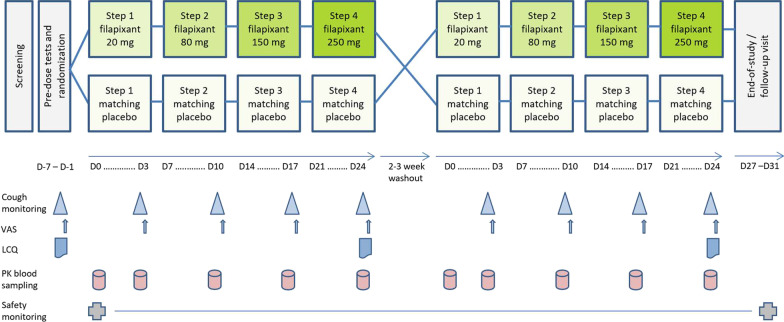
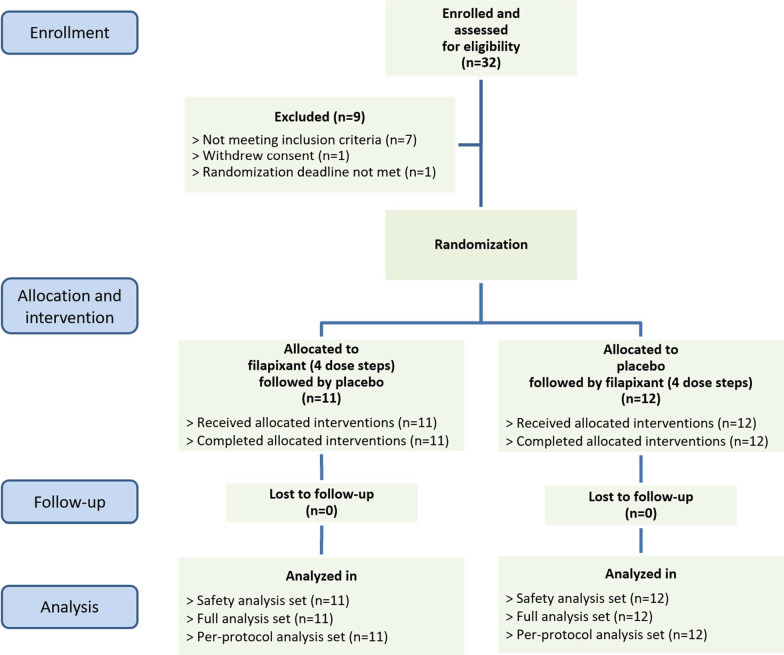
Methods: Following a crossover design, 23 patients with refractory chronic cough (age: 60.4 ± 9.1 years) received ascending doses of filapixant in one period (20, 80, 150, and 250 mg, twice daily, 4-days-on/3-days-off) and placebo in the other. The primary efficacy endpoint was the 24-h cough frequency on Day 4 of each dosing step. Further, subjective cough severity and health-related quality of life were assessed.
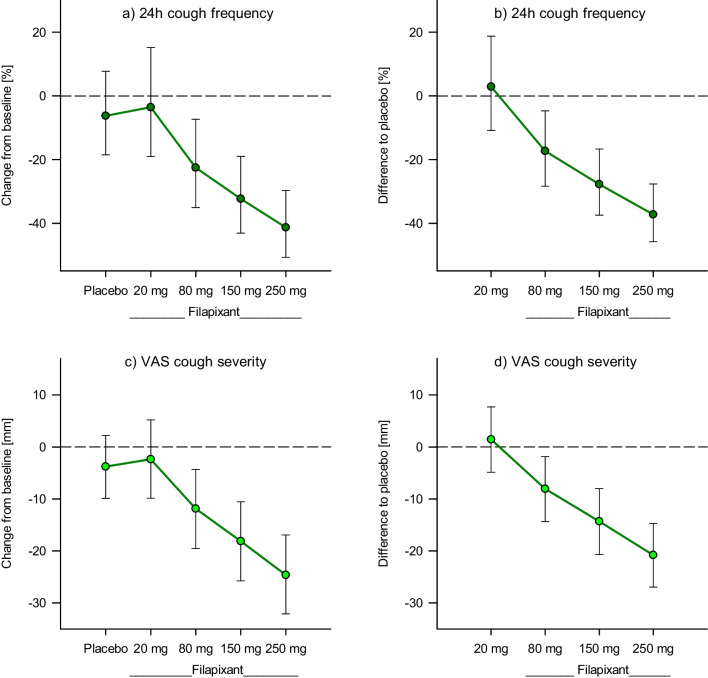
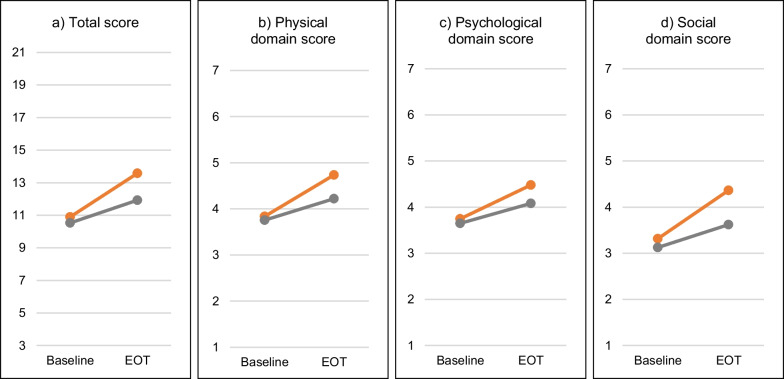
Results: Filapixant at doses ≥ 80 mg significantly reduced cough frequency and severity and improved cough health-related quality of life. Reductions in 24-h cough frequency over placebo ranged from 17% (80 mg dose) to 37% (250 mg dose), reductions over baseline from 23% (80 mg) to 41% (250 mg) (placebo: 6%). Reductions in cough severity ratings on a 100-mm visual analog scale ranged from 8 mm (80 mg) to 21 mm (250 mg). No serious or severe adverse events or adverse events leading to discontinuation of treatment were reported. Taste-related adverse events occurred in 4%, 13%, 43%, and 57% of patients treated with filapixant 20, 80, 150, and 250 mg, respectively, and in 12% treated with placebo.
Conclusions: Filapixant proved to be efficacious, safe, and-apart from the occurrence of taste disturbances, especially at higher dosages-well tolerated during the short therapeutic intervention. Clinical trial registration EudraCT, eudract.ema.europa.eu, 2018-000129-29; ClinicalTrials.gov, NCT03535168.
Keywords: Airway hyperreactivity; Airway hyperresponsiveness; Cough reflex sensitivity; P2X3 receptor antagonist; Proof of concept; Receptor pharmacology; Refractory chronic cough; Taste disturbances.
© 2023. The Author(s).
Conflict of interest statement
CF, KF, and SK are employees of Bayer AG, the company that developed the study drug and sponsored the study and the preparation of this manuscript. IG was employed by Bayer AG when the study was planned and conducted. AHM has received grant funding and personal fees from Merck, Shionogi, Bellus, and Bayer. PAM has received industry-sponsored research funding. AMT, JWKvdB, LMcG, PW, and SSB have no potential conflicts of interest to declare.
Figures
References
Publication types
MeSH terms
Substances
Associated data
LinkOut - more resources
Full Text Sources
Medical
Research Materials
