


Differential diagnosis and cause-specific treatment during out-of-hospital cardiac arrest: a retrospective descriptive study
- PMID: 37041592
- PMCID: PMC10091670
- DOI: 10.1186/s13049-023-01080-2
Differential diagnosis and cause-specific treatment during out-of-hospital cardiac arrest: a retrospective descriptive study
Abstract
Background: The cardiopulmonary resuscitation (CPR) guidelines recommend identifying and correcting the underlying reversible causes of out-of-hospital cardiac arrest (OHCA). However, it is uncertain how often these causes can be identified and treated. Our aim was to estimate the frequency of point of care ultrasound examinations, blood sample analyses and cause-specific treatments during OHCA.
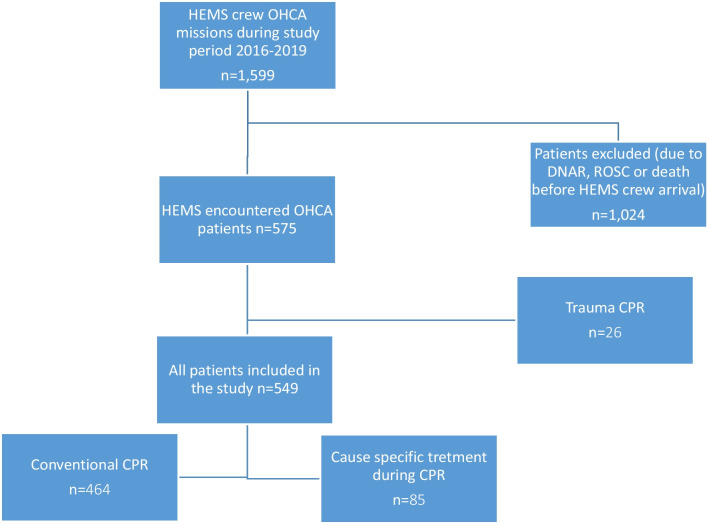
Methods: We performed a retrospective study in a physician-staffed helicopter emergency medical service (HEMS) unit. Data on 549 non-traumatic OHCA patients who were undergoing CPR at the arrival of the HEMS unit from 2016 to 2019 were collected from the HEMS database and patient records. We also recorded the frequency of ultrasound examinations, blood sample analyses and specific therapies provided during OHCA, such as procedures or medications other than chest compressions, airway management, ventilation, defibrillation, adrenaline or amiodarone.
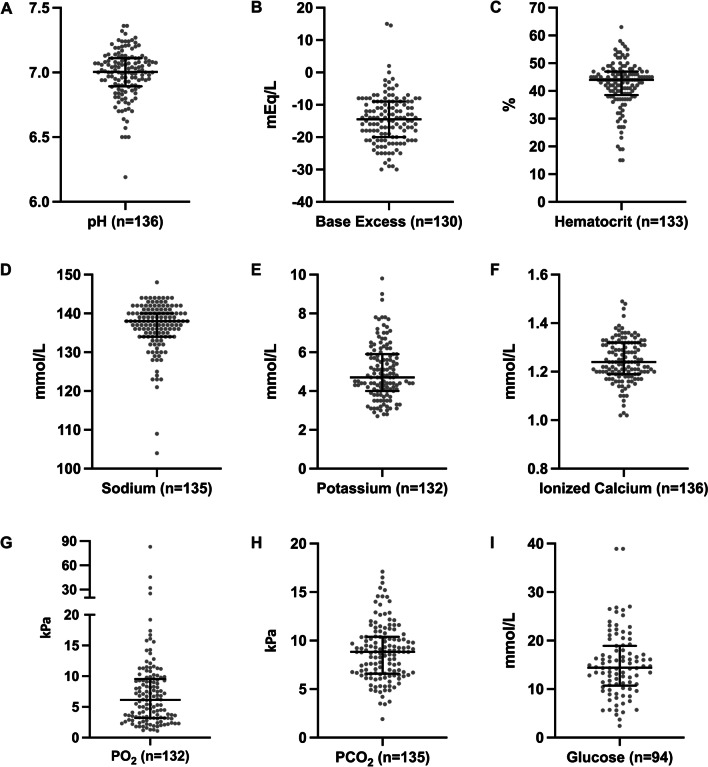
Results: Of the 549 patients, ultrasound was used in 331 (60%) and blood sample analyses in 136 (24%) patients during CPR. A total of 85 (15%) patients received cause-specific treatment, the most common ones being transportation to extracorporeal CPR and percutaneous coronary intervention (PCI) (n = 30), thrombolysis (n = 23), sodium bicarbonate (n = 17), calcium gluconate administration (n = 11) and fluid resuscitation (n = 10).
Conclusion: In our study, HEMS physicians deployed ultrasound or blood sample analyses in 84% of the encountered OHCA cases. Cause-specific treatment was administered in 15% of the cases. Our study demonstrates the frequent use of differential diagnostic tools and relatively infrequent use of cause-specific treatment during OHCA. Effect on protocol for differential diagnostics should be evaluated for more efficient cause specific treatment during OHCA.
Keywords: Air ambulances; Critical care; Emergency medical service; Helicopter emergency medical service; Out-of-hospital cardiac arrest.
© 2023. The Author(s).
Conflict of interest statement
The authors declare that they have no competing interests.
Figures
References
-
- Link MS, Berkow LC, Kudenchuk PJ, Halperin HR, Hess EP, Moitra VK, et al. Part 7: adult advanced cardiovascular life support: 2015 American heart association guidelines update for cardiopulmonary resuscitation and emergency cardiovascular care. Circulation. 2015;132:S444–S464. doi: 10.1161/CIR.0000000000000261. - DOI - PubMed
MeSH terms
Grants and funding
LinkOut - more resources
Full Text Sources
Medical
Miscellaneous
