. 2023 Apr 12;6(1):367.
doi: 10.1038/s42003-023-04742-0.

Functional reorganisation of the cranial skeleton during the cynodont-mammaliaform transition

Affiliations

Functional reorganisation of the cranial skeleton during the cynodont-mammaliaform transition

Stephan Lautenschlager et al. Commun Biol. .

Abstract

Skeletal simplification occurred in multiple vertebrate clades over the last 500 million years, including the evolution from premammalian cynodonts to mammals. This transition is characterised by the loss and reduction of cranial bones, the emergence of a novel jaw joint, and the rearrangement of the jaw musculature. These modifications have long been hypothesised to increase skull strength and efficiency during feeding. Here, we combine digital reconstruction and biomechanical modelling to show that there is no evidence for an increase in cranial strength and biomechanical performance. Our analyses demonstrate the selective functional reorganisation of the cranial skeleton, leading to reduced stresses in the braincase and the skull roof but increased stresses in the zygomatic region through this transition. This cranial functional reorganisation, reduction in mechanical advantage, and overall miniaturisation in body size are linked with a dietary specialisation to insectivory, permitting the subsequent morphological and ecological diversification of the mammalian lineage.


Conflict of interest statement

The authors declare no competing interests.

Figures
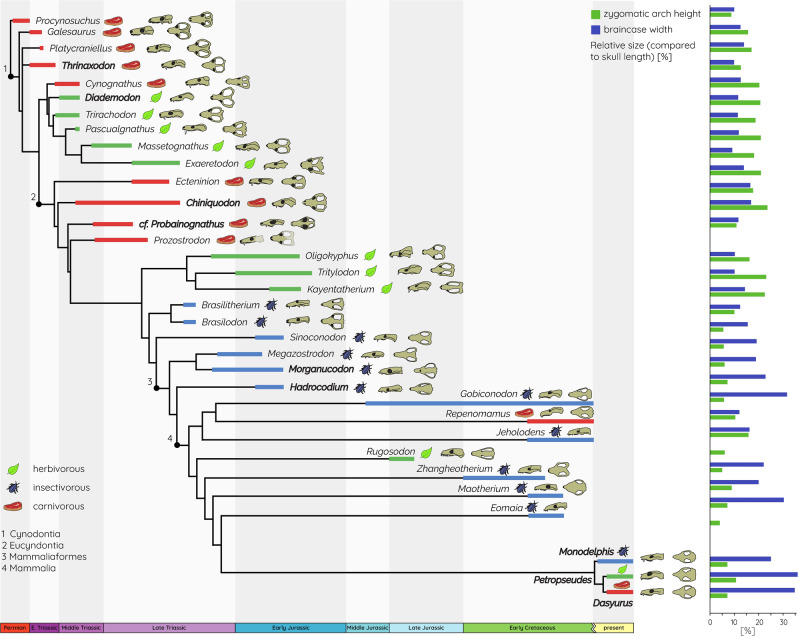
Fig. 1
Fig. 1. Evolutionary relationship of cynodonts and mammaliaforms depicting dietary adaptations and modifications in skull morphology.
Relative changes in the height of the zygomatic arch and the width of the braincase (compared to skull length) are shown in the bar graph (see Supplementary Table 1 for details). The phylogeny is simplified after previously published phylogenies,,, and dietary categories were assigned according to literature data,–. Taxa included in the biomechanical analysis are highlighted in bold.
Fig. 2
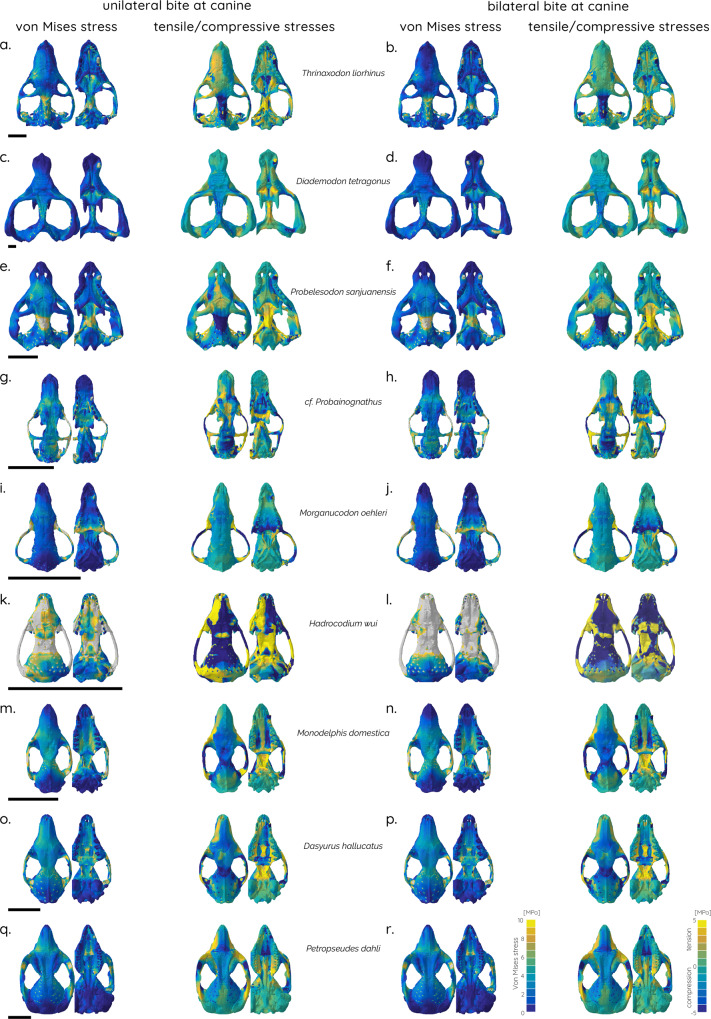
Fig. 2. Finite element analyses results for studied taxa.
Contour plots of von Mises stress (left) and principal tensile/compressive stresses (right) of skull models in dorsal and ventral. Unilateral bite at left canine tooth (a, c, e, g, i, k, mo, q) and bilateral bite at canine teeth (b, d, f, h, j, ln, p, r). Scale bar equals 10 mm.
Fig. 3
Fig. 3. Finite element analyses results for studied taxa.
Contour plots of von Mises stress (left) and tensile/compressive stresses (right) of skull models in dorsal and ventral. Unilateral bite at left posterior tooth (a, c, e, g, i, k, mo, q) and bilateral bite at posterior teeth (b, d, f, h, j, l, n, p, r). Scale bar equals 10 mm.
Fig. 4
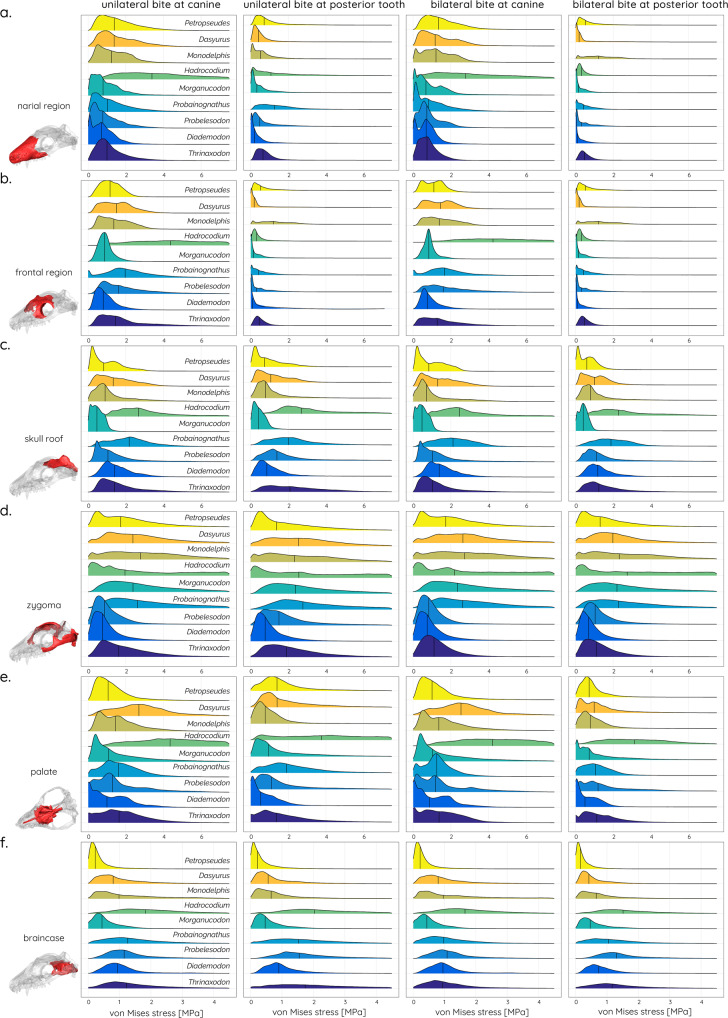
Fig. 4. Stress distribution across different cranial regions.
Ridgeline plots showing the distribution of von Mises stress for the a narial, b frontal, c skull roof, d zygoma, e palatal, and f braincase regions.
Fig. 5
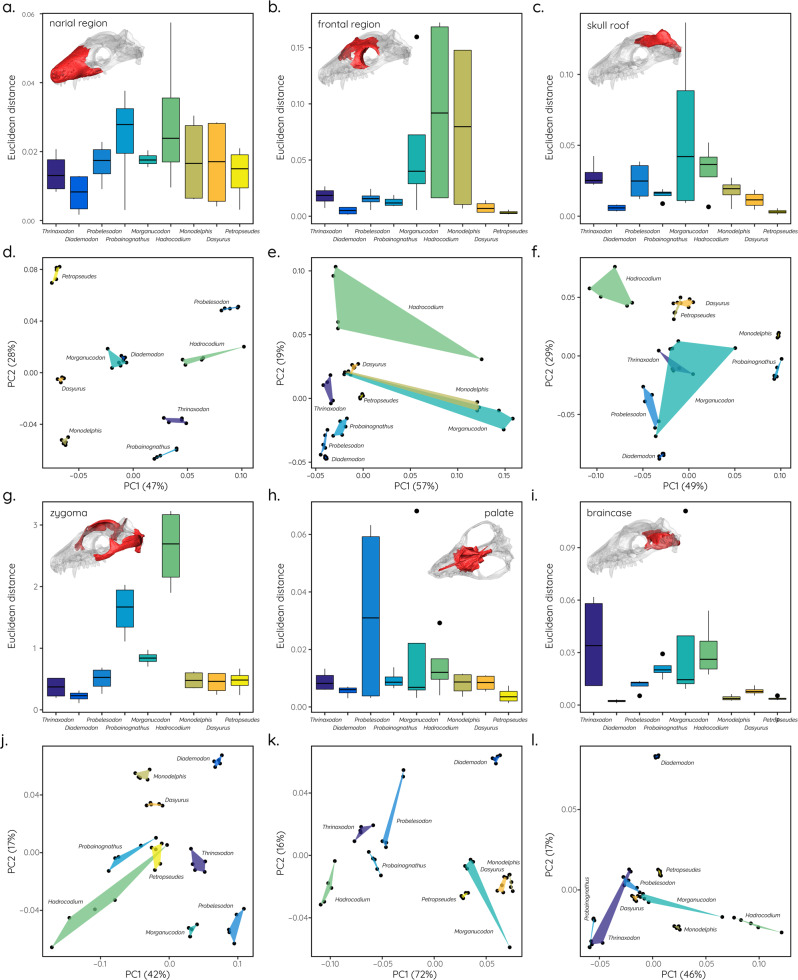
Fig. 5. Deformation in cranial models quantified using a landmark-based approach.
Boxplots showing deformation of individual cranial regions compared to undeformed models based on the Euclidean distances between PCs 1–3 (a, b, c, g, h, i) and corresponding PCA plots (d, e, f, j, k, l). Results combine all tested bite scenarios (unilateral and bilateral canine bite, unilateral and bilateral posterior bite, undeformed and deformed models, see Supplementary Table 2 for details).
Fig. 6
Fig. 6. Bite forces and mechanical advantage of studied taxa.
Absolute bite forces in newtons N (a) and mechanical advantage, bite force relative to input muscle force (b), obtained from the finite element analyses for all taxa and bite scenarios. Correlation between bite force and skull length (c) and between mechanical advantage and skull length (d) with convex hulls indicating dietary adaptations.
Fig. 7
Fig. 7. Artistic reconstruction of the environmental setting and lifestyle of early mammaliaforms.
Two individuals of Hadrocodium wui are shown hunting insect prey illustrating how the adoption of an insectivorous diet and miniaturisation likely played a pivotal role in the functional reorganisation of the cranial skeleton (Image credit: Stephan Lautenschlager).
Fig. 8
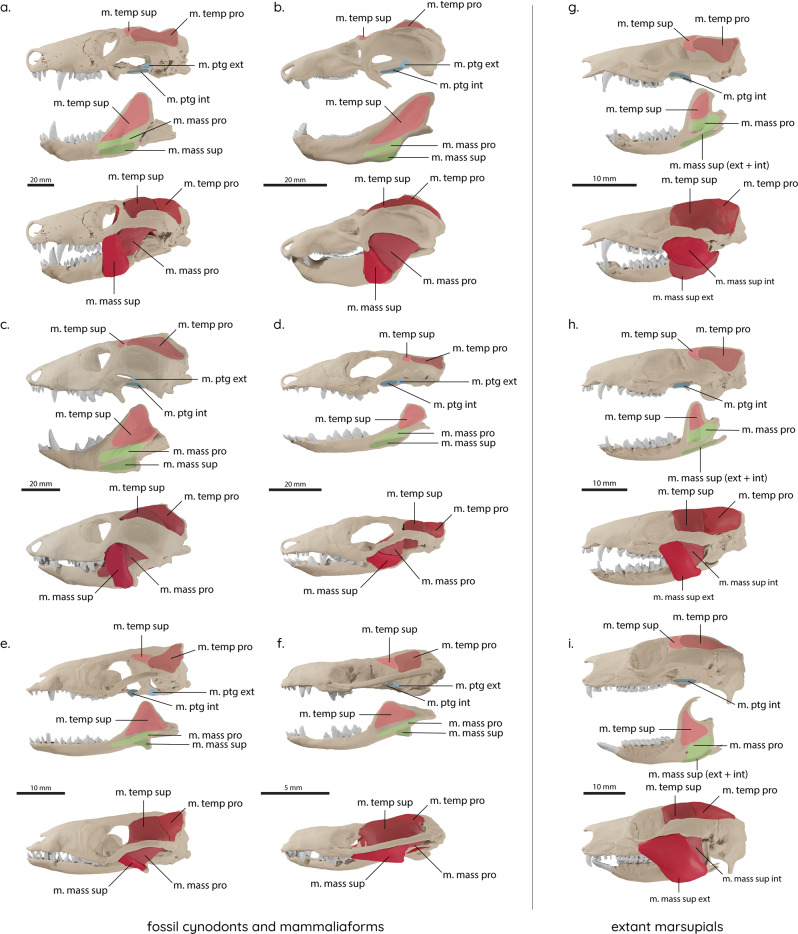
Fig. 8. Digitally restored cynodont and mammaliaform species.
Digitally restored skull and lower jaw model (top) and digitally reconstructed jaw muscles (bottom). a Thrinaxodon liorhinus, b Diademodon tetragonus, c Chiniquodon sanjuanensis, d cf. Probainognathus sp., e Morganucodon oehleri, f Hadrocodium wui, g Monodelphis domestica, h Dasyurus hallucatus, i Petropseudes dahli. m. mass. pro., m. masseter pars profunda; m. mass. sup., m. masseter pars superficialis; m. ptg. ext., m. pterygoideus externus; m. ptg. int., m. pterygoideus internus; m. temp. pro., m. temporalis pars profunda; m. temp. sup., m. temporalis pars superficialis.

References

    1. Gregory WK. ‘Williston’s law’ relating to the evolution of skull bones in the vertebrates. Am. J. Phys. Anthropol. 1935;20:123–152. doi: 10.1002/ajpa.1330200202. - DOI
    1. Hanken, J. & Hall, B. K. (eds) The Skull:Functional and Evolutionary Mechanisms, Vol. 3 (University of Chicago Press, 1993).
    1. Esteve-Altava B, Marugán-Lobón J, Botella H, Rasskin-Gutman D. Structural constraints in the evolution of the tetrapod skull complexity: Williston’s law revisited using network models. Evol. Biol. 2013;40:209–219. doi: 10.1007/s11692-012-9200-9. - DOI
    1. Esteve-Altava B, Marugán-Lobón J, Botella H, Rasskin-Gutman D. Random loss and selective fusion of bones originate morphological complexity trends in tetrapod skull networks. Evol. Biol. 2014;41:52–61. doi: 10.1007/s11692-013-9245-4. - DOI
    1. Herrel A, Schaerlaeken V, Meyers JJ, Metzger KA, Ross CF. The evolution of cranial design and performance in squamates: consequences of skull-bone reduction on feeding behavior. Integr. Comp. Biol. 2007;47:107–117. doi: 10.1093/icb/icm014. - DOI - PubMed

Publication types