


Influencing factors and predictive model of postoperative infection in patients with primary hepatic carcinoma
- PMID: 37046206
- PMCID: PMC10099730
- DOI: 10.1186/s12876-023-02713-7
Influencing factors and predictive model of postoperative infection in patients with primary hepatic carcinoma
Abstract
Background: The purpose of this study was to explore the risk factors for postoperative infection in patients with primary hepatic carcinoma (PHC), build a nomogram prediction model, and verify the model to provide a better reference for disease prevention, diagnosis and treatment.
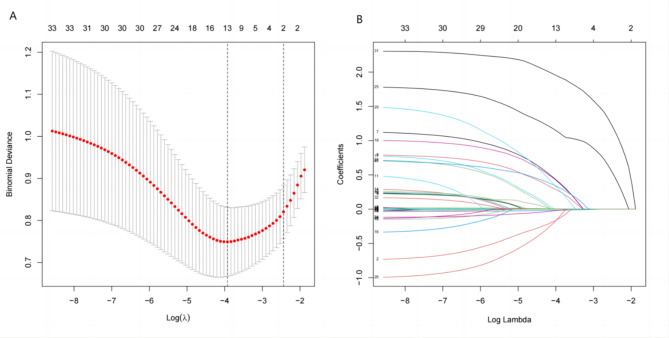
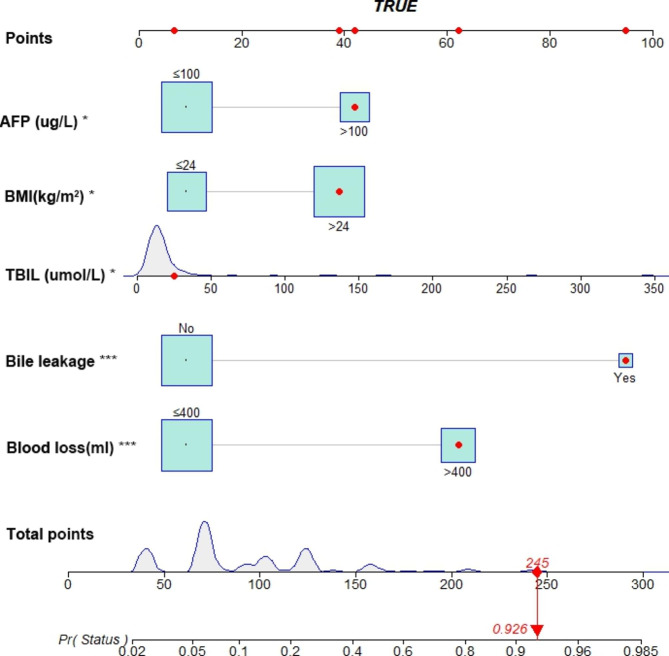
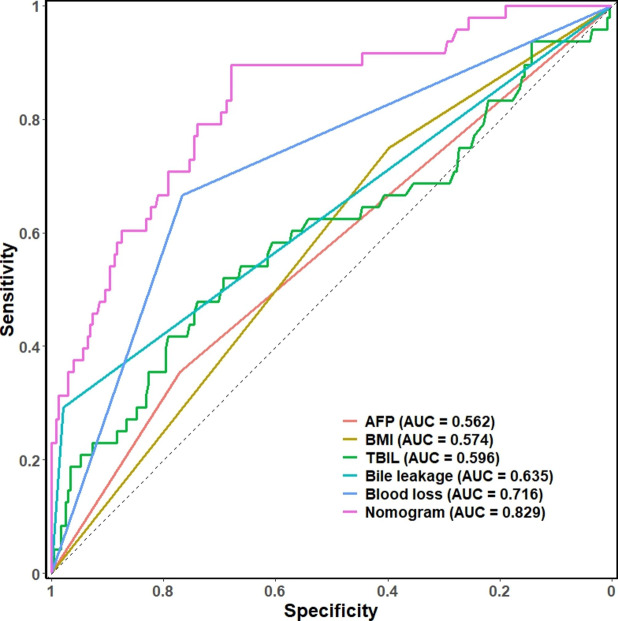
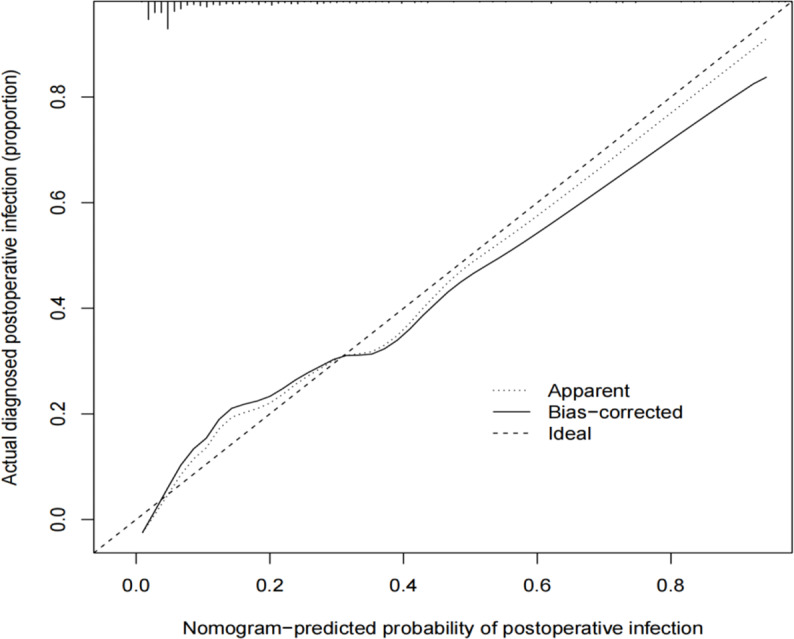
Methods: This single-center study included 555 patients who underwent hepatobiliary surgery in the Department of Hepatobiliary Surgery of Tianjin Third Central Hospital from January 2014 to December 2021, and 32 clinical indicators were selected for statistical analysis. In this study, Lasso logistic regression was used to determine the risk factors for infection after liver cancer resection, establish a predictive model, and construct a visual nomogram. The consistency index (C-index), calibration curve, and receiver operating characteristic (ROC) curve were used for internal validation, and decision curve analysis (DCA) was used to analyze the clinical applicability of the predictive model. The bootstrap method was used for intramodel validation, and the C-index was calculated to assess the model discrimination.
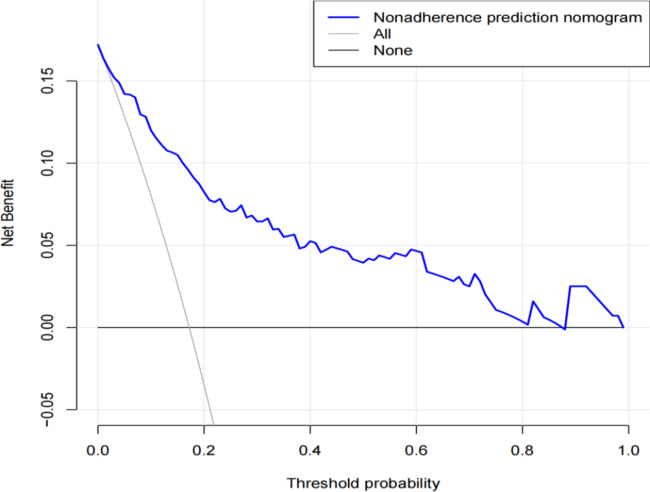
Results: Among the 555 patients, 279 patients met the inclusion criteria, of whom 48 had a postoperative infection, with an incidence rate of 17.2%. Body mass index (BMI) (P = 0.022), alpha-fetoprotein (P = 0.023), total bilirubin (P = 0.016), intraoperative blood loss (P < 0.001), and bile leakage (P < 0.001) were independent risk factors for infection after liver cancer surgery. The nomogram was constructed and verified to have good discriminative and predictive ability. DCA showed that the model had good clinical applicability. The C-index value verified internally by the bootstrap method results was 0.818.
Conclusion: Postoperative infection in patients undergoing hepatectomy may be related to risk factors such as BMI, preoperative AFP level, TBIL level, intraoperative blood loss and bile leakage. The prediction model of the postoperative infection nomogram established in this study can better predict and estimate the risk of postoperative infection in patients undergoing hepatectomy.
Keywords: Nomogram; Postoperative infection; Predictive model; Primary hepatic carcinoma; Risk factors.
© 2023. The Author(s).
Conflict of interest statement
The authors declare that they have no conflicts of interest.
Figures
References
-
- Zhao P, Jiang DM, Xian LF, Lin JS, Liu DH, Zhang LJ, Yu HP, Cao GW. Mortality analysis of primary liver cancer in the mainland of China from 2004 to 2018. Shanghai J Prev Med. 2021;33(10):881–6.
-
- General Office of National Health Commission Standard for diagnosis and treatment of primary liver cancer(2022 edition) J Clin Hepatol. 2022;38(2):288–303.
MeSH terms
Grants and funding
- KJ20134/Science and technology talent training project of Tianjin Health Commission
- TJWJ2021ZD003/The Key Research Project of Tianjin Health Commission
- TJYXZDXK-047A/Tianjin Key Medical Discipline (Specialty) Construction Project
- 21JCZDJC01050/Natural Science Foundation of Tianjin Science and Technology Bureau
LinkOut - more resources
Full Text Sources
Medical
Miscellaneous
