


P4-ATPase subunit Cdc50 plays a role in yeast budding and cell wall integrity in Candida glabrata
- PMID: 37046215
- PMCID: PMC10100066
- DOI: 10.1186/s12866-023-02810-3
P4-ATPase subunit Cdc50 plays a role in yeast budding and cell wall integrity in Candida glabrata
Abstract
Background: As highly-conserved types of lipid flippases among fungi, P4-ATPases play a significant role in various cellular processes. Cdc50 acts as the regulatory subunit of flippases, forming heterodimers with Drs2 to translocate aminophospholipids. Cdc50 homologs have been reported to be implicated in protein trafficking, drug susceptibility, and virulence in Saccharomyces cerevisiae, Candida albicans and Cryptococcus neoformans. It is likely that Cdc50 has an extensive influence on fungal cellular processes. The present study aimed to determine the function of Cdc50 in Candida glabrata by constructing a Δcdc50 null mutant and its complemented strain.
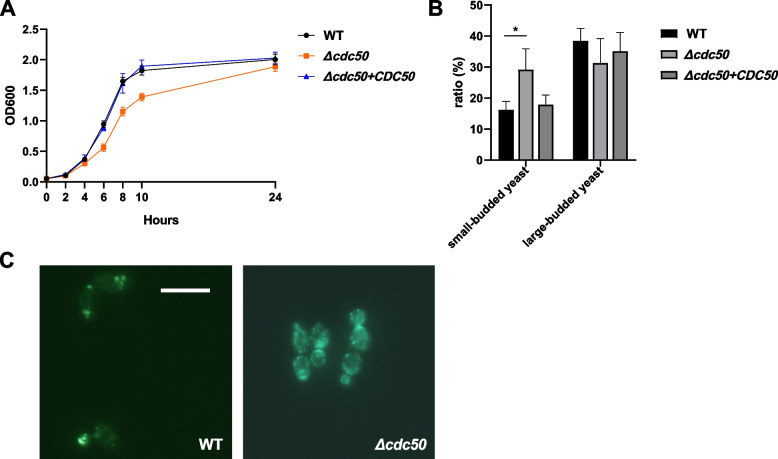
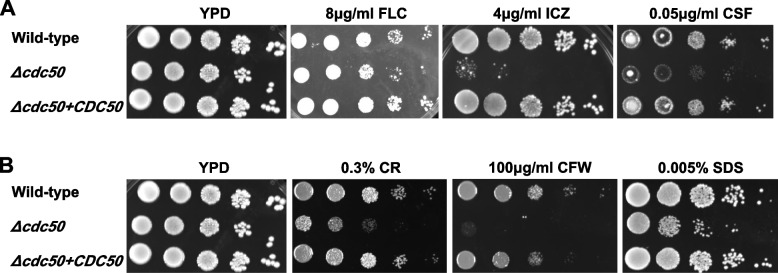
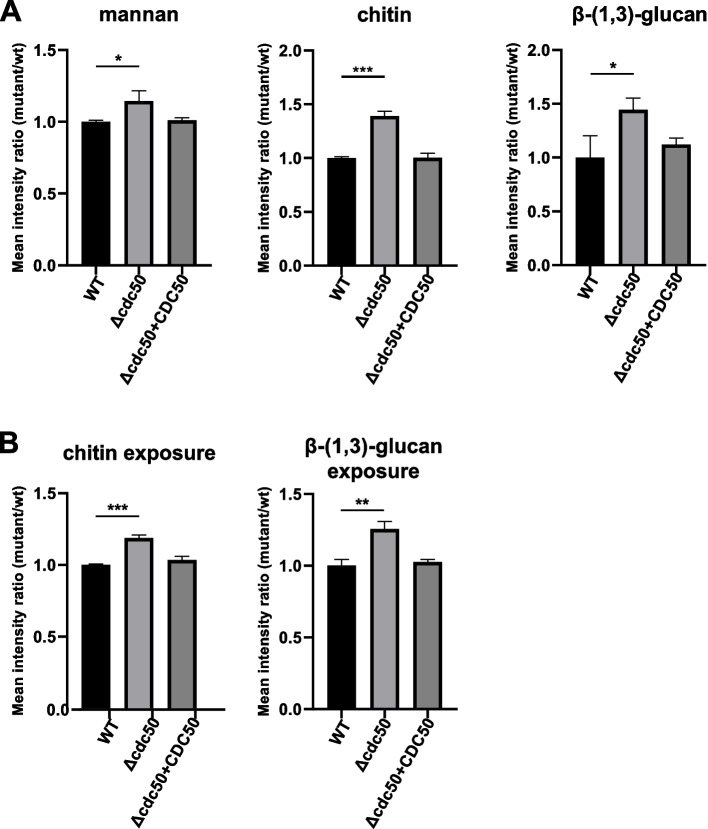
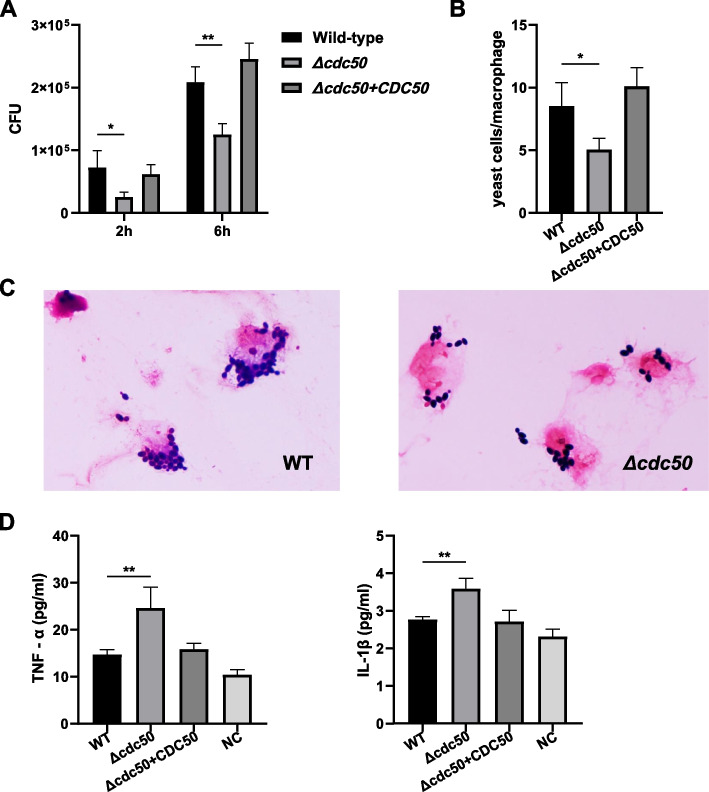
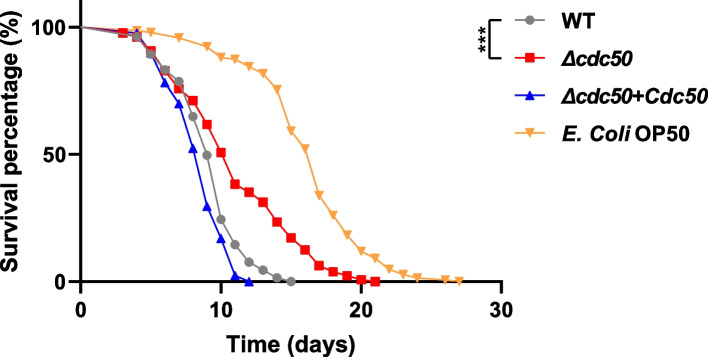
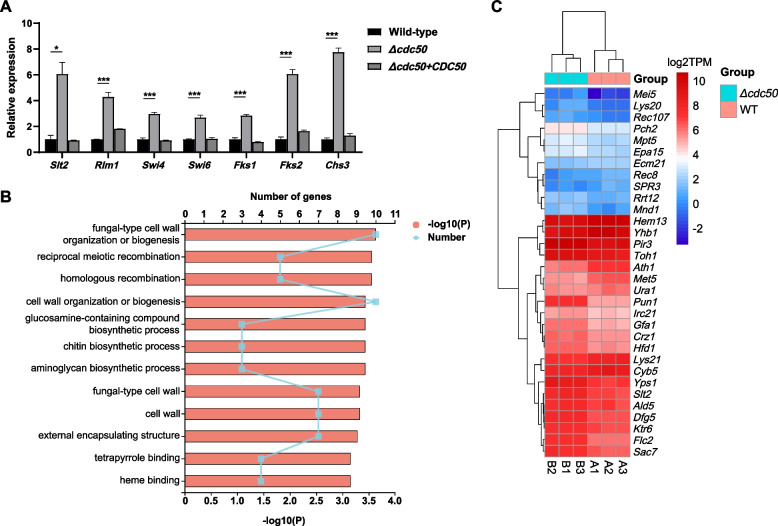
Results: In Candida glabrata, the loss of Cdc50 led to difficulty in yeast budding, probably caused by actin depolarization. The Δcdc50 mutant also showed hypersensitivity to azoles, caspofungin, and cell wall stressors. Further experiments indicated hyperactivation of the cell wall integrity pathway in the Δcdc50 mutant, which elevated the major cell wall contents. An increase in exposure of β-(1,3)-glucan and chitin on the cell surface was also observed through flow cytometry. Interestingly, we observed a decrease in the phagocytosis rate when the Δcdc50 mutant was co-incubated with THP-1 macrophages. The Δcdc50 mutant also exhibited weakened virulence in nematode survival tests.
Conclusion: The results suggested that the lipid flippase subunit Cdc50 is implicated in yeast budding and cell wall integrity in C. glabrata, and thus have a broad influence on drug susceptibility and virulence. This work highlights the importance of lipid flippase, and offers potential targets for new drug research.
Keywords: Candida glabrata; Cdc50; Cell wall integrity; Drug susceptibility; Lipid flippase; Virulence.
© 2023. The Author(s).
Conflict of interest statement
The authors declare that there are no competing interests.
Figures
References
-
- Andes DR, Safdar N, Baddley JW, Alexander B, Brumble L, Freifeld A, et al. The epidemiology and outcomes of invasive Candida infections among organ transplant recipients in the United States: results of the Transplant-Associated Infection Surveillance Network (TRANSNET) Transpl Infect Dis. 2016;18(6):921–931. doi: 10.1111/tid.12613. - DOI - PubMed
Publication types
MeSH terms
Substances
LinkOut - more resources
Full Text Sources
Molecular Biology Databases
Research Materials
