


Cardiovascular magnetic resonance-derived left atrioventricular coupling index and major adverse cardiac events in patients following acute myocardial infarction
- PMID: 37046343
- PMCID: PMC10099819
- DOI: 10.1186/s12968-023-00929-w
Cardiovascular magnetic resonance-derived left atrioventricular coupling index and major adverse cardiac events in patients following acute myocardial infarction
Abstract
Background: Recently, a novel left atrioventricular coupling index (LACI) has been introduced providing prognostic value to predict cardiovascular events beyond common risk factors in patients without cardiovascular disease. Since data on cardiovascular magnetic resonance (CMR)-derived LACI in patients following acute myocardial infarction (AMI) are scarce, we aimed to assess the diagnostic and prognostic implications of LACI in a large AMI patient cohort.
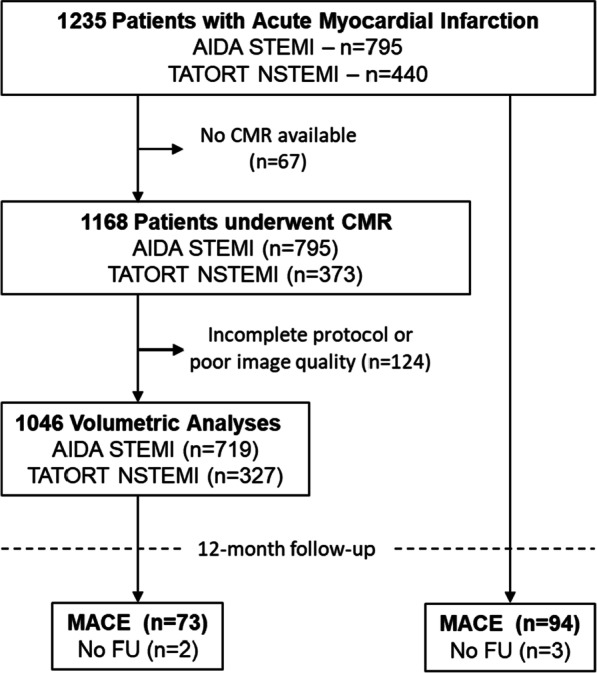
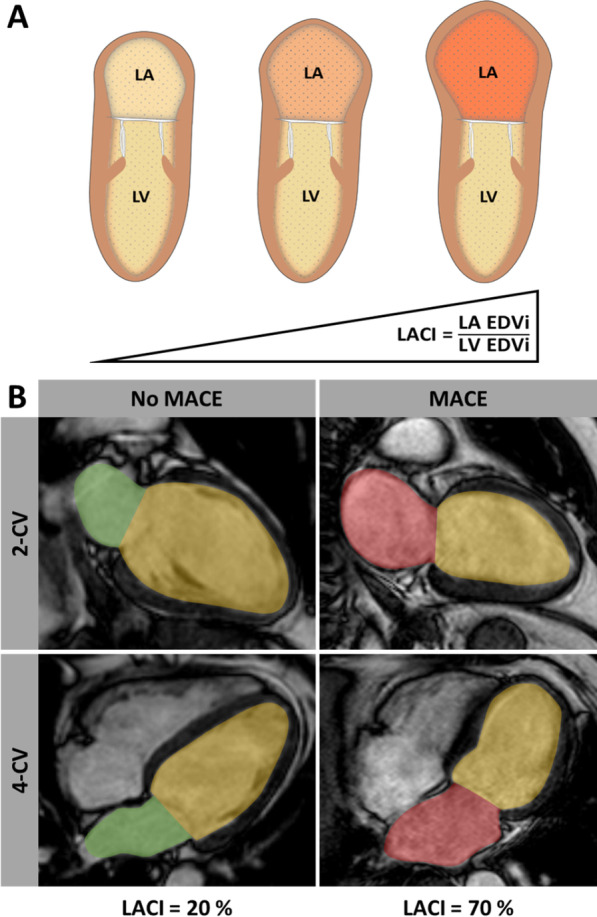
Methods: In total, 1046 patients following AMI were included. After primary percutaneous coronary intervention CMR imaging and subsequent functional analyses were performed. LACI was defined by the ratio of the left atrial end-diastolic volume divided by the left ventricular (LV) end-diastolic volume. Major adverse cardiac events (MACE) including death, reinfarction or heart failure within 12 months after the index event were defined as primary clinical endpoint.
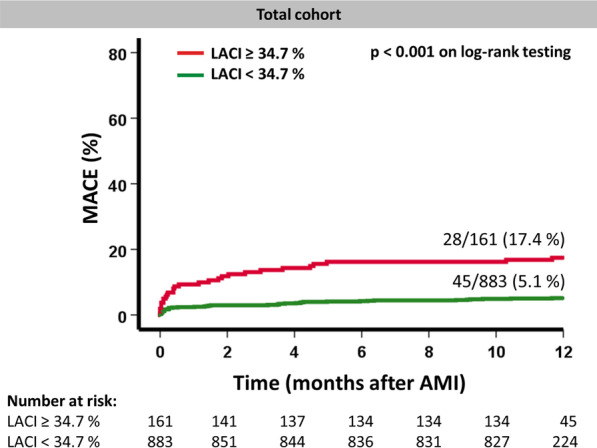
Results: LACI was significantly higher in patients with MACE compared to those without MACE (p < 0.001). Youden Index identified an optimal LACI cut-off at 34.7% to classify patients at high-risk (p < 0.001 on log-rank testing). Greater LACI was associated with MACE on univariate regression modeling (HR 8.1, 95% CI 3.4-14.9, p < 0.001) and after adjusting for baseline confounders and LV ejection fraction (LVEF) on multivariate regression analyses (HR 3.1 95% CI 1.0-9, p = 0.049). Furthermore, LACI assessment enabled further risk stratification in high-risk patients with impaired LV systolic function (LVEF ≤ 35%; p < 0.001 on log-rank testing).
Conclusion: Atrial-ventricular interaction using CMR-derived LACI is a superior measure of outcome beyond LVEF especially in high-risk patients following AMI. Trial registration ClinicalTrials.gov, NCT00712101 and NCT01612312.
Keywords: Acute myocardial infarction; Cardiovascular magnetic resonance imaging; Left atrioventricular coupling index; Optimized risk stratification.
© 2023. The Author(s).
Conflict of interest statement
None disclosed.
Figures

References
-
- Schuster A, Backhaus SJ, Stiermaier T, et al. Fast manual long-axis strain assessment provides optimized cardiovascular event prediction following myocardial infarction. Eur Heart J Cardiovasc Imaging. 2019;8:78. - PubMed
Publication types
MeSH terms
Associated data
LinkOut - more resources
Full Text Sources
Medical
Miscellaneous
