


The Relationship between Working Night Shifts and Depression among Nurses: A Systematic Review and Meta-Analysis
- PMID: 37046864
- PMCID: PMC10094007
- DOI: 10.3390/healthcare11070937
The Relationship between Working Night Shifts and Depression among Nurses: A Systematic Review and Meta-Analysis
Abstract
Background: For many years, occupational physicians have debated whether there is a link between working the night shift and depression and other co-occurring mental health issues, with an emphasis on work-related, biological, individual, and environmental factors. We performed this systematic review and meta-analysis to estimate the overall association between sleep deprivation and depression among nurses working night shifts.
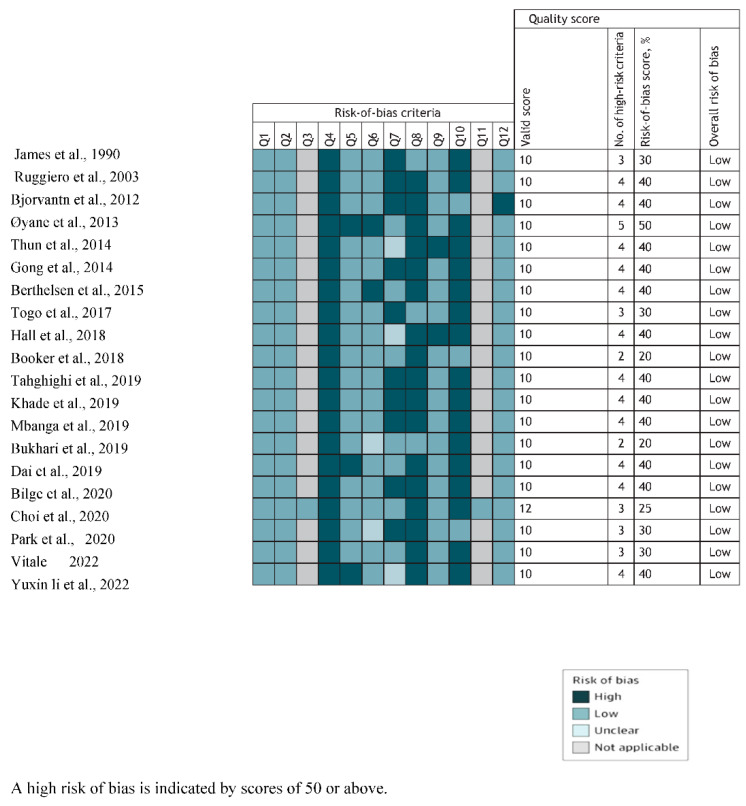
Methods: A systematic search was carried out across the electronic databases PubMed, Scopus, and Web of Science from inception to 30 September 2022, for studies that reported a relationship between estimated night shift work and depression in nurses. The outcomes were measured using the odds ratio (OR) and matching 95% confidence interval (CI). The I2 statistic was used to assess heterogeneity. The Grading of Recommendations Assessment, Development and Evaluation technique was used to evaluate the quality of the evidence, and the Newcastle-Ottawa Scale was utilized to assess the methodological quality of each of the included studies. We determined the overall relationship between working nights and the onset of depression.
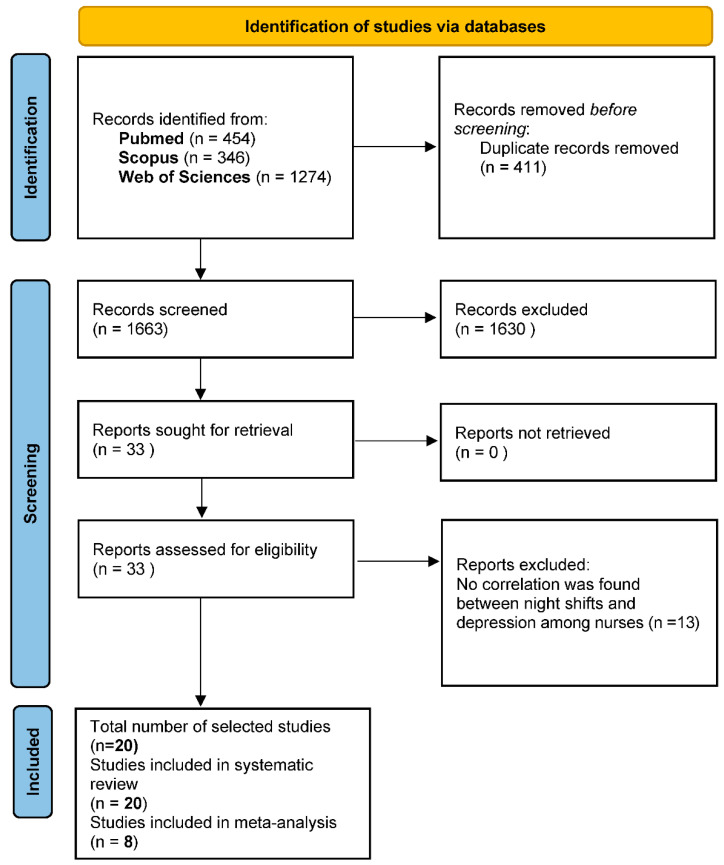
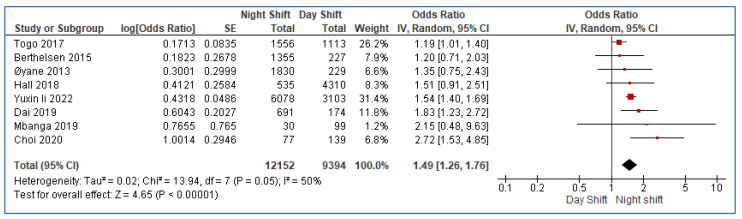
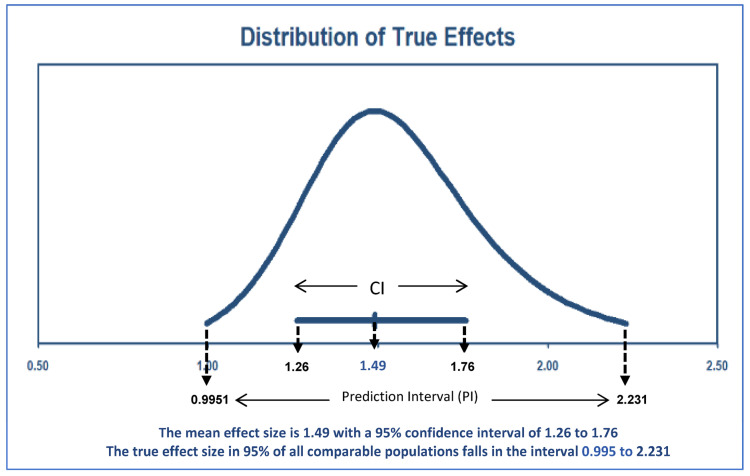
Results: A total of 20 studies were included in the systematic review. Furthermore, 8 studies were included in the meta-analysis due to their common use of the OR as an effect measure. The 8 studies gave an overall estimate indicating a statistically significant association between night shift work and depression among nurses (OR = 1.49 95% CI: 1.26, 1.76). The prediction interval for the overall estimate was (0.995, 2.231). This implies that the true OR in a future study would most likely fall within this range, with a 95% certainty.
Conclusions: The outcome of this systematic review and meta-analysis showed a significant association between night shift work, the circadian and sleep disruption it causes, and the risk of depression in nurses. This demonstrates that nurses who work night shifts are at risk of developing depression.
Keywords: circadian rhythm; depression; mental health; nurses; shift work; sleep.
Conflict of interest statement
The authors declare no conflict of interest.
Figures
References
-
- Smith M.T., McCrae C.S., Cheung J., Martin J.L., Harrod C.G., Heald J.L., Carden K.A. Use of Actigraphy for the Evaluation of Sleep Disorders and Circadian Rhythm Sleep-Wake Disorders: An American Academy of Sleep Medicine Systematic Review, Meta-Analysis, and GRADE Assessment. J. Clin. Sleep Med. 2018;14:1209–1230. doi: 10.5664/jcsm.7228. - DOI - PMC - PubMed
Publication types
LinkOut - more resources
Full Text Sources
