


Transcriptome Dynamics Underlying Planticine®-Induced Defense Responses of Tomato (Solanum lycopersicum L.) to Biotic Stresses
- PMID: 37047467
- PMCID: PMC10095179
- DOI: 10.3390/ijms24076494
Transcriptome Dynamics Underlying Planticine®-Induced Defense Responses of Tomato (Solanum lycopersicum L.) to Biotic Stresses
Abstract
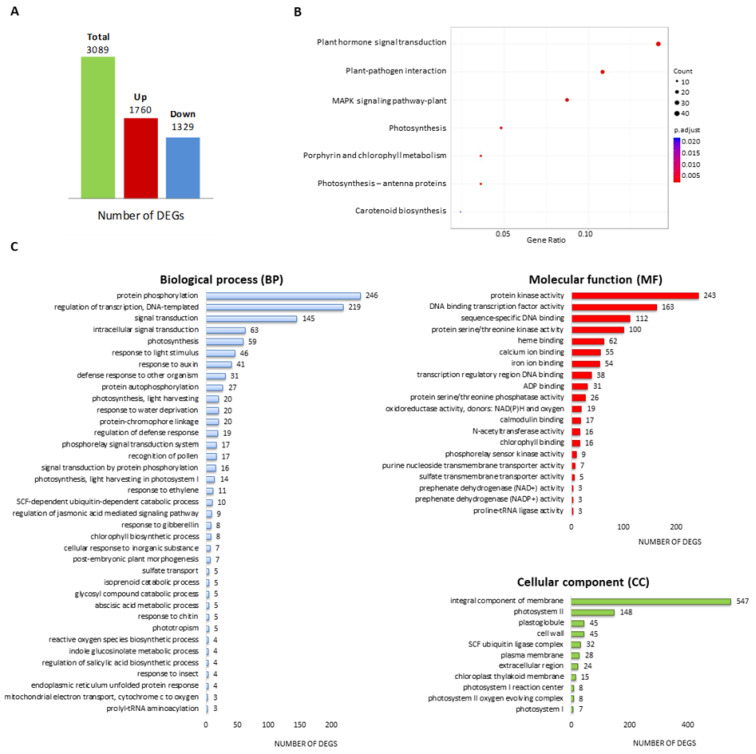
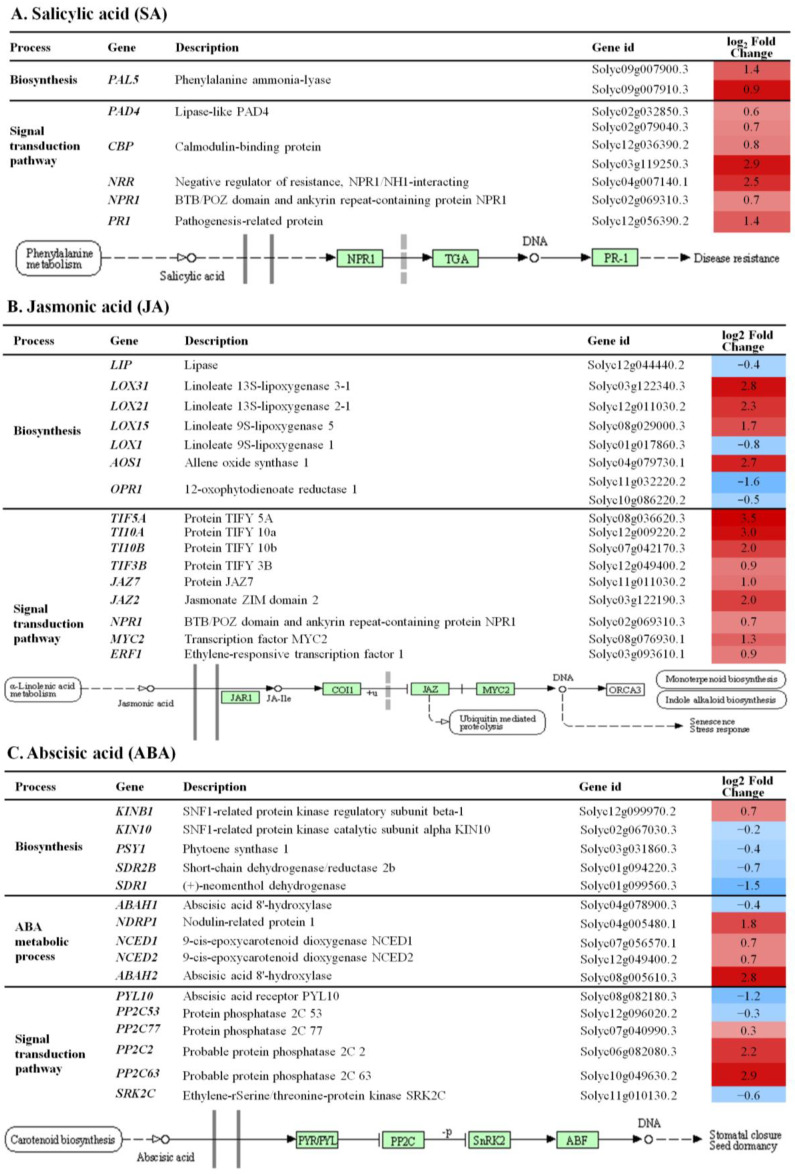
The induction of natural defense mechanisms in plants is considered to be one of the most important strategies used in integrated pest management (IPM). Plant immune inducers could reduce the use of chemicals for plant protection and their harmful impacts on the environment. Planticine® is a natural plant defense biostimulant based on oligomers of α(1→4)-linked D-galacturonic acids, which are biodegradable and nontoxic. The aim of this study was to define the molecular basis of Planticine's biological activity and the efficacy of its use as a natural plant resistance inducer in greenhouse conditions. Three independent experiments with foliar application of Planticine® were carried out. The first experiment in a climatic chamber (control environment, no pest pressure) subjected the leaves to RNA-seq analysis, and the second and third experiments in greenhouse conditions focused on efficacy after a pest infestation. The result was the RNA sequencing of six transcriptome libraries of tomatoes treated with Planticine® and untreated plants; a total of 3089 genes were found to be differentially expressed genes (DEGs); among them, 1760 and 1329 were up-regulated and down-regulated, respectively. DEG analysis indicated its involvement in such metabolic pathways and processes as plant-pathogen interaction, plant hormone signal transduction, MAPK signaling pathway, photosynthesis, and regulation of transcription. We detected up-regulated gene-encoded elicitor and effector recognition receptors (ELRR and ERR), mitogen-activated protein kinase (MAPKs) genes, and transcription factors (TFs), i.e., WRKY, ERF, MYB, NAC, bZIP, pathogenesis-related proteins (PRPs), and resistance-related metabolite (RRMs) genes. In the greenhouse trials, foliar application of Planticine® proved to be effective in reducing the infestation of tomato leaves by the biotrophic pathogen powdery mildew and in reducing feeding by thrips, which are insect herbivores. Prophylactic and intervention use of Planticine® at low infestation levels allows the activation of plant defense mechanisms.
Keywords: RNA-seq; elicitor; oligogalacturonides; phytohormones; plant-pathogen interaction; transcriptome.
Conflict of interest statement
Hubert Kardasz (H.K.)—CEO of INTERMAG Sp. z o.o., Krzysztof Ambroziak (K.A.)—Director of R&D INTERMAG Sp. z o.o., Roksana Rakoczy-Lelek (R.R.-L.)., Marlena Grzanka (M.G.) and Klaudia Gąska (K.G.) are employees of INTERMAG Sp. z o.o., Poland, a company active in the sector of fertilizers and biostimulants. The other authors declare no conflict of interest.
Figures
References
-
- Van Aubel G., Buonatesta R., Van Cutsem P. COS-OGA: A novel oligosaccharidic elicitor that protects grapes and cucumbers against powdery mildew. Crop Prot. 2014;65:129–137. doi: 10.1016/j.cropro.2014.07.015. - DOI
-
- Younus Wani M., Mehraj S., Rather R.A., Rani S., Hajam O.A., Ganie N.A., Mir M.R., Baqual M.F., Kamili A.S. Systemic acquired resistance (SAR): A novel strategy for plant protection with reference to mulberry. Int. J. Chem. Stud. 2018;6:1184–1192.
MeSH terms
Substances
LinkOut - more resources
Full Text Sources
