


SMTP-44D Inhibits Atherosclerotic Plaque Formation in Apolipoprotein-E Null Mice Partly by Suppressing the AGEs-RAGE Axis
- PMID: 37047475
- PMCID: PMC10094964
- DOI: 10.3390/ijms24076505
SMTP-44D Inhibits Atherosclerotic Plaque Formation in Apolipoprotein-E Null Mice Partly by Suppressing the AGEs-RAGE Axis
Abstract
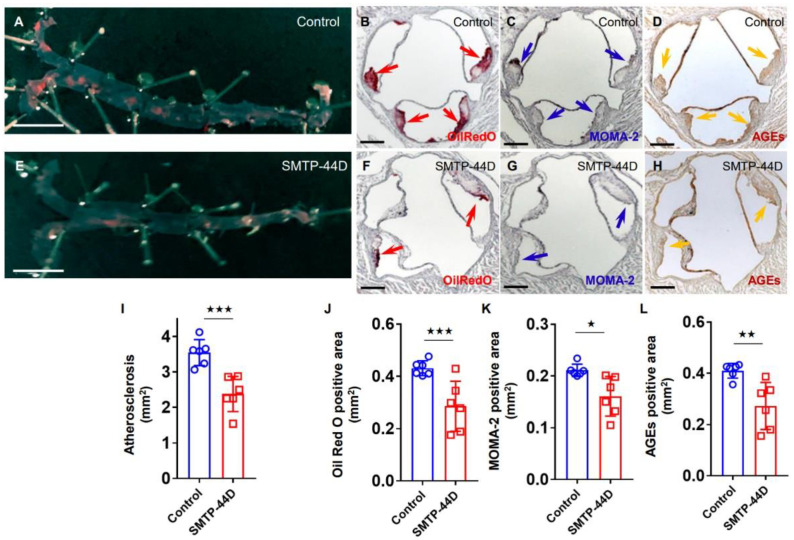
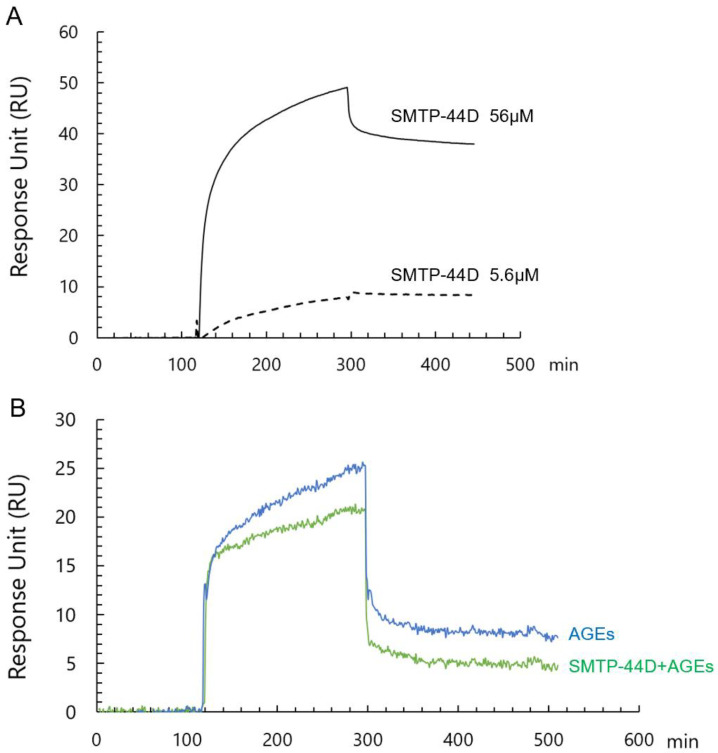
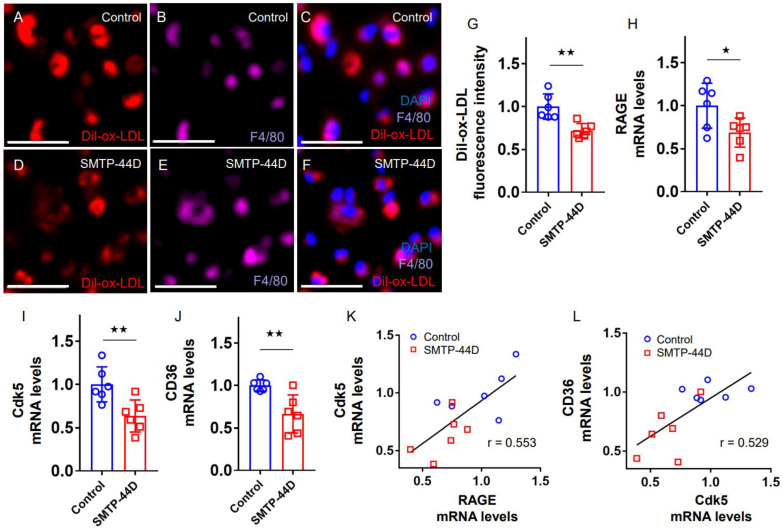
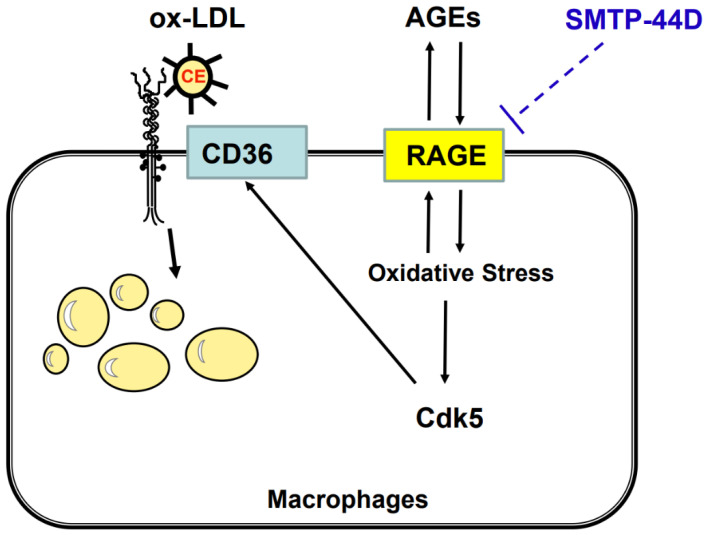
SMTP-44D has been reported to have anti-oxidative and anti-inflammatory reactions, including reduced expression of receptor for advanced glycation end products (RAGE) in experimental diabetic neuropathy. Although activation of RAGE with its ligands, and advanced glycation end products (AGEs), play a crucial role in atherosclerotic cardiovascular disease, a leading cause of death in diabetic patients, it remains unclear whether SMTP-44D could inhibit experimental atherosclerosis by suppressing the AGEs-RAGE axis. In this study, we investigated the effects of SMTP-44D on atherosclerotic plaque formation and expression of AGEs in apolipoprotein-E null (Apoe-/-) mice. We further studied here whether and how SMTP-44D inhibited foam cell formation of macrophages isolated from Apoe-/- mice ex vivo. Although administration of SMTP-44D to Apoe-/- mice did not affect clinical or biochemical parameters, it significantly decreased the surface area of atherosclerotic lesions and reduced the atheromatous plaque size, macrophage infiltration, and AGEs accumulation in the aortic roots. SMTP-44D bound to immobilized RAGE and subsequently attenuated the interaction of AGEs with RAGE in vitro. Furthermore, foam cell formation evaluated by Dil-oxidized low-density lipoprotein (ox-LDL) uptake, and gene expression of RAGE, cyclin-dependent kinase 5 (Cdk5) and CD36 in macrophages isolated from SMTP-44D-treated Apoe-/- mice were significantly decreased compared with those from saline-treated mice. Gene expression levels of RAGE and Cdk5 were highly correlated with each other, the latter of which was also positively associated with that of CD36. The present study suggests that SMTP-44D may inhibit atherosclerotic plaque formation in Apoe-/- mice partly by blocking the AGEs-RAGE-induced ox-LDL uptake into macrophages via the suppression of Cdk5-CD36 pathway.
Keywords: AGEs; CD36; Cdk5; RAGE; SMTP-44D; atherosclerosis; macrophages.
Conflict of interest statement
K.H. is director of the board of TMS Co., Ltd., TMS Co., Ltd. shareholder, and received grants from TMS Co., Ltd. and EPS Corporation, as well as license fees for SMTP-related patents. Y.M. holds an endowed chair funded by Ono Pharmaceutical Co., Ltd., and Nippon Boehringer Ingelheim Co., Ltd.
Figures
References
-
- Razaei M., Rabizadeh S., Mirahmad M., Hajmiri M.S., Nakhjavani M., Hemmatabadi M., Shirzad N. The association between advanced glycation end products (AGEs) and ABC (hemoglobin A1C, blood pressure, and low-density lipoprotein cholesterol) control parameters among patients with type 2 diabetes mellitus. Diabetol. Metab. Syndr. 2022;14:122. doi: 10.1186/s13098-022-00895-w. - DOI - PMC - PubMed
-
- Kilhovd B.K., Juutilainen A., Lehto S., Rönnemaa T., Torjesen P.A., Hanssen K.F., Laakso M. Increased serum levels of advanced glycation endproducts predict total, cardiovascular and coronary mortality in women with type 2 diabetes: A population-based 18 year follow-up study. Diabetologia. 2007;50:1409–1417. doi: 10.1007/s00125-007-0687-z. - DOI - PubMed
MeSH terms
Substances
Grants and funding
LinkOut - more resources
Full Text Sources
Medical
Miscellaneous
