


Investigating the Relationship between Obstructive Sleep Apnoea, Inflammation and Cardio-Metabolic Diseases
- PMID: 37047780
- PMCID: PMC10095553
- DOI: 10.3390/ijms24076807
Investigating the Relationship between Obstructive Sleep Apnoea, Inflammation and Cardio-Metabolic Diseases
Abstract
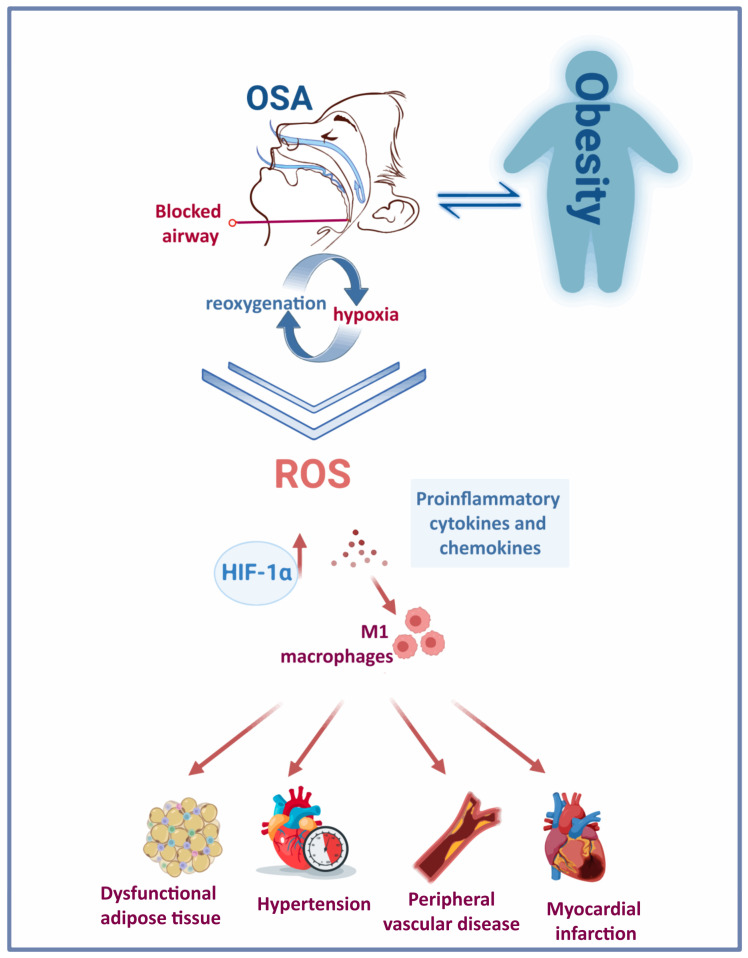
Obstructive sleep apnoea (OSA) is a prevalent underdiagnosed disorder whose incidence increases with age and weight. Uniquely characterised by frequent breathing interruptions during sleep-known as intermittent hypoxia (IH)-OSA disrupts the circadian rhythm. Patients with OSA have repeated episodes of hypoxia and reoxygenation, leading to systemic consequences. OSA consequences range from apparent symptoms like excessive daytime sleepiness, neurocognitive deterioration and decreased quality of life to pathological complications characterised by elevated biomarkers linked to endocrine-metabolic and cardiovascular changes. OSA is a well-recognized risk factor for cardiovascular and cerebrovascular diseases. Furthermore, OSA is linked to other conditions that worsen cardiovascular outcomes, such as obesity. The relationship between OSA and obesity is complex and reciprocal, involving interaction between biological and lifestyle factors. The pathogenesis of both OSA and obesity involve oxidative stress, inflammation and metabolic dysregulation. The current medical practice uses continuous positive airway pressure (CPAP) as the gold standard tool to manage OSA. It has been shown to improve symptoms and cardiac function, reduce cardiovascular risk and normalise biomarkers. Nonetheless, a full understanding of the factors involved in the deleterious effects of OSA and the best methods to eliminate their occurrence are still poorly understood. In this review, we present the factors and evidence linking OSA to increased risk of cardiovascular conditions.
Keywords: CPAP; cardiovascular disease; hypoxia-inducible factor-1; inflammation; obstructive sleep apnoea; reactive oxygen species.
Conflict of interest statement
The authors declare no conflict of interest.
Figures
References
-
- Andayeshgar B., Janatolmakan M., Soroush A., Azizi S.M., Khatony A. The prevalence of obstructive sleep apnea in patients with type 2 diabetes: A systematic review and meta-analysis. Sleep Sci. Pract. 2022;6:6. doi: 10.1186/s41606-022-00074-w. - DOI
-
- Benjafield A.V., Ayas N.T., Eastwood P.R., Heinzer R., Ip M.S.M., Morrell M.J., Nunez C.M., Patel S.R., Penzel T., Pépin J.L., et al. Estimation of the global prevalence and burden of obstructive sleep apnoea: A literature-based analysis. Lancet Respir. Med. 2019;7:687–698. doi: 10.1016/S2213-2600(19)30198-5. - DOI - PMC - PubMed
-
- Ouayoun M.C., Chabolle F., De Vito A., Heiser C., Paramasivan V.K., Rabelo F.A.W., Rotenberg B., Suurna M.V. International consensus (ICON) on the ENT role in diagnosis of obstructive sleep apnea syndrome. Eur. Ann. Otorhinolaryngol. Head Neck Dis. 2018;135:S3–S6. doi: 10.1016/j.anorl.2017.12.012. - DOI - PubMed
Publication types
MeSH terms
LinkOut - more resources
Full Text Sources
Medical
