


Calcined Clays from Nigeria-Properties and Performance of Supplementary Cementitious Materials Suitable for Producing Level 1 Concrete
- PMID: 37048982
- PMCID: PMC10096092
- DOI: 10.3390/ma16072684
Calcined Clays from Nigeria-Properties and Performance of Supplementary Cementitious Materials Suitable for Producing Level 1 Concrete
Abstract
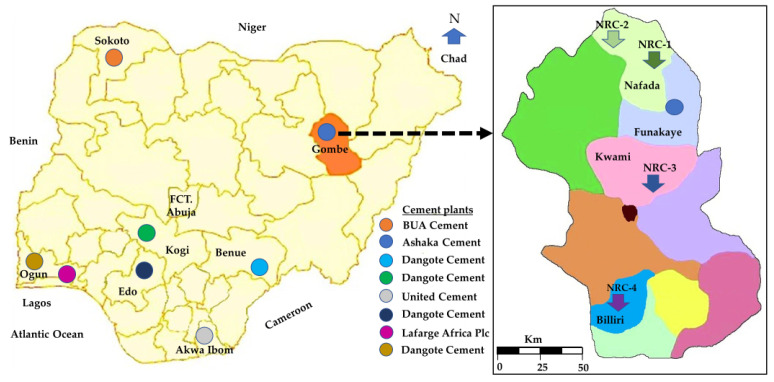
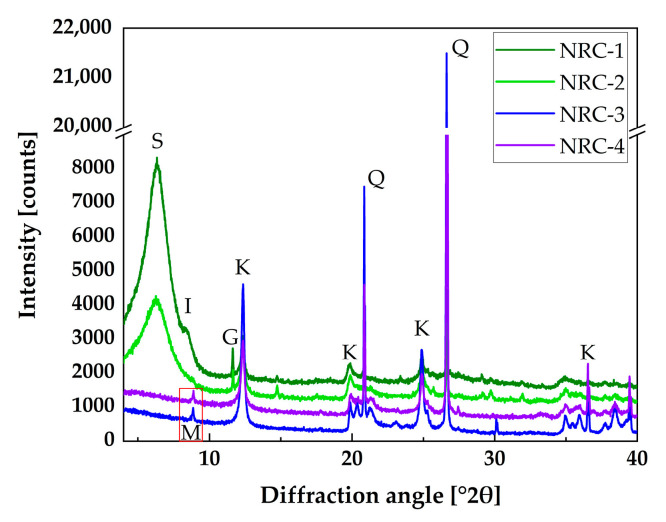
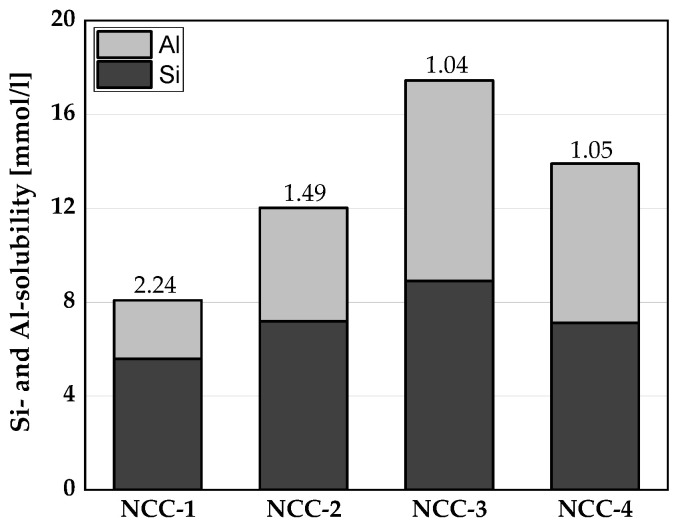
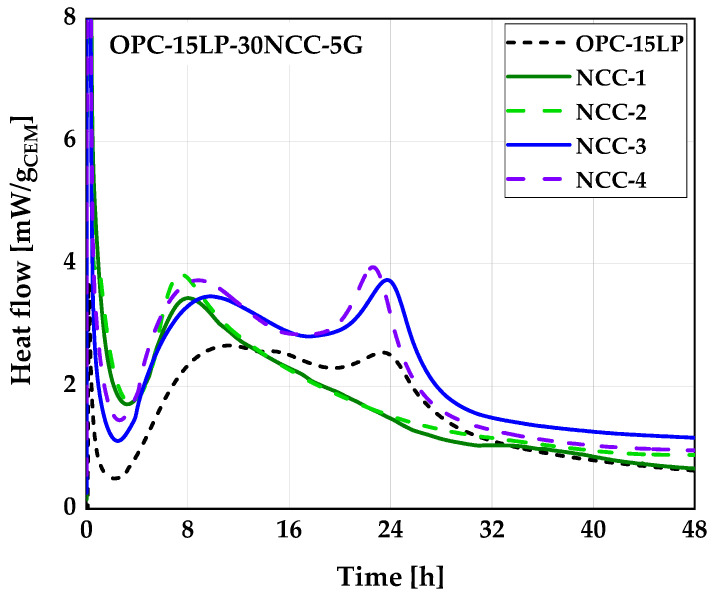
In this work, four naturally occurring (two kaolinite-rich and two smectite-rich) clay samples were collected from different areas around the Ashaka cement production plant, located in Gombe State, Nigeria and calcined in a laboratory. The mineralogical characterization of the clays was carried out by XRD. The hydration kinetics of the calcined clay-cement systems were monitored by isothermal calorimetry. Workability was determined using the flow table method. The reactivity of the calcined clays was determined from the solubility of Si and Al ions and the strength activity index. All calcined clays studied met the requirements of ASTM C618 for the use of natural pozzolans as a partial replacement for hydraulic cement. The metasmectite clays yielded a higher specific surface area, increased water demand, and less reactive Si and Al ions compared to the metakaolin clays. The two calcined clay groups require the addition of superplasticizer to achieve a workability class similar to the Portland cement mortar system. They can be used to replace Portland cement at replacement levels of up to 45%, in combination with limestone powder to form an LC3 cement, thereby achieving at least a "Level 1" reduction in greenhouse gas emissions.
Keywords: calcined clay; clay mineralogy; hydration mechanism; ion solubility; metakaolin; metasmectite; strength activity index; workability.
Conflict of interest statement
The authors declare no conflict of interest.
Figures
References
-
- Schmidt W., Commeh M., Olonade K., Schiewer G.L., Dodoo-Arhin D., Dauda R., Fataei S., Tawiah A.T., Mohamed F., Thiedeitz M., et al. Sustainable circular value chains: From rural waste to feasible urban construction materials solutions. Dev. Built Environ. 2021;6:100047. doi: 10.1016/j.dibe.2021.100047. - DOI
-
- Scrivener K.L., John V.M., Gartner E.M. Eco-efficient cements: Potential economically viable solutions for a low-CO2 cement-based materials industry. Cem. Concr. Res. 2018;114:2–26. doi: 10.1016/j.cemconres.2018.03.015. - DOI
-
- Schmidt W., Otieno M., Olonade K., Radebe N., Van-Damme H., Tunji-Olayeni P., Kenai S., Tawiah A.T., Manful K., Akinwale A., et al. Innovation potentials for construction materials with specific focus on the challenges in Africa. RILEM Tech. Lett. 2020;5:63–74. doi: 10.21809/rilemtechlett.2020.112. - DOI
-
- Yetano Roche M. Built for net-zero: Analysis of long-term greenhouse gas emission pathways for the Nigerian cement sector. J. Clean. Prod. 2023;383:135446. doi: 10.1016/j.jclepro.2022.135446. - DOI
-
- Mullholland A., Achkerman C., Astle P., Drewnlok M., Dunster A., Hibbert A., Imman R., Kershaw R., Martin B., McCague C., et al. Low Carbon Concrete Routemap. Institution of Civil Engineers; London, UK: 2022. p. 80.
Grants and funding
LinkOut - more resources
Full Text Sources
Miscellaneous
