


A Meta-Analysis of the Prevalence of Wheat Allergy Worldwide
- PMID: 37049405
- PMCID: PMC10097276
- DOI: 10.3390/nu15071564
A Meta-Analysis of the Prevalence of Wheat Allergy Worldwide
Abstract
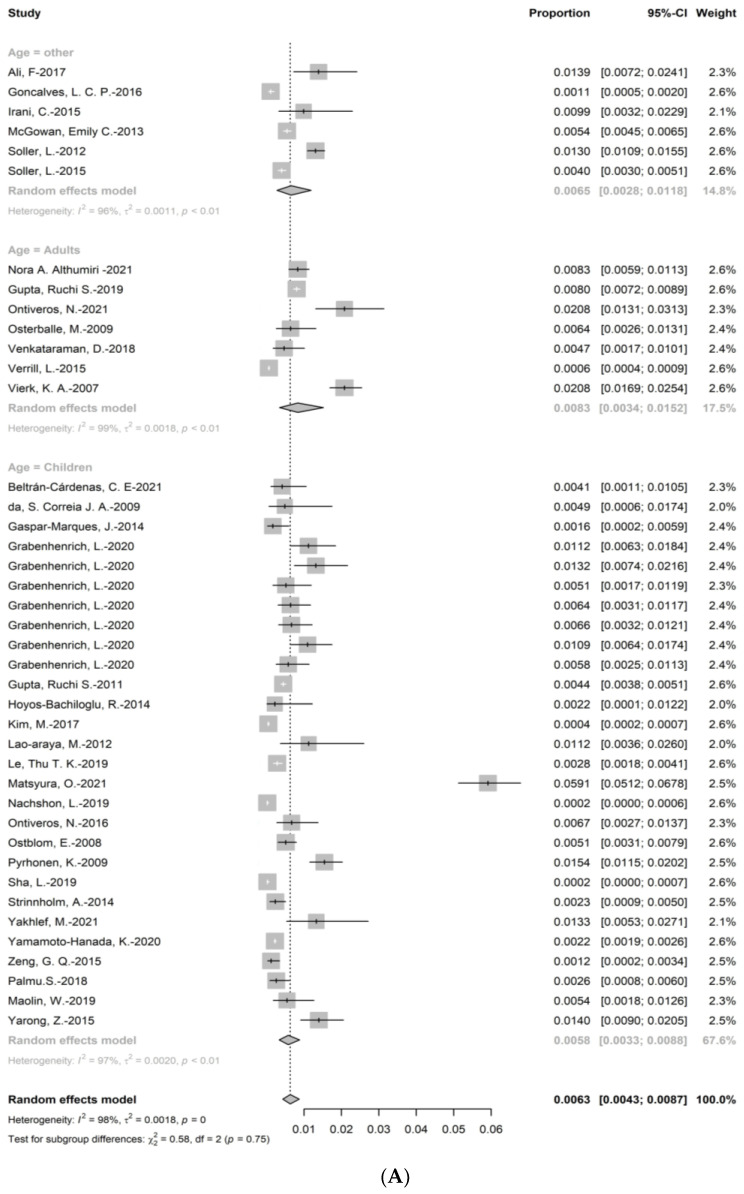
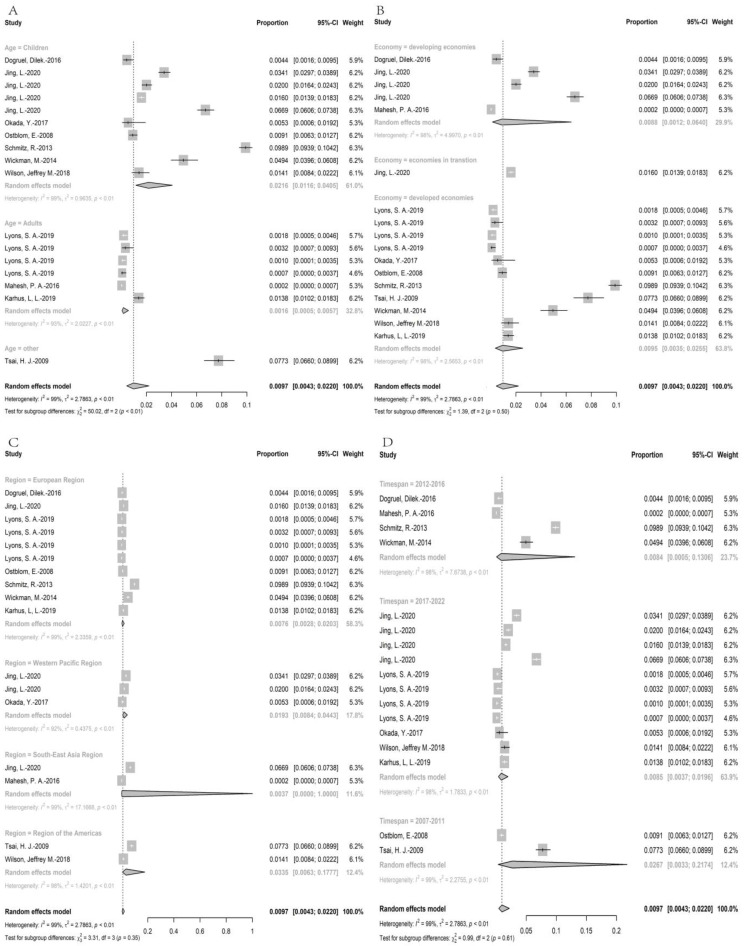
Wheat allergy is a primary disease of food allergy, and its global prevalence is unclear. This study aimed to characterize the latest worldwide prevalence of wheat allergy based on five different diagnostic methods. Study searches were conducted in Web of Science, PubMed, Ovid LWW, and Cochrane database, with a time limit of 1 January 2007 to 1 September 2022. The review and screening of the articles was undertaken by two independent reviewers. The statistical analysis was conducted by R. A total of 56 articles were finally included. The prevalence of wheat allergy was 0.63% (95% CI: 0.43-0.87%) for self-reported, 0.70% (95% CI: 0.18-1.22%) for self-reported physician-diagnosed, 0.22% (95%CI: 0.07-0.65%) for skin prick test positive, 0.97% (95% CI: 0.43-2.20%) for specific immunoglobulin E positive, and 0.04% (95% CI: 0-0.16%) for food challenge. However, food challenge can be largely subjective, and the results were only based two countries, so the prevalence of wheat allergy confirmed by food challenge may be not entirely trustworthy. In conclusion, investigating the prevalence of wheat allergy in the real world as accurately as possible will contribute to the prevention, management, and risk assessment of wheat allergy.
Keywords: meta-analysis; prevalence; wheat allergy; worldwide.
Conflict of interest statement
The authors declare that the research was conducted in the absence of any commercial or financial relationships that could be construed as potential conflict of interest.
Figures




References
-
- Piboonpocanun S., Thongngarm T., Wongsa C., Pacharn P., Reamtong O., Sompornrattanaphan M. Omega-5 and Gamma Gliadin are the Major Allergens in Adult-Onset IgE-Mediated Wheat Allergy: Results from Thai Cohort with Oral Food Challenge. J. Asthma Allergy. 2021;14:907–917. doi: 10.2147/JAA.S315202. - DOI - PMC - PubMed
Publication types
MeSH terms
Substances
Grants and funding
LinkOut - more resources
Full Text Sources
Medical
