


How to maximize the therapeutic effect of exosomes on skin wounds in diabetes mellitus: Review and discussion
- PMID: 37051206
- PMCID: PMC10083381
- DOI: 10.3389/fendo.2023.1146991
How to maximize the therapeutic effect of exosomes on skin wounds in diabetes mellitus: Review and discussion
Abstract
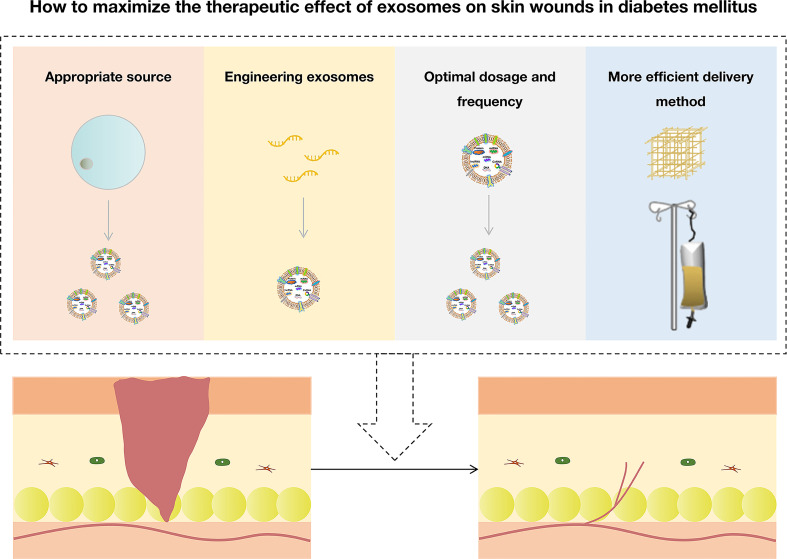
Chronic skin wound healing, especially in diabetes mellitus, is still unsolved. Although many efforts have been made to treat diabetic skin wounds, current strategies have achieved limited effectiveness. Nowadays, a great number of studies have shown that exosomes might be a promising approach for treating diabetic wounds. Many studies and reviews have focused on investigating and discussing the effectiveness and mechanism of exosomes. However, maximizing its value in treating skin wounds in diabetes mellitus requires further consideration. In this review, we reviewed and discussed the aspects that could be further improved in this process, including finding a better source of exosomes, engineering exosomes, adjusting dosage and frequency, and combining more efficient delivery methods. This review provided an overview and idea of what we can do to improve the therapeutic effect of exosomes on skin wounds in diabetes mellitus. Only by combining all the factors that affect the effectiveness of exosomes in diabetic wound healing can we further promote their clinical usefulness.
Keywords: diabetes; exosomes; maximize; skin wounds; therapeutic effect.
Copyright © 2023 Dong, Wu and Tian.
Conflict of interest statement
The authors declare that the research was conducted in the absence of any commercial or financial relationships that could be construed as a potential conflict of interest.
Figures
References
-
- Théry C, Witwer K, Aikawa E, Alcaraz M, Anderson J, Andriantsitohaina R, et al. Minimal information for studies of extracellular vesicles 2018 (MISEV2018): a position statement of the international society for extracellular vesicles and update of the MISEV2014 guidelines. J Extracell Vesicles (2018) 7(1):1535750. doi: 10.1080/20013078.2018.1535750 - DOI - PMC - PubMed
Publication types
MeSH terms
LinkOut - more resources
Full Text Sources
