


User fee exemption and malaria treatment-seeking for children under five in a Cameroonian health district: a cross-sectional study
- PMID: 37055809
- PMCID: PMC10103474
- DOI: 10.1186/s12936-023-04509-2
User fee exemption and malaria treatment-seeking for children under five in a Cameroonian health district: a cross-sectional study
Abstract
Background: In Cameroon, malaria contributes significantly to the morbidity and mortality of children under 5 years old. In order to encourage adequate treatment-seeking in health facilities, user fee exemptions for malaria treatment have been instituted. However, many children are still brought to health facilities in the late stage of severe malaria. This study sought to determine the factors affecting the hospital treatment-seeking time of guardians of children under 5 years within the context of this user fee exemption.
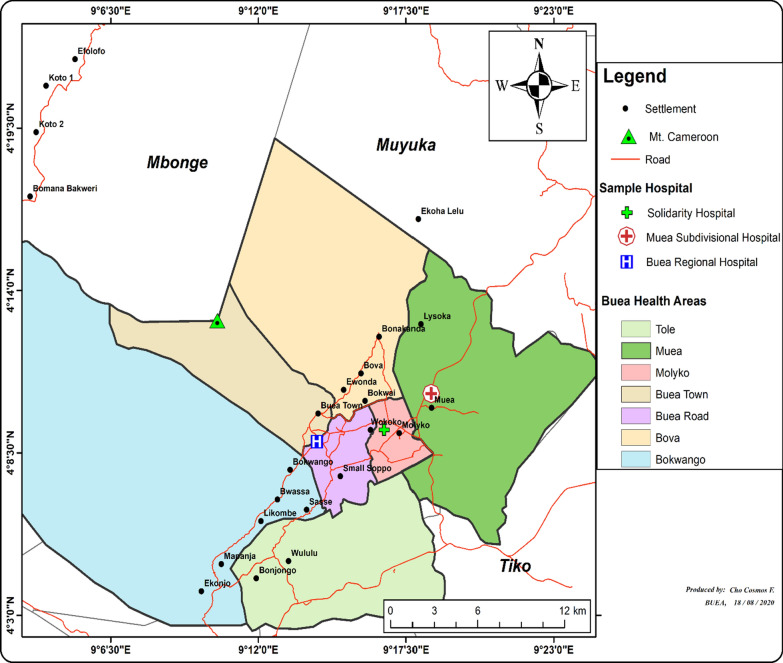
Methods: This was a cross-sectional study conducted at three randomly selected health facilities of the Buea Health District. A pre-tested questionnaire was used to collect data on the treatment-seeking behaviour and time of guardians, as well as potential predictors of this time. Hospital treatment sought after 24 h of noticing symptoms was denoted as delayed. Continuous variables were described using medians while categorical variables were described using percentages. A multivariate regression analysis was used to determine the factors affecting malaria treatment-seeking time of guardians. All statistical tests were done at a 95% confidence interval.
Results: Most of the guardians made use of pre-hospital treatments, with self-medication being practiced by 39.7% (95% CI 35.1-44.3%) of them. A total of 193 (49.5%) guardians delayed seeking treatment at health facilities. Reasons for delay included financial constraints and watchful waiting at home, during which guardians waited and hoped their child could get better without requiring medicines. Guardians with estimated monthly household incomes denoted as low/middle were significantly more likely (AOR 3.794; 95% CI 2.125-6.774) to delay seeking hospital treatment. The occupation of guardians was another significant determinant of treatment-seeking time (AOR 0.042; 95% CI 0.003-0.607). Also, guardians with tertiary education were less likely (AOR 0.315; 95% CI 0.107-0.927) to delay seeking hospital treatment.
Conclusions: This study suggests that despite user fee exemption, other factors such as educational and income levels of guardians affect malaria treatment-seeking time for children aged under five. Therefore, these factors should be considered when enacting policies aimed at increasing access of children to health facilities.
Keywords: Children; Exemption; Fee; Guardians; Malaria; Treatment-seeking; User.
© 2023. The Author(s).
Conflict of interest statement
The authors declare that there is no competing interests.
Figures
References
-
- WHO. World malaria report 2019. Geneva: World Health Organization; 2019. https://www.who.int/publications-detail/world-malaria-report-2019. Accessed 15th January 2020.
-
- MINSANTE. Rapport de suivi des 100 indicateurs cles de la sante au Cameroun en 2019. http://onsp.minsante.com. Accessed 21st Jan 2020.
-
- UN Inter-agency group for child mortality estimation I. Levels and trends in child mortality. Under 5 moratality rate for Cameroon. 2019. https://childmortality.org/data/Cameroon%0D. Accessed 18th Jan 2020.
-
- Kwenti TE, Kwenti TDB, Latz A, Njunda LA, Nkuo-Akenji T. Epidemiological and clinical profile of paediatric malaria: a cross sectional study performed on febrile children in five epidemiological strata of malaria in Cameroon. BMC Infect Dis. 2017;17:499. doi: 10.1186/s12879-017-2587-2. - DOI - PMC - PubMed
MeSH terms
LinkOut - more resources
Full Text Sources
Medical
