


Cryopreventive temperatures prior to chemotherapy
- PMID: 37058178
- PMCID: PMC10104916
- DOI: 10.1007/s12032-023-01989-9
Cryopreventive temperatures prior to chemotherapy
Abstract
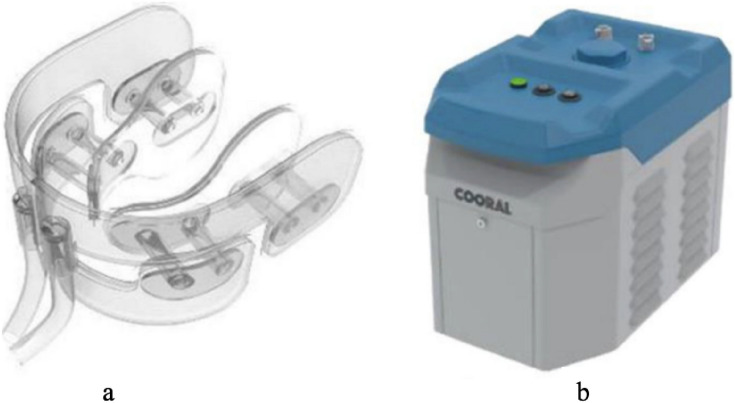
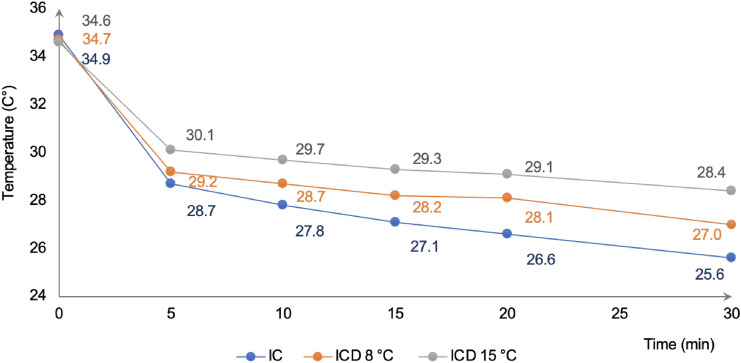
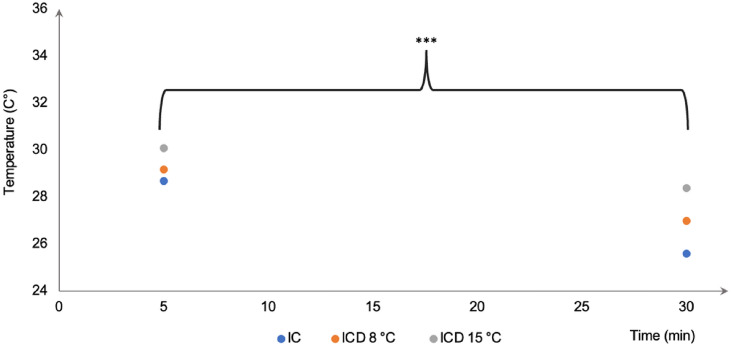
The superiority of oral cryotherapy (OC) for prevention of chemotherapy-induced oral mucositis (OM) has been demonstrated in several trials. In clinical settings, cooling is usually initiated prior to the chemotherapy infusion. It then continues during the infusion, and for a period after the infusion has been completed. While the cooling period post-infusion depends on the half-life of the chemotherapeutic drug, there is no consensus on when cooling should be initiated prior to the infusion. The lowest achieved temperature in the oral mucosa is believed to provide the best condition for OM prevention. Given this, it was of interest to investigate when along the course of intraoral cooling this temperature is achieved. In total, 20 healthy volunteers participated in this randomized crossover trial. Each subject attended three separate cooling sessions of 30 min each, with ice chips (IC) and the intraoral cooling device (ICD) set to 8 and 15 °C, respectively. At baseline and following 5, 10, 15, 20 and 30 min of cooling, intraoral temperatures were registered using a thermographic camera. The greatest drop in intraoral temperature was seen after 5 min of cooling with IC, ICD8°C and ICD15°C, respectively. A statistically significant difference, corresponding to 1.4 °C, was seen between IC and the ICD15°C (p < 0.05). The intraoral temperature further declined throughout the 30 min of cooling, showing an additional temperature reduction of 3.1, 2.2, and 1.7 °C for IC, ICD8°C and ICD15°C, respectively.
Keywords: Cryotherapy; Intraoral cooling device; Oral mucositis; Tolerability.
© 2023. The Author(s).
Conflict of interest statement
The authors declare that there are no conflicts of interest.
Figures

References
-
- Kanagalingam J, Wahid MIA, Lin JC, Cupino NA, Liu E, Kang JH, et al. Patient and oncologist perceptions regarding symptoms and impact on quality-of-life of oral mucositis in cancer treatment: results from the Awareness Drives Oral Mucositis PercepTion (ADOPT) study. Support Care Cancer. 2018;26(7):2191–2200. doi: 10.1007/s00520-018-4050-3. - DOI - PubMed
-
- Elting LS, Keefe DM, Sonis ST, Garden AS, Spijkervet FK, Barasch A, et al. Patient-reported measurements of oral mucositis in head and neck cancer patients treated with radiotherapy with or without chemotherapy: demonstration of increased frequency, severity, resistance to palliation, and impact on quality of life. Cancer. 2008;113(10):2704–2713. doi: 10.1002/cncr.23898. - DOI - PubMed
Publication types
MeSH terms
LinkOut - more resources
Full Text Sources
