


Mitochondrial membrane potential instability on reperfusion after ischemia does not depend on mitochondrial Ca2+ uptake
- PMID: 37061004
- PMCID: PMC10206190
- DOI: 10.1016/j.jbc.2023.104708
Mitochondrial membrane potential instability on reperfusion after ischemia does not depend on mitochondrial Ca2+ uptake
Abstract
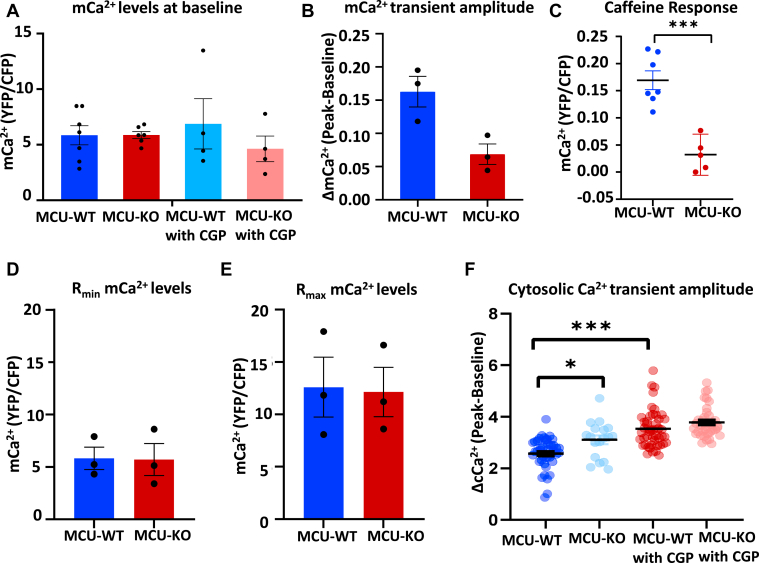
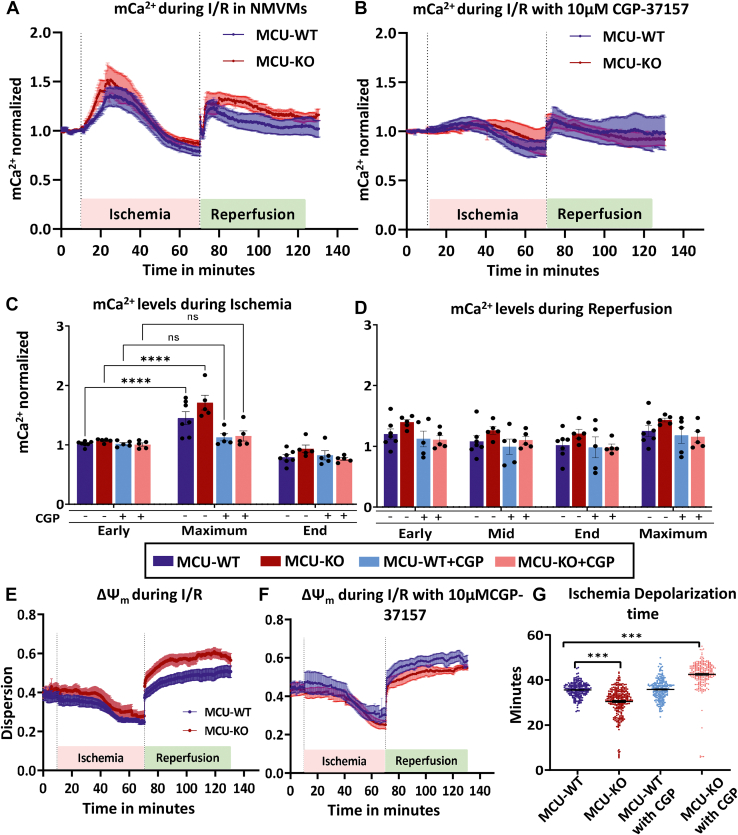
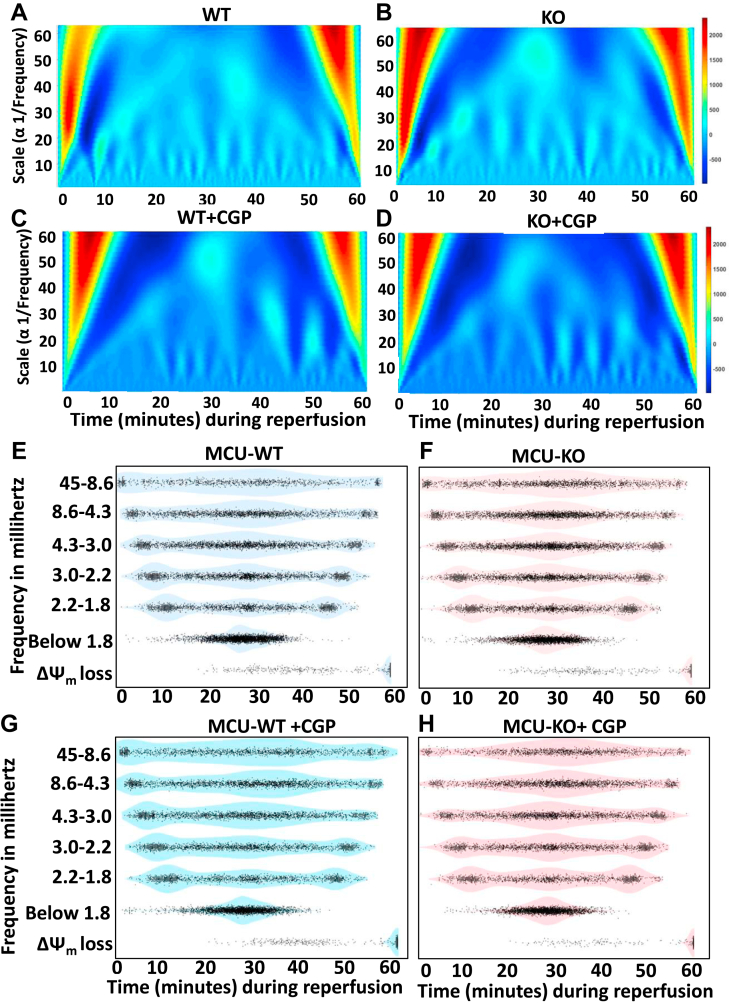
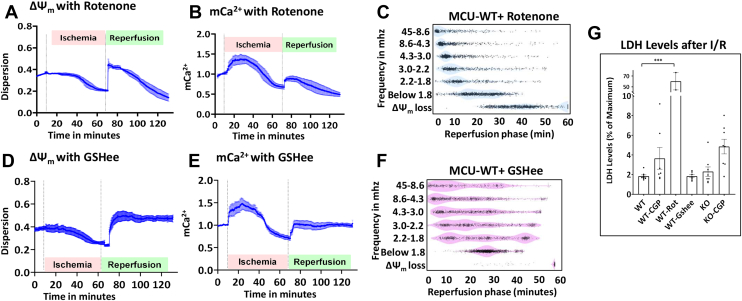
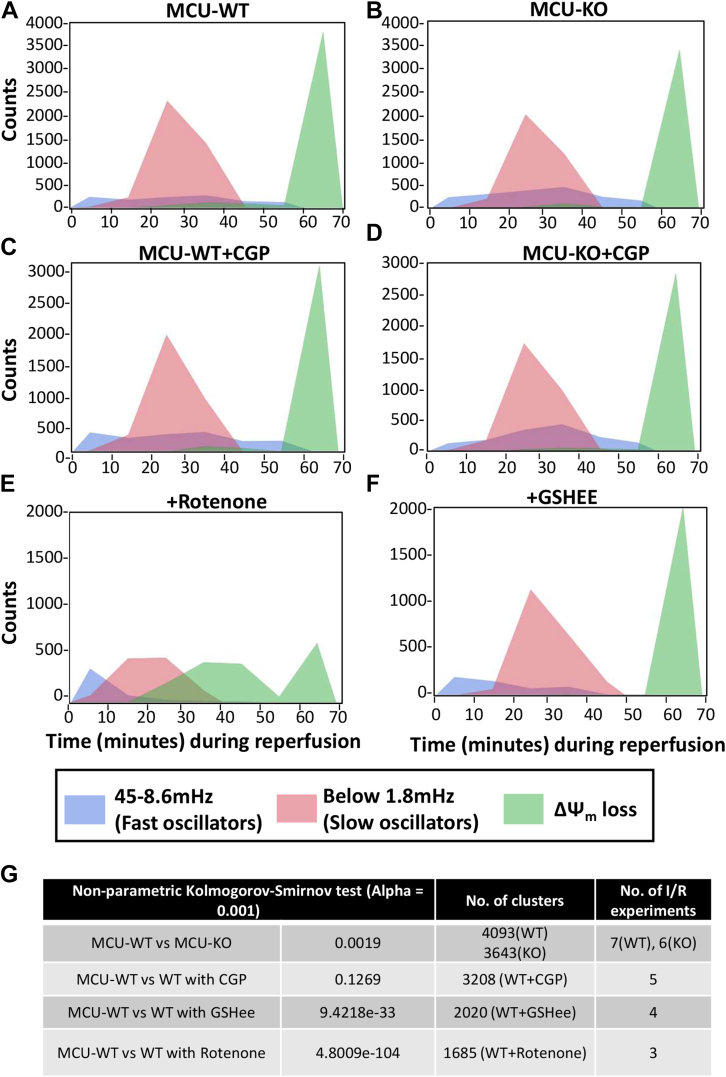
Physiologic Ca2+ entry via the Mitochondrial Calcium Uniporter (MCU) participates in energetic adaption to workload but may also contribute to cell death during ischemia/reperfusion (I/R) injury. The MCU has been identified as the primary mode of Ca2+ import into mitochondria. Several groups have tested the hypothesis that Ca2+ import via MCU is detrimental during I/R injury using genetically-engineered mouse models, yet the results from these studies are inconclusive. Furthermore, mitochondria exhibit unstable or oscillatory membrane potentials (ΔΨm) when subjected to stress, such as during I/R, but it is unclear if the primary trigger is an excess influx of mitochondrial Ca2+ (mCa2+), reactive oxygen species (ROS) accumulation, or other factors. Here, we critically examine whether MCU-mediated mitochondrial Ca2+ uptake during I/R is involved in ΔΨm instability, or sustained mitochondrial depolarization, during reperfusion by acutely knocking out MCU in neonatal mouse ventricular myocyte (NMVM) monolayers subjected to simulated I/R. Unexpectedly, we find that MCU knockout does not significantly alter mCa2+ import during I/R, nor does it affect ΔΨm recovery during reperfusion. In contrast, blocking the mitochondrial sodium-calcium exchanger (mNCE) suppressed the mCa2+ increase during Ischemia but did not affect ΔΨm recovery or the frequency of ΔΨm oscillations during reperfusion, indicating that mitochondrial ΔΨm instability on reperfusion is not triggered by mCa2+. Interestingly, inhibition of mitochondrial electron transport or supplementation with antioxidants stabilized I/R-induced ΔΨm oscillations. The findings are consistent with mCa2+ overload being mediated by reverse-mode mNCE activity and supporting ROS-induced ROS release as the primary trigger of ΔΨm instability during reperfusion injury.
Keywords: image processing; ischemia; mitochondrial membrane potential; oscillation; oxidative phosphorylation; reperfusion; time-series analysis; wavelet.
Copyright © 2023 The Authors. Published by Elsevier Inc. All rights reserved.
Conflict of interest statement
Conflict of interests The authors declare no conflict of interest with the contents of this article.
Figures

References
Publication types
MeSH terms
Substances
Grants and funding
LinkOut - more resources
Full Text Sources
Molecular Biology Databases
Miscellaneous
