


Delayed generation of functional virus-specific circulating T follicular helper cells correlates with severe COVID-19
- PMID: 37061513
- PMCID: PMC10105364
- DOI: 10.1038/s41467-023-37835-9
Delayed generation of functional virus-specific circulating T follicular helper cells correlates with severe COVID-19
Abstract
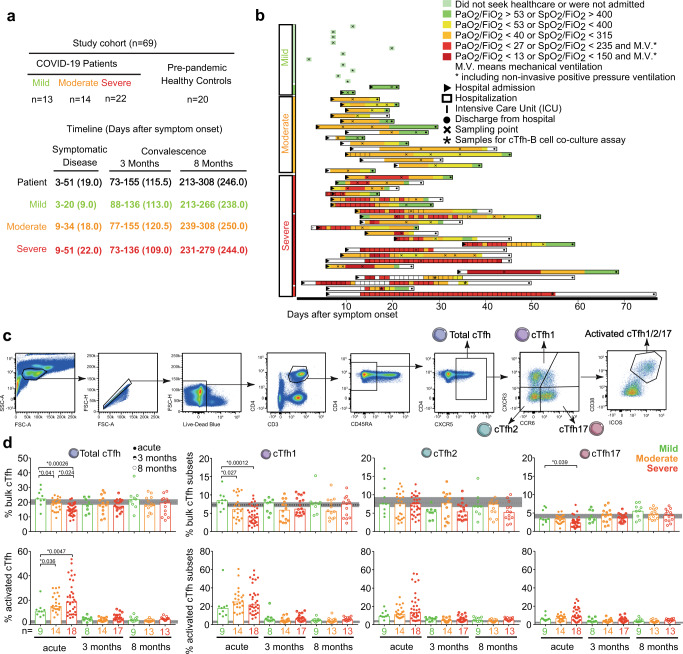
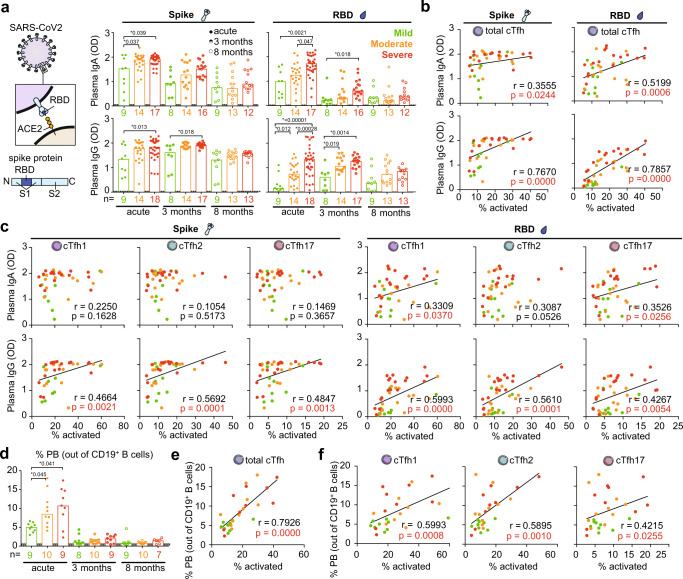
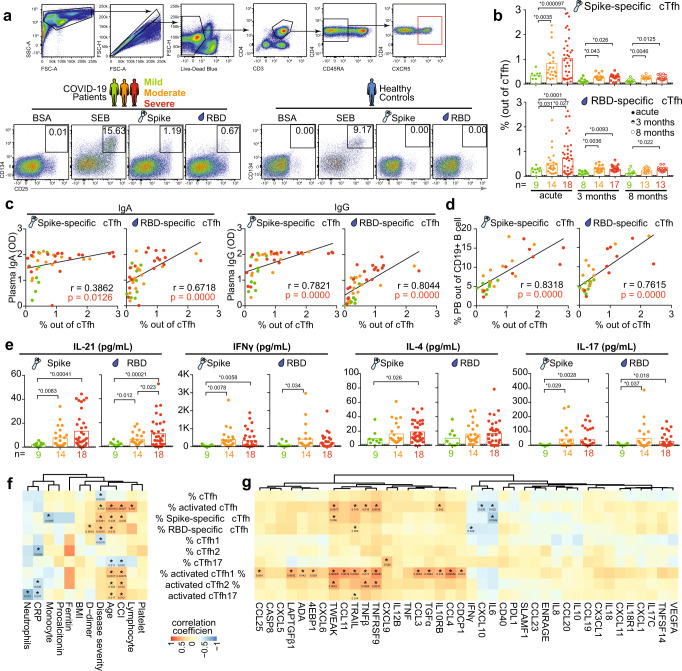
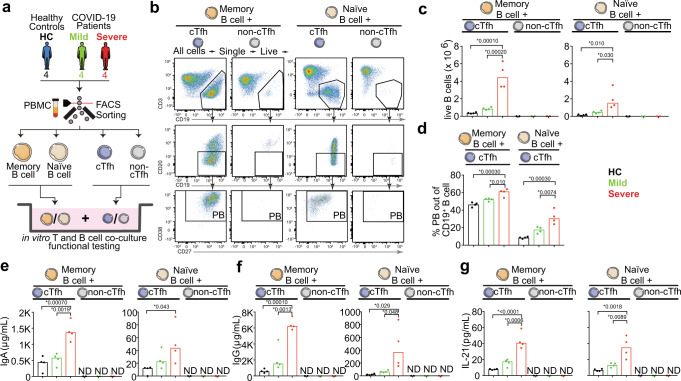
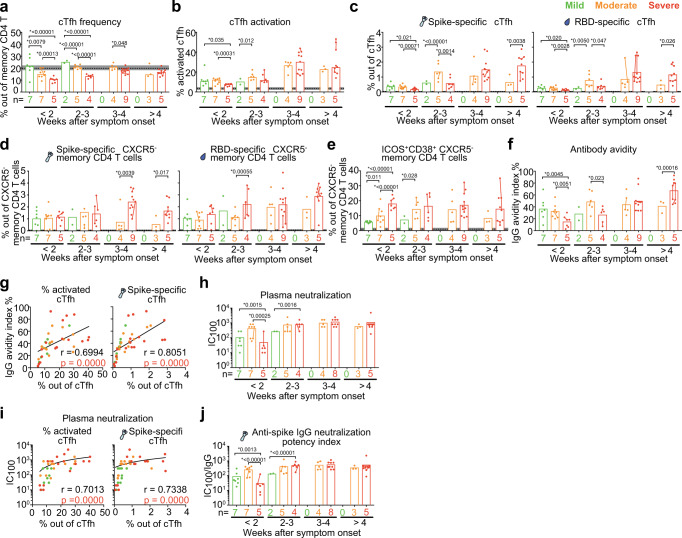
Effective humoral immune responses require well-orchestrated B and T follicular helper (Tfh) cell interactions. Whether these interactions are impaired and associated with COVID-19 disease severity is unclear. Here, longitudinal blood samples across COVID-19 disease severity are analysed. We find that during acute infection SARS-CoV-2-specific circulating Tfh (cTfh) cells expand with disease severity. SARS-CoV-2-specific cTfh cell frequencies correlate with plasmablast frequencies and SARS-CoV-2 antibody titers, avidity and neutralization. Furthermore, cTfh cells but not other memory CD4 T cells, from severe patients better induce plasmablast differentiation and antibody production compared to cTfh cells from mild patients. However, virus-specific cTfh cell development is delayed in patients that display or later develop severe disease compared to those with mild disease, which correlates with delayed induction of high-avidity neutralizing antibodies. Our study suggests that impaired generation of functional virus-specific cTfh cells delays high-quality antibody production at an early stage, potentially enabling progression to severe disease.
© 2023. The Author(s).
Conflict of interest statement
A.S.-S. is a consultant to Astra-Zeneca on studies not related to the present study. The remaining authors declare no competing interests.
Figures
References
Publication types
MeSH terms
LinkOut - more resources
Full Text Sources
Medical
Research Materials
Miscellaneous
