


Non-operative management for osteochondral lesions of the talus: a systematic review of treatment modalities, clinical- and radiological outcomes
- PMID: 37062042
- PMCID: PMC10356662
- DOI: 10.1007/s00167-023-07408-w
Non-operative management for osteochondral lesions of the talus: a systematic review of treatment modalities, clinical- and radiological outcomes
Abstract
Purpose: The purpose of the present study was to assess the overall clinical success rate of non-operative management for osteochondral lesions of the talus (OLT).
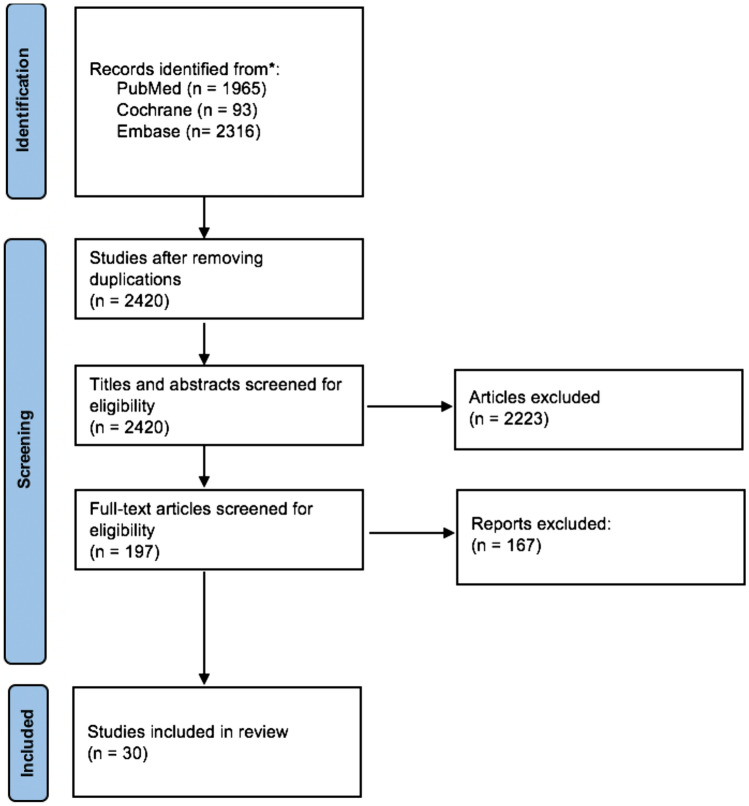
Methods: A literature search was conducted in the PubMed (MEDLINE), COCHRANE and EMBASE (Ovid) databases. Clinical success rates per separate study were calculated at the latest moment of follow-up and were defined as successful when a good or excellent clinical result at follow-up was reported in a qualitative manner or when a post-operative American Orthopaedic Foot and Ankle Society (AOFAS) score at or above 80 was reached. When clinical outcomes were based on other clinical scoring systems, outcomes reported as good or excellent were considered as clinical success. Studies methodologically eligible for a simplified pooling method were combined to calculate an overall pooled clinical success rate. Radiological changes over the course of conservative treatment were assessed either considering local OLT changes and/or overall ankle joint changes.
Results: Thirty articles were included, including an overall of 868 patients. The median follow-up of the included studies was 37 months (range: 3-288 months). A simplified pooling method was possible among 16 studies and yielded an overall pooled clinical success rate of 45% (95% CI 40-50%). As assessed with plain radiographs, progression of ankle joint osteoarthritis was observed in of 9% (95% CI 6-14%) of the patients. As assessed through a Computed Tomography (CT) scan, focal OLT deterioration was observed in 11% (95% CI 7-18%) of the patients. As assessed with a Magnetic Resonance Imaging (MRI) scan, focal OLT deterioration was observed in 12% (95% CI 6-24%) of the patients. An unchanged lesion was detected on plain radiographs in 53% (48/91; CI 43-63%), 76% (99/131; 95% CI 68-82%) on a CT scan and on MRI in 84% (42/50; 95% CI 71-92%) of the patients.
Conclusion: The current literature on non-operative management of OLTs is scarce and heterogeneous on indication and type of treatment. Promising clinical results are presented but need to interpreted with caution due to the heterogeneity in indication, duration and type of treatment. Further studies need to focus on specific types on conservative management, indications and its results.
Level of evidence: Systematic review, Level IV.
Keywords: Ankle; Cartilage; Conservative; Non-operative; OLT; Osteochondral lesions of the talus.
© 2023. The Author(s).
Conflict of interest statement
The authors do not report any form of conflict of interest related to this research.
Figures
References
-
- Blom JM, Strijk SP. Lesions of the trochlea tali. Osteochondral fractures and osteochondritis dissecans of the trochlea tali. Radiol Clin. 1975;44:387–396. - PubMed
-
- Brown LD, Cai TT, DasGupta A. Interval estimation for a binomial proportion. Stat Sci. 2001;16(101–133):133.
Publication types
MeSH terms
LinkOut - more resources
Full Text Sources
Research Materials
