


Replacement of dietary saturated with unsaturated fatty acids is associated with beneficial effects on lipidome metabolites: a secondary analysis of a randomized trial
- PMID: 37062359
- PMCID: PMC10315407
- DOI: 10.1016/j.ajcnut.2023.03.024
Replacement of dietary saturated with unsaturated fatty acids is associated with beneficial effects on lipidome metabolites: a secondary analysis of a randomized trial
Abstract
Background: The effects of replacing dietary saturated fatty acids (SFAs) with monounsaturated fatty acids (MUFAs) and/or polyunsaturated fatty acids (PUFAs) on the plasma lipidome in relation to the cardiometabolic disease (CMD) risk is poorly understood.
Objectives: We aimed to assess the impact of substituting dietary SFAs with unsaturated fatty acids (UFAs) on the plasma lipidome and examine the relationship between lipid metabolites modulated by diet and CMD risk.
Methods: Plasma fatty acid (FA) concentrations among 16 lipid classes (within-class FAs) were measured in a subgroup from the Dietary Intervention and VAScular function (DIVAS) parallel randomized controlled trial (n = 113/195), which consisted of three 16-wk diets enriched in SFAs (target SFA:MUFA:n-6PUFA ratio = 17:11:4% total energy [TE]), MUFAs (9:19:4% TE), or a MUFA/PUFA mixture (9:13:10% TE). Similar lipidomics analyses were conducted in the European Prospective Investigation into Cancer and Nutrition (EPIC)-Potsdam study (specific case/cohorts: n = 775/1886 for type 2 diabetes [T2D], n = 551/1671 for cardiovascular disease [CVD]). Multiple linear regression and multivariable Cox models identified within-class FAs sensitive to replacement of dietary SFA with UFA in DIVAS and their association with CMD risk in EPIC-Potsdam. Elastic-net regression models identified within-class FAs associated with changes in CMD risk markers post-DIVAS interventions.
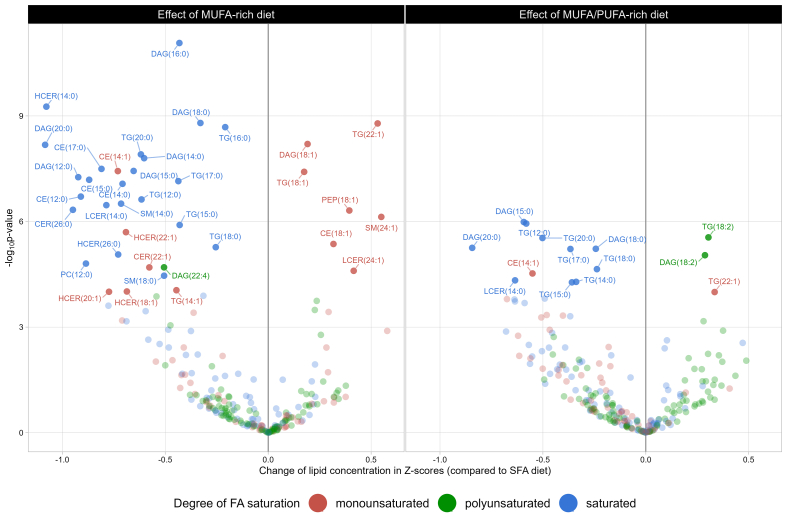
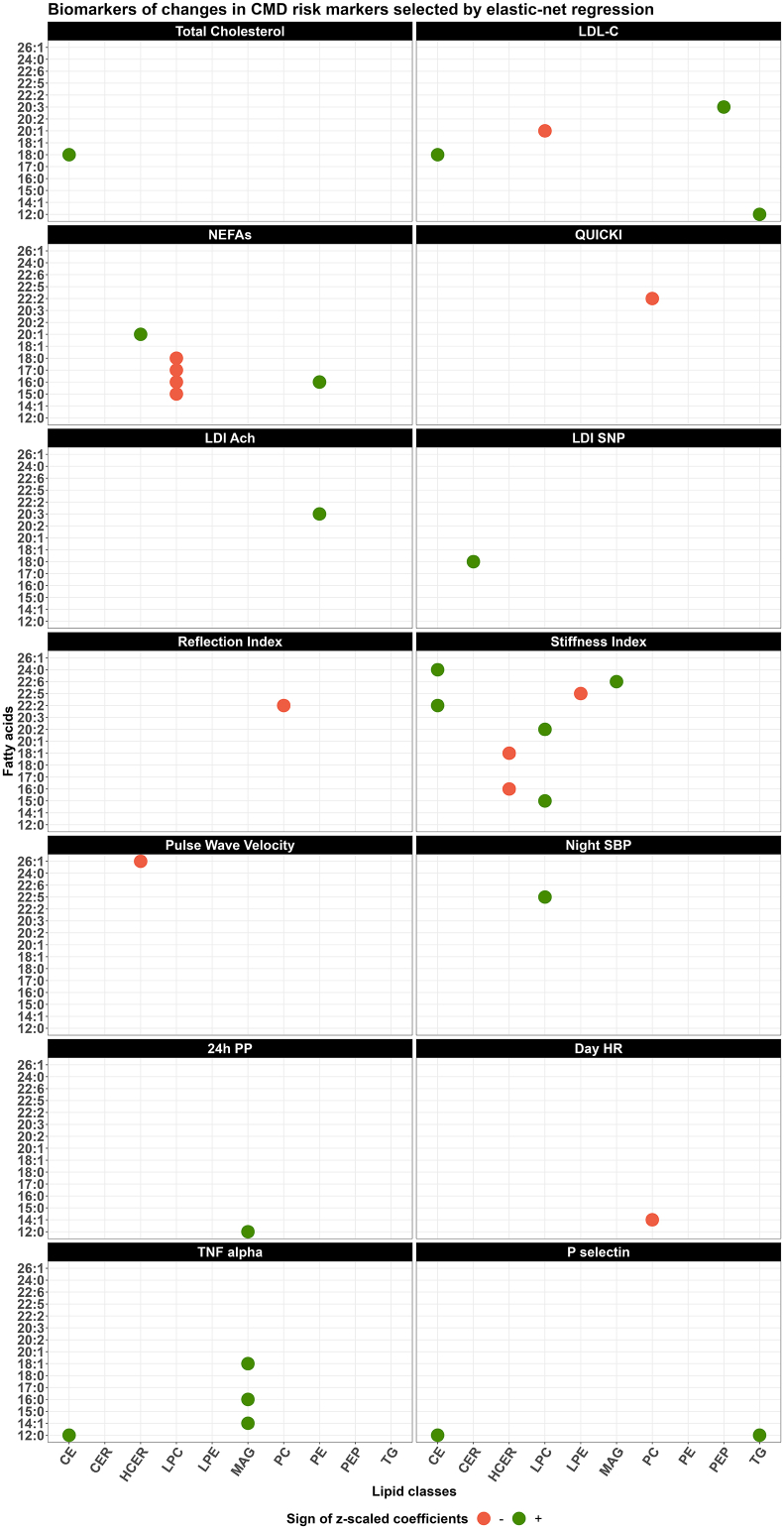
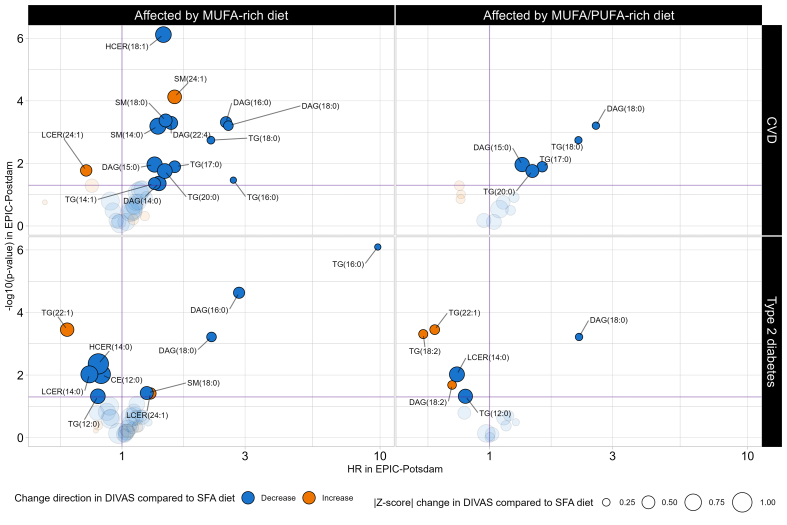
Results: DIVAS high-UFA interventions reduced plasma within-class FAs associated with a higher CVD risk in EPIC-Potsdam, especially SFA-containing glycerolipids and sphingolipids (e.g., diacylglycerol (20:0) z-score = -1.08; SE = 0.17; P value < 10-8), whereas they increased those inversely associated with CVD risk. The results on T2D were less clear. Specific sphingolipids and phospholipids were associated with changes in markers of endothelial function and ambulatory blood pressure, whereas higher low-density lipoprotein cholesterol concentrations were characterized by higher plasma glycerolipids containing lauric and stearic acids.
Conclusions: These results suggest a mediating role of plasma lipid metabolites in the association between dietary fat and CMD risk. Future research combining interventional and observational findings will further our understanding of the role of dietary fat in CMD etiology. This trial was registered in ClinicalTrials.gov as NCT01478958.
Keywords: EPIC-Potsdam; cardiovascular disease; dietary fat; lipidomics; randomized controlled trial; type 2 diabetes.
Copyright © 2023 The Authors. Published by Elsevier Inc. All rights reserved.
Figures
References
-
- Report of an expert consultation [Internet] Rome: Food and Agriculture Organization of the United Nations; 2010. Fats and fatty acids in human nutrition. Report no. 91.
-
- Saturated fats and health . 2019. Scientific Advisory Committee on Nutrition.https://assets.publishing.service.gov.uk/government/uploads/system/uploa... [cited August 1, 2019]; Available from:
-
- William L., Daniel L. 2nd ed. Academic Press; Amsterdam, Boston, Heidelberg, London, New York, Oxford, Paris, San Diego, San Franscisco, Singapore, sydney, Tokyo: 2013. Encyclopedia of Biological Chemistry II.
Publication types
MeSH terms
Substances
Associated data
Grants and funding
LinkOut - more resources
Full Text Sources
Medical
Research Materials
Miscellaneous
