


An updated review on phytochemistry and molecular targets of Withania somnifera (L.) Dunal (Ashwagandha)
- PMID: 37063285
- PMCID: PMC10090468
- DOI: 10.3389/fphar.2023.1049334
An updated review on phytochemistry and molecular targets of Withania somnifera (L.) Dunal (Ashwagandha)
Abstract
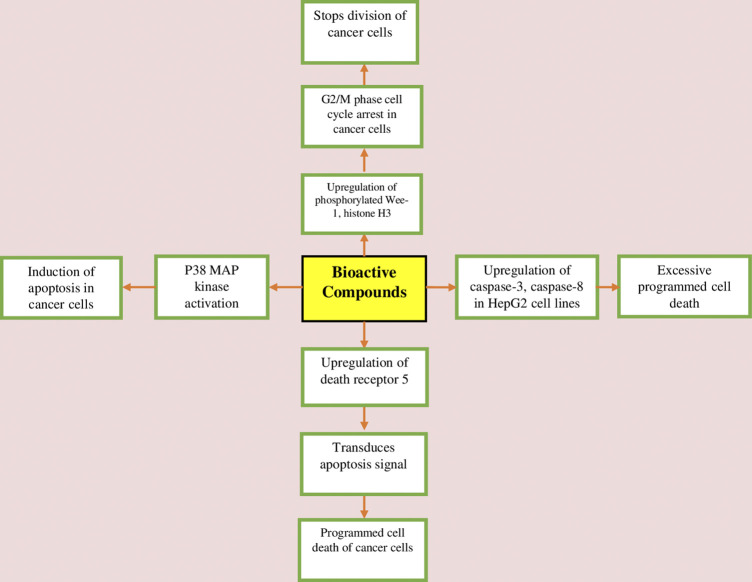
Withania somnifera (L.) Dunal belongs to the nightshade family Solanaceae and is commonly known as Ashwagandha. It is pharmacologically a significant medicinal plant of the Indian sub-continent, used in Ayurvedic and indigenous systems of medicine for more than 3,000 years. It is a rich reservoir of pharmaceutically bioactive constituents known as withanolides (a group of 300 naturally occurring C-28 steroidal lactones with an ergostane-based skeleton). Most of the biological activities of W. somnifera have been attributed to two key withanolides, namely, withaferin-A and withanolide-D. In addition, bioactive constituents such as withanosides, sitoindosides, steroidal lactones, and alkaloids are also present with a broad spectrum of therapeutic potential. Several research groups worldwide have discovered various molecular targets of W. somnifera, such as inhibiting the activation of nuclear factor kappa-B and promoting apoptosis of cancer cells. It also enhances dopaminergic D2 receptor activity (relief in Parkinson's disease). The active principles such as sitoindosides VII-X and withaferin-A possess free radical properties. Withanolide-D increases the radio sensitivity of human cancer cells via inhibiting deoxyribonucleic acid (DNA) damage to non-homologous end-joining repair (NHEJ) pathways. Withanolide-V may serve as a potential inhibitor against the main protease (Mpro) of severe acute respiratory syndrome coronavirus 2 (SARS-CoV-2) to combat COVID. The molecular docking studies revealed that the withanolide-A inhibits acetyl-cholinesterase in the brain, which could be a potential drug to treat Alzheimer's disease. Besides, withanolide-A reduces the expression of the N-methyl-D-aspartate (NMDA) receptor, which is responsible for memory loss in epileptic rats. This review demonstrates that W. somnifera is a rich source of withanolides and other bioactive constituents, which can be used as a safe drug for various chronic diseases due to the minimal side effects in various pre-clinical studies. These results are interesting and signify that more clinical trials should be conducted to prove the efficacy and other potential therapeutic effects in human settings.
Keywords: Withania somnifera (L.) Dunal; apoptosis; molecular targets; phytochemistry; withaferin A; withanolides.
Copyright © 2023 Bashir, Nabi, Tabassum, Afzal and Ayoub.
Conflict of interest statement
The authors declare that the research was conducted in the absence of any commercial or financial relationships that could be construed as a potential conflict of interest.
Figures



References
-
- Afewerky H. K., Ayodeji A. E., Tiamiyu B. B., Orege J. I., Okeke E. S., Oyejobi A. O., et al. (2021). Critical review of the Withania somnifera (L.) Dunal: Ethnobotany, pharmacological efficacy, and commercialization significance in Africa. Bull. Natl. Res. Centre 45 (1), 176. 10.1186/s42269-021-00635-6 10.1186/s42269-021-00635-6 | Google Scholar - DOI - DOI - PMC - PubMed
-
- Ahmad M., Dar N. J. (2017). “Withania somnifera: Ethnobotany, pharmacology, and therapeutic functions,” in Sustained energy for enhanced human functions and activity (Academic Press; ), 137–154. 10.1016/B978-0-12-805413-0.00008-9 10.1016/B978-0-12-805413-0.00008-9 | Google Scholar - DOI - DOI
-
- Ahmed W., Mofed D., Zekri A. R., El-Sayed N., Rahouma M., Sabet S. (2018). Antioxidant activity and apoptotic induction as mechanisms of action of Withania somnifera (Ashwagandha) against a hepatocellular carcinoma cell line. J. Int. Med. Res. 46 (4), 1358–1369. 10.1177/0300060517752022 PubMed Abstract | 10.1177/0300060517752022 | Google Scholar - DOI - DOI - PMC - PubMed
-
- Alam N., Hossain M., Khalil M. I., Moniruzzaman M., Sulaiman S. A., Gan S. H. (2011). High catechin concentrations detected in Withania somnifera (ashwagandha) by high performance liquid chromatography analysis. BMC Complementary Altern. Med. 11 (1), 65. 10.1186/1472-6882-11-65 10.1186/1472-6882-11-65 | Google Scholar - DOI - DOI - PMC - PubMed
-
- Ali A., Maher S., Khan S. A., Chaudhary M. I., Musharraf S. G. (2015). Sensitive quantification of six steroidal lactones in Withania coagulans extract by UHPLC electrospray tandem mass spectrometry. Steroids 104, 176–181. 10.1016/j.steroids.2015.09.011 PubMed Abstract | 10.1016/j.steroids.2015.09.011 | Google Scholar - DOI - DOI - PubMed
Publication types
LinkOut - more resources
Full Text Sources
Miscellaneous
