Review
. 2023;1(4):286-303.
doi: 10.1038/s44222-023-00030-y. Epub 2023 Feb 16.

Engineering cytokine therapeutics

Affiliations
Review

Engineering cytokine therapeutics

Jeroen Deckers et al. Nat Rev Bioeng. 2023.

Abstract

Cytokines have pivotal roles in immunity, making them attractive as therapeutics for a variety of immune-related disorders. However, the widespread clinical use of cytokines has been limited by their short blood half-lives and severe side effects caused by low specificity and unfavourable biodistribution. Innovations in bioengineering have aided in advancing our knowledge of cytokine biology and yielded new technologies for cytokine engineering. In this Review, we discuss how the development of bioanalytical methods, such as sequencing and high-resolution imaging combined with genetic techniques, have facilitated a better understanding of cytokine biology. We then present an overview of therapeutics arising from cytokine re-engineering, targeting and delivery, mRNA therapeutics and cell therapy. We also highlight the application of these strategies to adjust the immunological imbalance in different immune-mediated disorders, including cancer, infection and autoimmune diseases. Finally, we look ahead to the hurdles that must be overcome before cytokine therapeutics can live up to their full potential.

Keywords: Cell delivery; Cytokines; Nanoparticles; Nucleic-acid therapeutics; Protein design.


Conflict of interest statement

Competing interestsW.J.M.M., L.A.B.J. and M.G.N. are scientific co-founders of and have equity in Trained Therapeutix Discovery. W.J.M.M. and M.G.N. have consulting agreements with Trained Therapeutix Discovery. The remaining authors declare no competing interests.

Figures
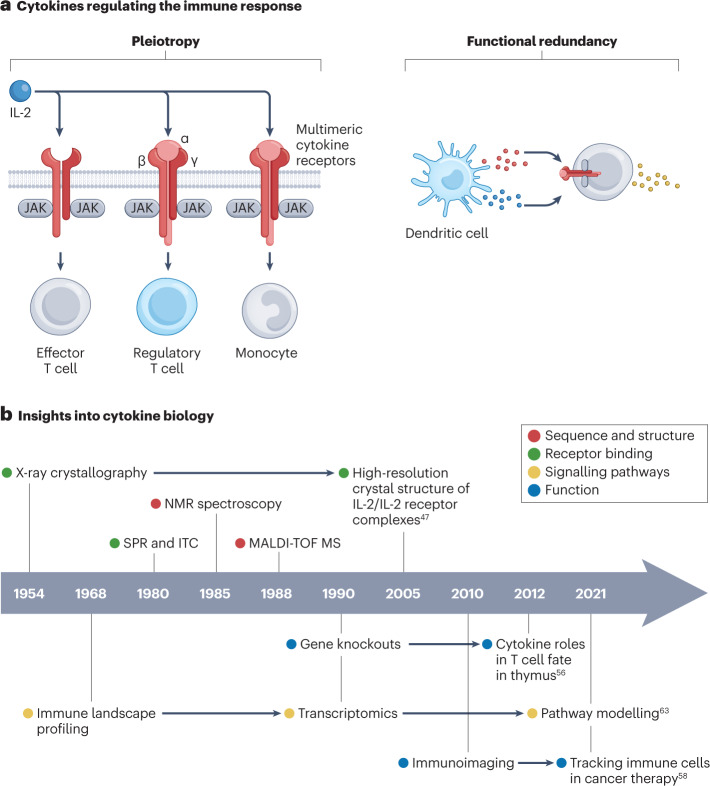
Fig. 1
Fig. 1. Cytokine biology and mechanisms.
a, Cytokines are key regulators of the immune system and can be classified according to their function, for example, as pro-inflammatory or anti-inflammatory. Upon binding to the (multimeric) cytokine receptor on a target cell, cytokines can activate enzymes that regulate epigenetic modifications, cytokine synthesis, augmented metabolism, cellular proliferation and apoptosis. Cytokine pleiotropy refers to the ability to induce different phenotypic traits, resulting in a variety of biological consequences. The ability of cytokines to act on the same receptor indicates their redundancy. b, Insights into cytokine biology owing to advances in bioengineering, including greater knowledge about cytokine sequence and structure, receptor binding mechanisms, signalling pathways and function. Data are taken from refs. ,,,. ITC, isothermal titration calorimetry; JAK, Janus kinase; MALDI-TOF MS, matrix-assisted laser desorption/ionization time-of-flight mass spectrometry; NMR, nuclear magnetic resonance; SPR, surface plasmon resonance.
Fig. 2
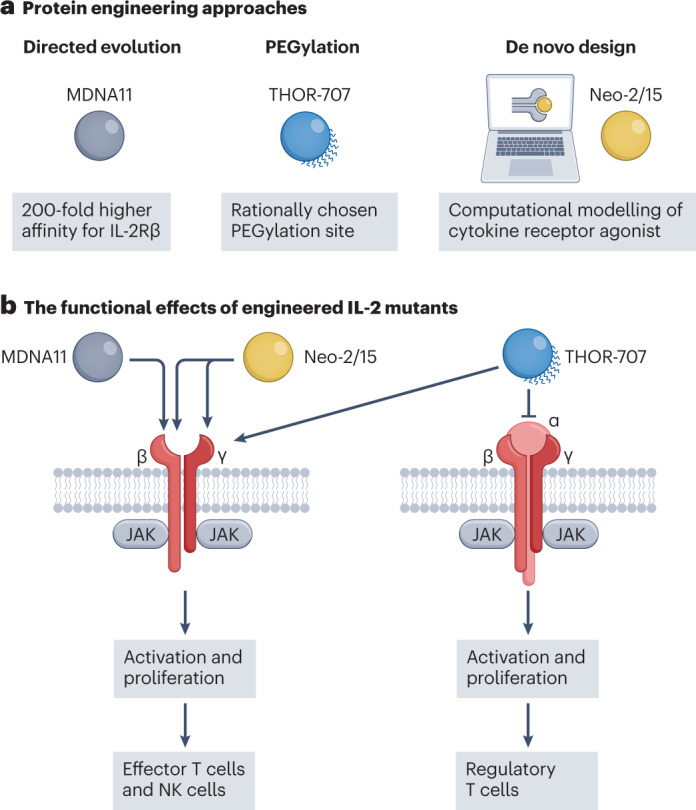
Fig. 2. Re-engineering cytokines.
a, Bioengineering methods for improving the function and pharmacokinetic properties of IL-2 include directed evolution, rational PEGylation and de novo design signalling. Taking advantage of these engineering tools, three different cytokine-based drugs (MDNA11, THOR-707 and Neo-2/15) have been developed to enhance IL-2Rβγ-mediated signalling. MDNA11 is a variant of IL-2, developed using directed evolution, with 200-fold higher binding affinity for IL-2 receptor subunit-β (IL-2Rβ) compared to IL-2. To develop THOR-707, rational PEGylation is employed to block IL-2’s affinity for IL-2Rα to eliminate IL-2’s innate bias towards cells that express IL-2Rα. Neo-2/15 is produced by computationally modelling peptide motifs in IL-2Rβγ without interacting with IL-2Rα, resulting in a de novo protein that selectively mediates IL-2Rβγ signalling. b, High specificity of cytokine-based drugs increases effector T cell and natural killer (NK) cell activation and proliferation, but prevents signalling through the trimeric form (IL-2Rαβγ), thereby minimizing undesired activation of regulatory T cells. JAK, Janus kinase; PEG, polyethylene glycol.
Fig. 3
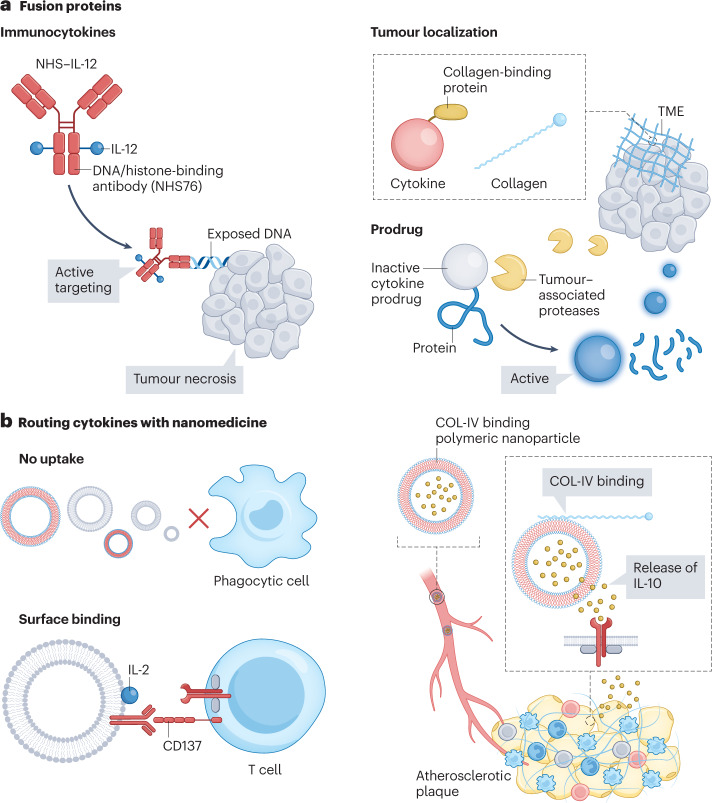
Fig. 3. Cytokine targeting and delivery.
a, Cytokine fusion proteins and their roles in redirecting cytokines to a specific site or cell type. Immunocytokines are cytokines fused to antibodies that target cytokines to distinct locations. This strategy can, for example, be used with the pro-inflammatory cytokine IL-12 to actively target exposed DNA found in necrotic areas within the tumour microenvironment (TME). Tumour localization can be achieved by directing cytokines to the tumour’s extracellular components, such as collagen. Fusing a cytokine to collagen-binding proteins can anchor it in collagen and increase its retention in the tumour. Cytokine prodrugs can be engineered by fusion protein technology. These prodrugs usually exploit tumour-associated proteases that remove the inactivation domain from the cytokines through cleavage to release tumour-specific active cytokines. b, Routing cytokines with nanomedicine. Cytokine receptors are expressed on the cell surface and, thus, nanomedicine strategies must avoid uptake by immune cells. Nanoparticles can be designed with surface-displayed cytokines to target T cells. In another approach, polymeric nanoparticles target collagen in the extracellular matrix, aiming for local sustained release of cytokines. COL-IV, type IV collagen.
Fig. 4
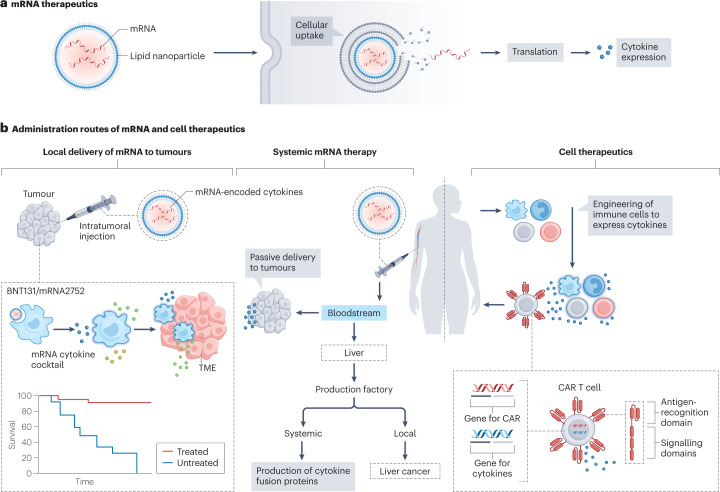
Fig. 4. mRNA encoding cytokines and cell therapeutics.
a, mRNA encoding cytokines is packaged in lipid nanoparticles and taken up by cells. The mRNA is then released into the cytosol and translated into cytokines. b, Local cytokine delivery to tumours using lipid nanoparticles encapsulating mRNA-encoding cytokines that locally induce inflammation against the tumour. Systemic mRNA therapy strategies include: harnessing the liver as a production factory to generate re-engineered cytokines, such as an IL-2–albumin fusion protein; treating liver cancer with mRNA encoding pro-inflammatory cytokines; and passively targeting mRNA encoding pro-inflammatory cytokines to the tumour to reshape the tumour microenvironment (TME). Chimeric antigen receptor (CAR) T cells can include a gene to express cytokines, thereby enhancing immune activation. This technique can also be used to engineer other immune cells, for example, genetically engineered myeloid cells, dendritic cells and natural killer cells. These engineered immune cells can modulate the immunosuppressive tumour environment, after systemic adminstration.

References

    1. Chaplin DD. Overview of the immune response. J. Allergy Clin. Immunol. 2010;125:S3–S23. doi: 10.1016/j.jaci.2009.12.980. - DOI - PMC - PubMed
    1. Altan-Bonnet G, Mukherjee R. Cytokine-mediated communication: a quantitative appraisal of immune complexity. Nat. Rev. Immunol. 2019;19:205–217. doi: 10.1038/s41577-019-0131-x. - DOI - PMC - PubMed
    1. Stanley AC, Lacy P. Pathways for cytokine secretion. Physiology. 2010;25:218–229. doi: 10.1152/physiol.00017.2010. - DOI - PubMed
    1. Leonardi CL, et al. Efficacy and safety of ustekinumab, a human interleukin-12/23 monoclonal antibody, in patients with psoriasis: 76-week results from a randomised, double-blind, placebo-controlled trial (PHOENIX 1) Lancet. 2008;371:1665–1674. doi: 10.1016/S0140-6736(08)60725-4. - DOI - PubMed
    1. Saenz SA, Taylor BC, Artis D. Welcome to the neighborhood: epithelial cell-derived cytokines license innate and adaptive immune responses at mucosal sites. Immunol. Rev. 2008;226:172–190. doi: 10.1111/j.1600-065X.2008.00713.x. - DOI - PMC - PubMed

LinkOut - more resources