


Global change in brain state during spontaneous and forced walk in Drosophila is composed of combined activity patterns of different neuron classes
- PMID: 37067152
- PMCID: PMC10168698
- DOI: 10.7554/eLife.85202
Global change in brain state during spontaneous and forced walk in Drosophila is composed of combined activity patterns of different neuron classes
Abstract
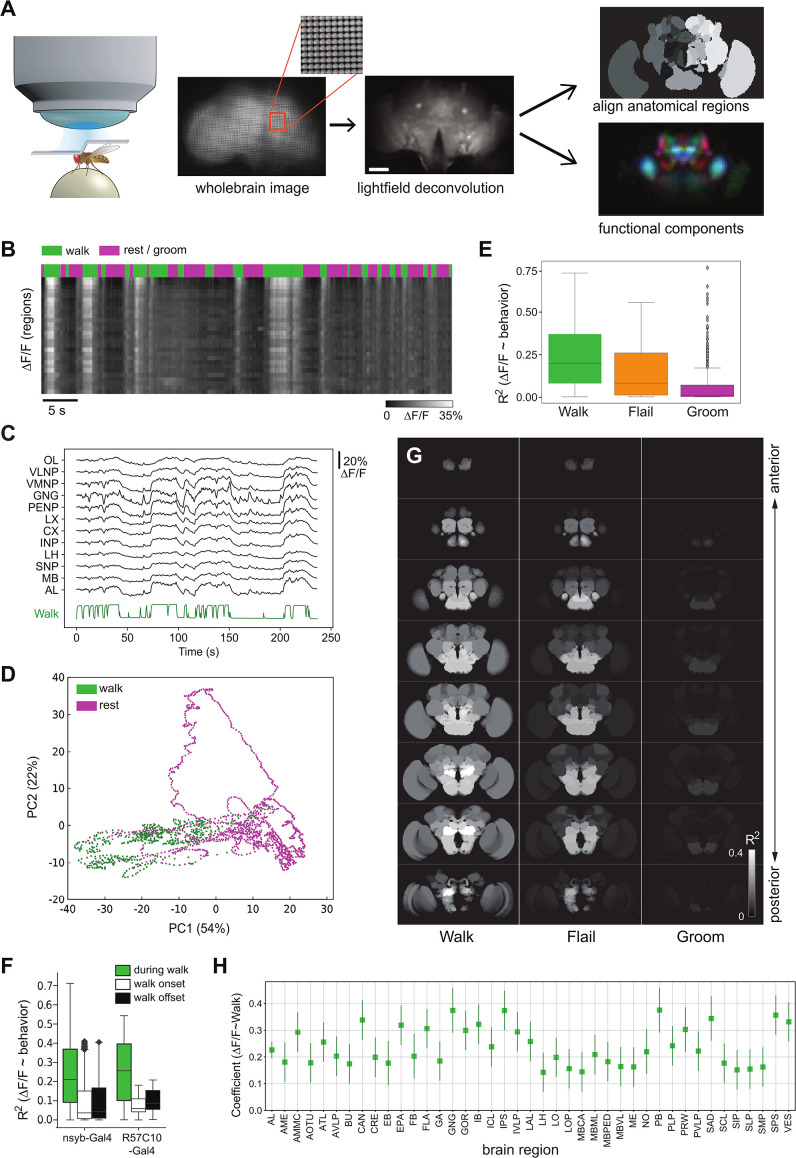
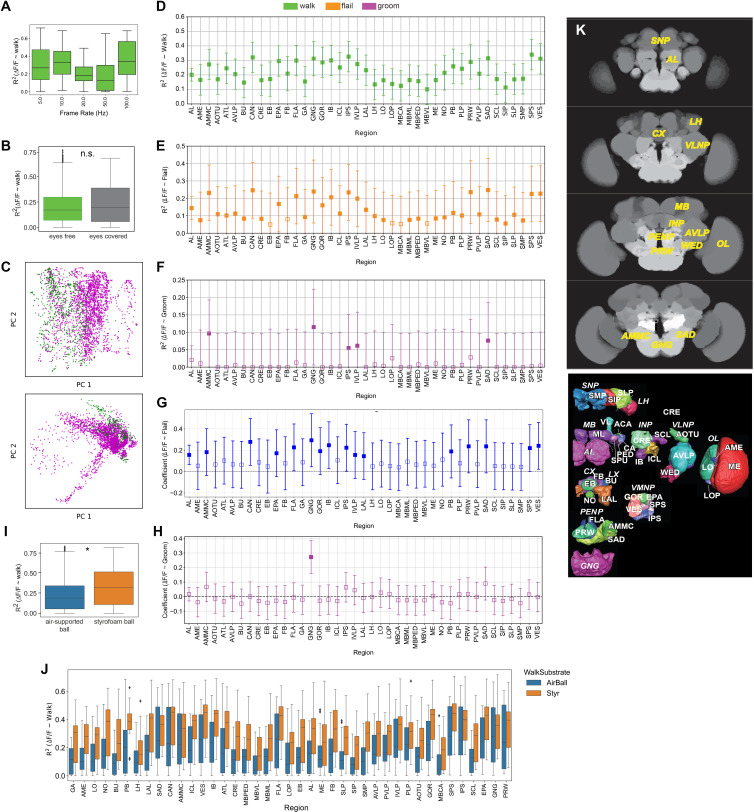
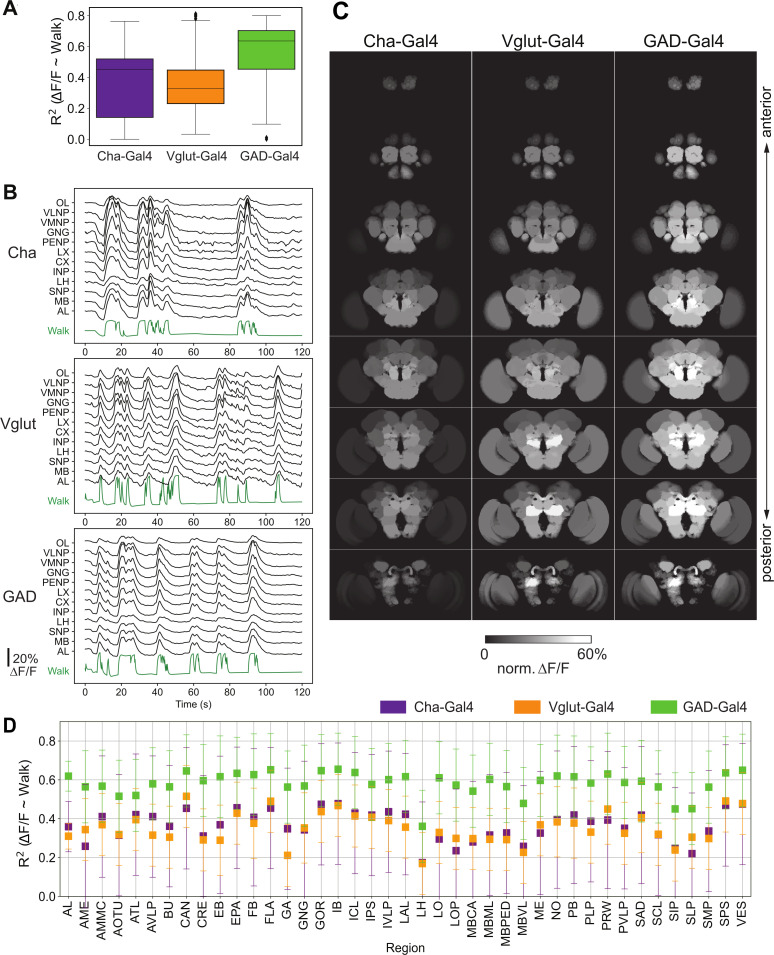
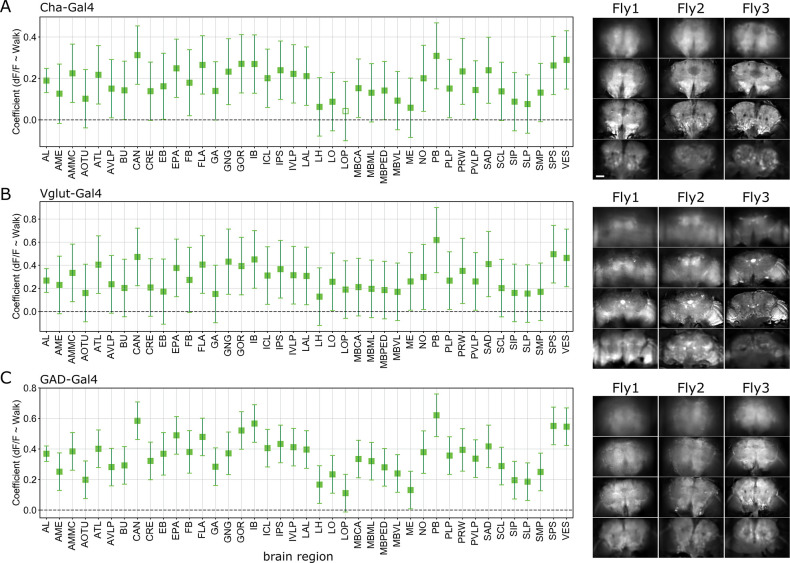
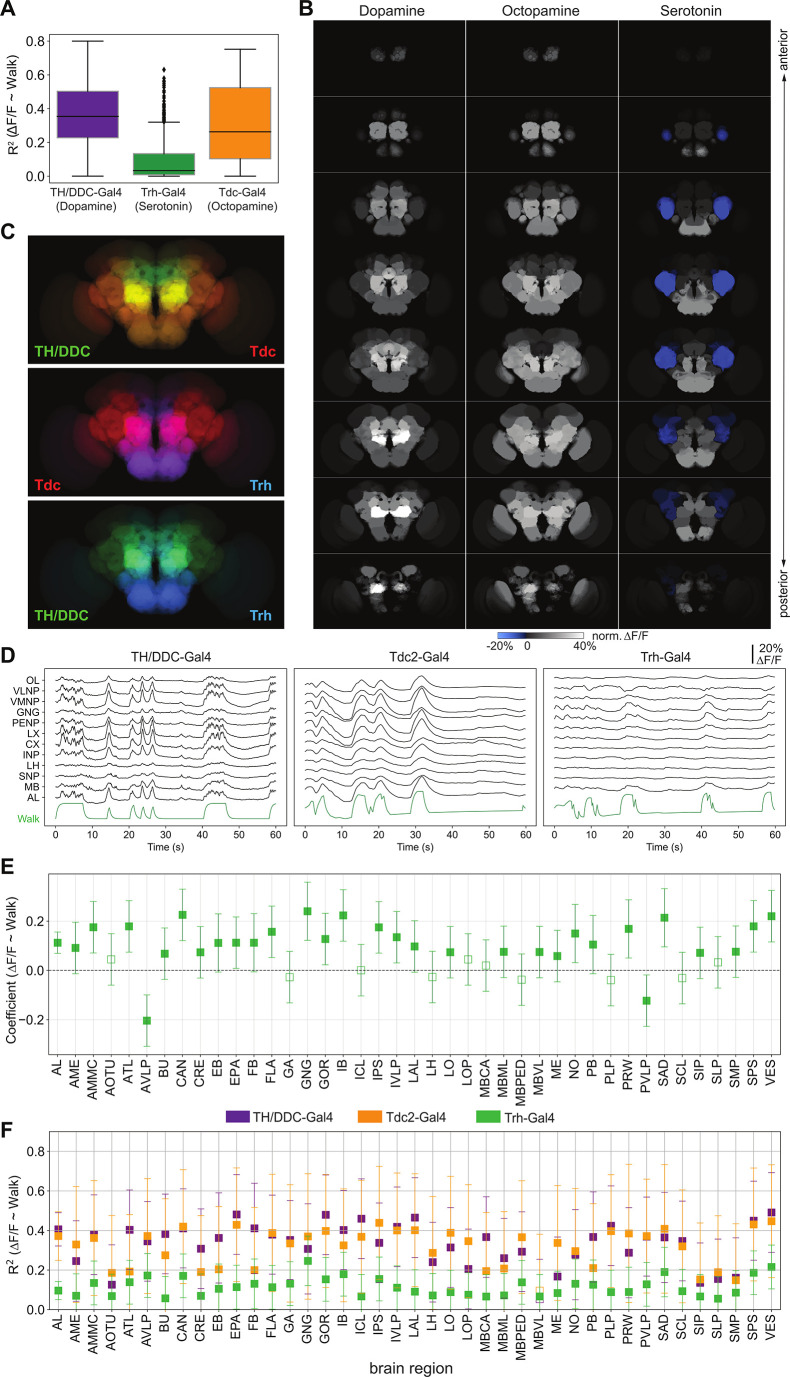
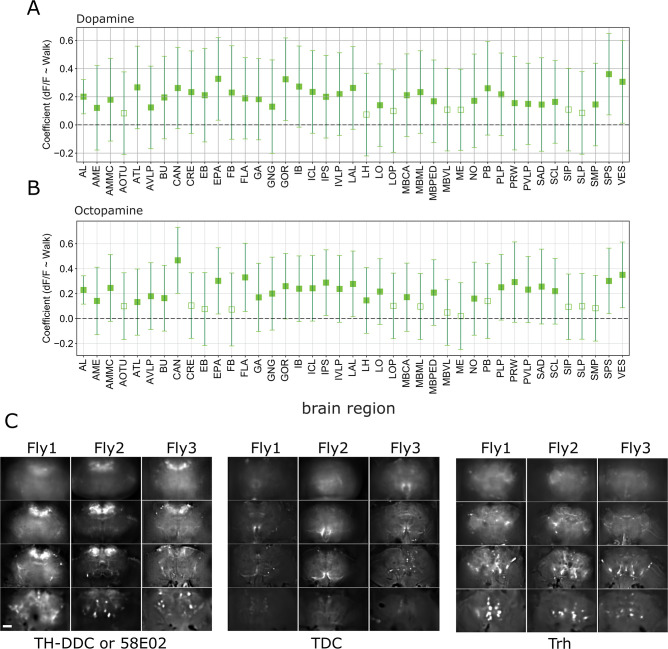
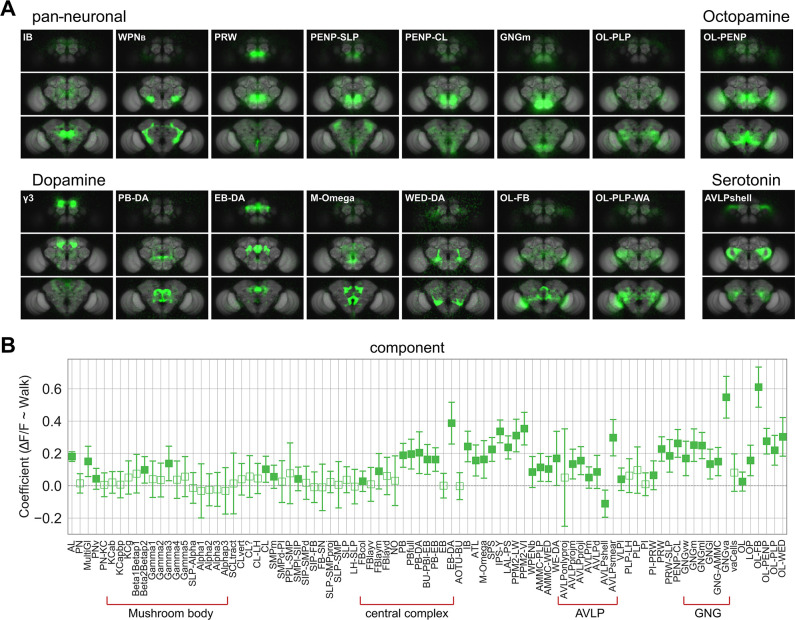
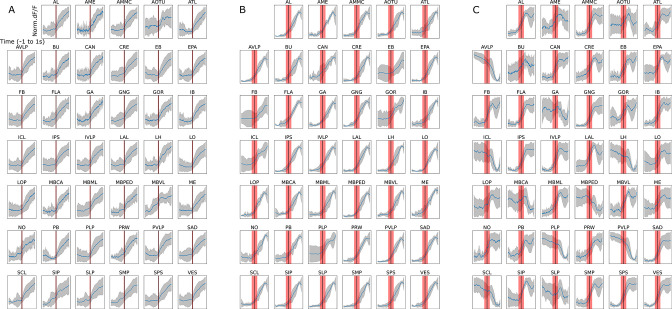
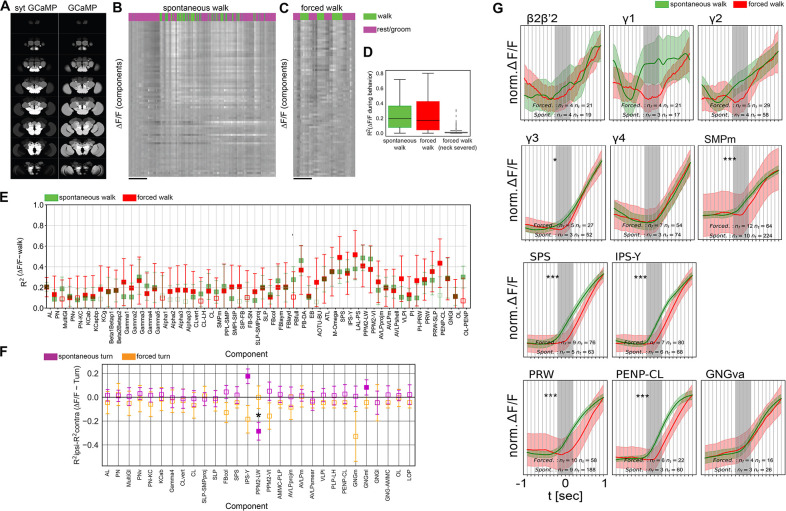
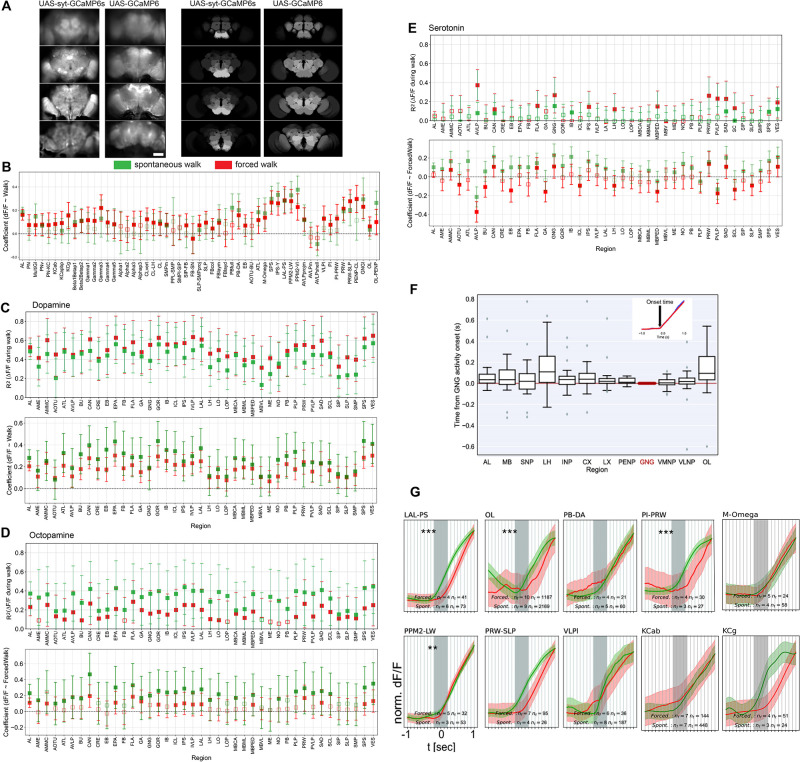
Movement-correlated brain activity has been found across species and brain regions. Here, we used fast whole brain lightfield imaging in adult Drosophila to investigate the relationship between walk and brain-wide neuronal activity. We observed a global change in activity that tightly correlated with spontaneous bouts of walk. While imaging specific sets of excitatory, inhibitory, and neuromodulatory neurons highlighted their joint contribution, spatial heterogeneity in walk- and turning-induced activity allowed parsing unique responses from subregions and sometimes individual candidate neurons. For example, previously uncharacterized serotonergic neurons were inhibited during walk. While activity onset in some areas preceded walk onset exclusively in spontaneously walking animals, spontaneous and forced walk elicited similar activity in most brain regions. These data suggest a major contribution of walk and walk-related sensory or proprioceptive information to global activity of all major neuronal classes.
Keywords: AVLP; D. melanogaster; PCA/ICA; behavior; dopamine; neuromodulators; neuroscience; serotonin; spontaneous behavior; walk; whole brain activity.
© 2023, Aimon et al.
Conflict of interest statement
SA, KC, JG No competing interests declared, IG Reviewing editor, eLife
Figures
Update of
References
-
- Afelt Z. Functional significance of ventral descending tracts of the spinal cord in the cat. Acta Neurobiologiae Experimentalis. 1974;34:393–407. - PubMed
Publication types
MeSH terms
Associated data
LinkOut - more resources
Full Text Sources
Molecular Biology Databases
Miscellaneous
