


Spatio-temporal patterns of human-wildlife conflicts and effectiveness of mitigation in Shuklaphanta National Park, Nepal
- PMID: 37068090
- PMCID: PMC10109493
- DOI: 10.1371/journal.pone.0282654
Spatio-temporal patterns of human-wildlife conflicts and effectiveness of mitigation in Shuklaphanta National Park, Nepal
Abstract
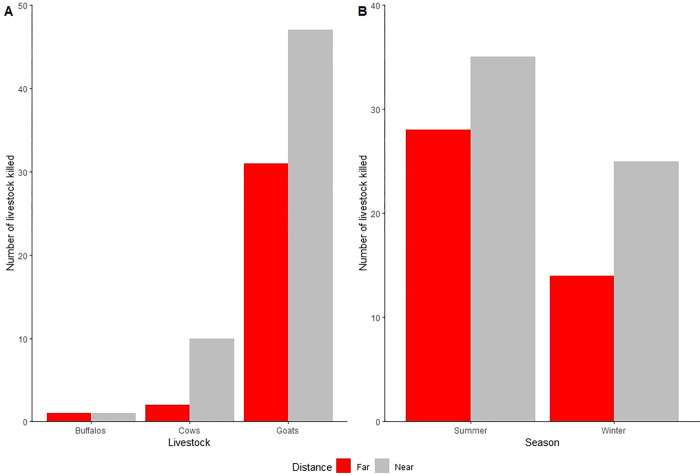
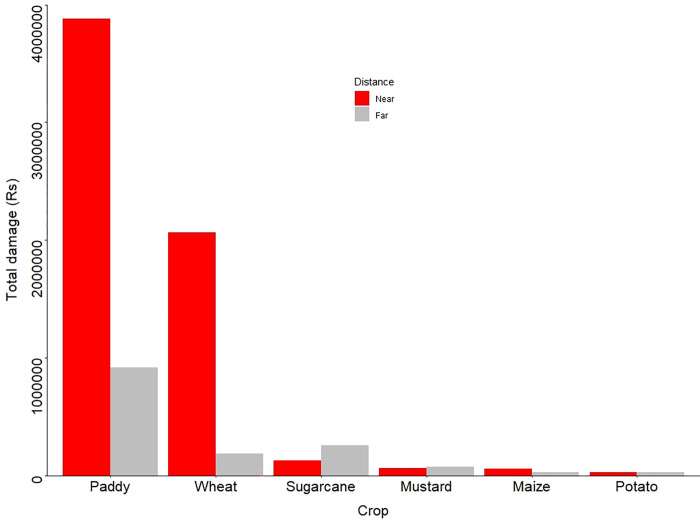
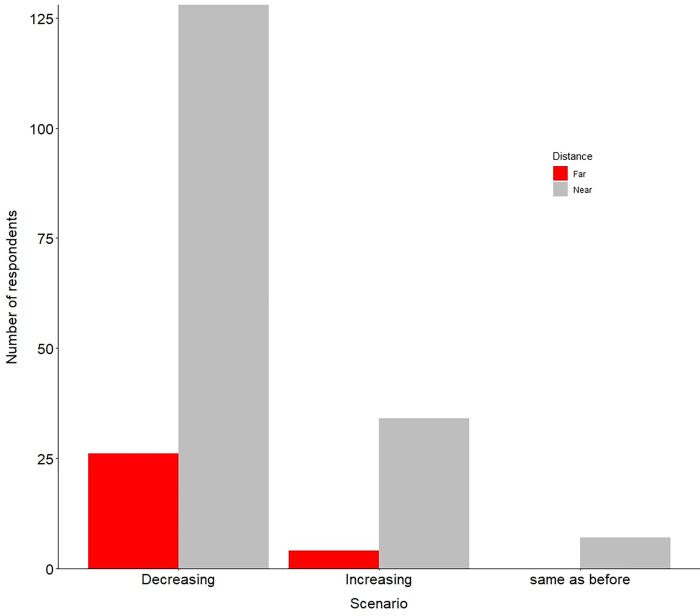
Human-wildlife interactions occur where human and wildlife coexist and share common resources including food or shelter. Increasing wildlife populations within protected areas also can increase interactions with humans living adjacent to these areas, resulting in conflicts including human casualty, livestock depredation, crop damage, and property loss. We analyzed six years human-wildlife conflict data from 2016-2021 in the buffer zone of Shuklaphanta National Park and conducted questionnaire survey to investigate factors influencing human-wildlife conflicts. Nineteen people were attacked by wildlife, primarily wild boar (Sus scrofa). Ninety-two livestock were killed by leopard (Panthera pardus), and among these most were sheep or goats killed near ShNP during summer. Crops were most frequently damaged by Asian elephants (Elephas maximus), followed by wild boar. Greatest economic losses were from damage to rice, followed by sugarcane and wheat. Asian elephant was the only reported species to cause structural damage to property (e.g., homes). Majority of respondents (83%) considered that the mitigation techniques that are currently in practice are effective to reduce the conflicts. However, the effectiveness of the mitigation techniques are the species specific, we recommend use of more efficacious deterrents (e.g., electric fencing) for large herbivores and mesh wire fencing with partially buried in the ground. Effective collaboration among different tiers of government, non-governmental organizations, civil societies and affected communities are important to share the best practices and continue to apply innovative methods for impactful mitigation of human-wildlife conflicts in the region.
Copyright: © 2023 Pant et al. This is an open access article distributed under the terms of the Creative Commons Attribution License, which permits unrestricted use, distribution, and reproduction in any medium, provided the original author and source are credited.
Conflict of interest statement
The authors have declared that no competing interests exist.
Figures
References
-
- Lamichhane BR, Persoon GA, Leirs H, Poudel S, Subedi N, Pokheral CP, et al. Contribution of buffer zone programs to reduce human-wildlife impacts: the case of the Chitwan National Park, Nepal. Hum Ecol 2019;47: 95–110.
-
- Graham K, Beckerman AP, Thirgood S. Human–predator–prey conflicts: ecological correlates, prey losses and patterns of management. Biol Conserv. 2005;122: 159–171.
-
- Rodgers WA. Policy issues in wildlife conservation. Indian J Public Adm. 1989;35: 461–468.
-
- Messmer TA. Human–wildlife conflicts: emerging challenges and opportunities. Human-Wildlife Conflicts. 2009;3: 10–17.
-
- Echeverri A, Karp DS, Naidoo R, Zhao J, Chan KMA. Approaching human-animal relationships from multiple angles: A synthetic perspective. Biol Conserv. 2018;224: 50–62.
Publication types
MeSH terms
Associated data
LinkOut - more resources
Full Text Sources
