


Role of iron in the reduction of anemia among women of reproductive age in low-middle income countries: insights from systematic review and meta-analysis
- PMID: 37069552
- PMCID: PMC10111688
- DOI: 10.1186/s12905-023-02291-6
Role of iron in the reduction of anemia among women of reproductive age in low-middle income countries: insights from systematic review and meta-analysis
Abstract
Background: Iron deficiency anemia is a common public health issue among women of reproductive age (WRA) because it can result in adverse maternal and birth outcomes. Although studies are undertaken to assess iron efficacy, some gaps and limitations in the existing literature need to be addressed. To fill the gaps, we conducted a systematic review and meta-analysis of randomized controlled trials (RCTs) assessing the role of iron in reducing anemia among WRA in low-middle-income countries (LMICs).
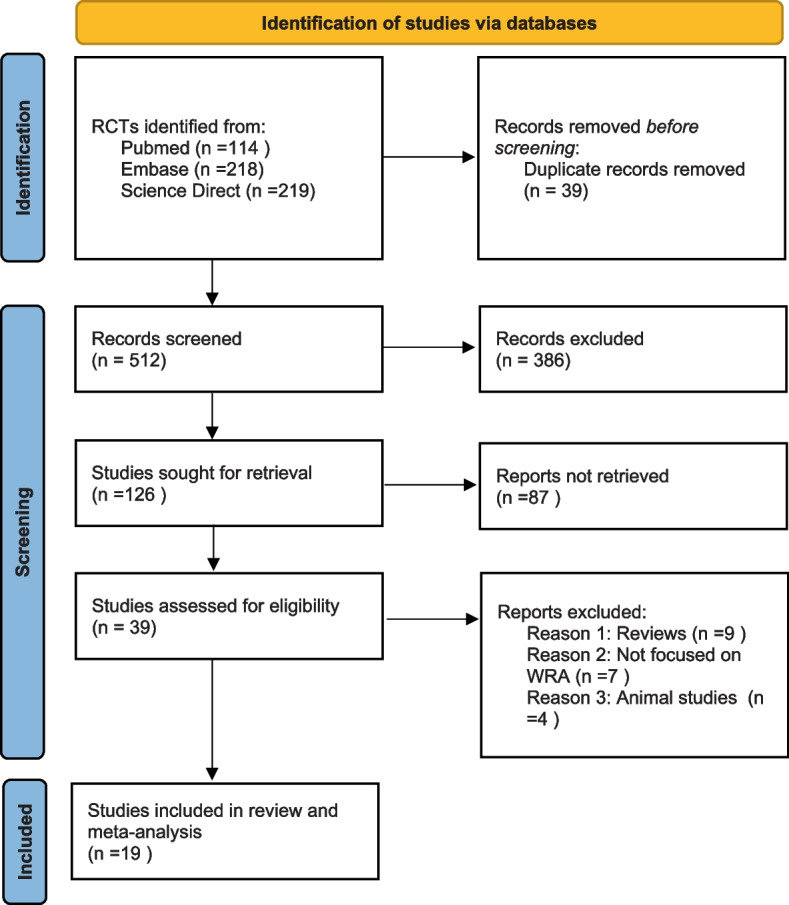
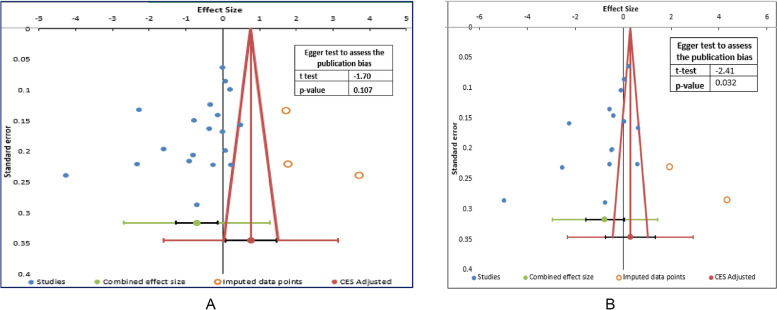
Methods: A comprehensive search strategy was used to search Medline through PubMed, Embase, and Science Direct for RCTs published between 2000 and 2020. The primary outcome was the mean change in hemoglobin level. We used standardized mean differences and their respective 95% CI to estimate the pooled effect. We used I2 statistics and Egger's test to assess heterogeneity and publication bias, respectively. This review was carried out in accordance with revised guidelines based on the Preferred Reporting Items for Systematic Review and Meta-analysis.
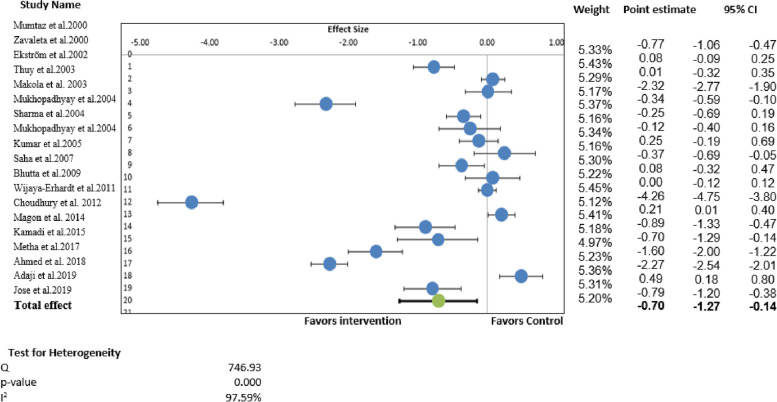
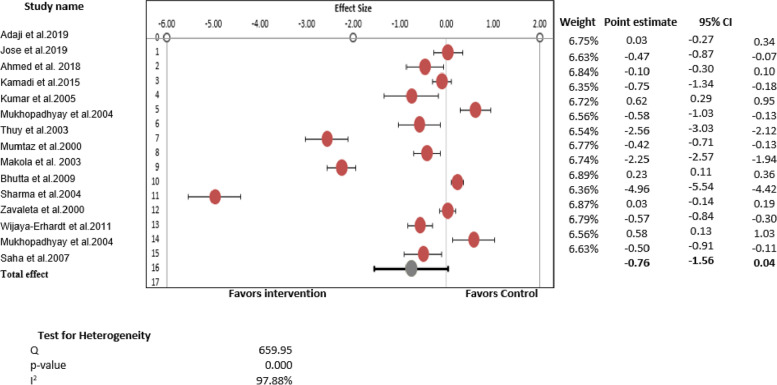
Results: The findings showed that iron therapy improved hemoglobin and ferritin levels, though the results varied across studies. An overall pooled effect estimate for the role of iron therapy in improving the hemoglobin levels among WRA was -0.71 (95% CI: -1.27 to -0.14) (p = 0.008). Likewise, the overall pooled effect estimate for the role of iron therapy in improving the ferritin levels among WRA was -0.76 (95% CI: -1.56 to 0.04) (p = 0.04). The heterogeneity (I2) across included studies was found to be statistically significant for studies assessing hemoglobin (Q = 746.93, I2 = 97.59%, p = 0.000) and ferritin level (Q = 659.95, I2 = 97.88%, p = 0.000).
Conclusion: Iron therapy in any form may reduce anemia's burden and improve hemoglobin and ferritin levels, indicating improvement in iron-deficiency anemia. More evidence is required, however, to assess the morbidity associated with iron consumption, such as side effects, work performance, economic outcomes, mental health, and adherence to the intervention, with a particular focus on married but non-pregnant women planning a pregnancy in the near future.
Trial registration: Registered with PROSPERO and ID is CRD42020185033.
Keywords: Anemia; Iron therapy; Low-middle income countries; Meta-analysis; Systematic review; Women of reproductive age.
© 2023. The Author(s).
Conflict of interest statement
The authors declare no competing interests.
Figures
References
-
- Khan AM, Kidwai SS, Akhtar S, Ara J. Knowledge, apptitude and practice: smoking and gutka habits in a lower socio-economic cohort. Int J Res Med Sci. 2018;6(5):1643. doi: 10.18203/2320-6012.ijrms20181752. - DOI
Publication types
MeSH terms
Substances
LinkOut - more resources
Full Text Sources
Medical
