


Urogenital pathogens in urine samples of clinically diagnosed urinary tract infected patients in Tanzania: A laboratory based cross-sectional study
- PMID: 37069922
- PMCID: PMC10105482
- DOI: 10.1016/j.ijregi.2022.12.007
Urogenital pathogens in urine samples of clinically diagnosed urinary tract infected patients in Tanzania: A laboratory based cross-sectional study
Abstract
Background: Urogenital pathogens such as Chlamydia trachomatis, Neisseria gonorrhoeae, Mycoplasma genitalium and Trichomonas vaginalis have been reported to cause pyuria, however they are not routinely cultured from urine samples of patients clinically diagnosed to have urinary tract infections (UTI). In this study, pathogen specific PCR was done to identify the urogenital pathogens in the urine samples among clinically diagnosed UTI patients with negative routine urine culture.
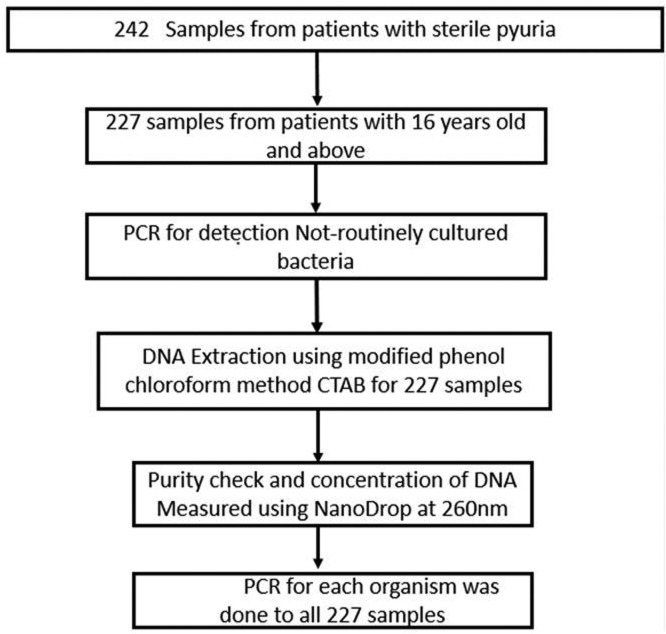
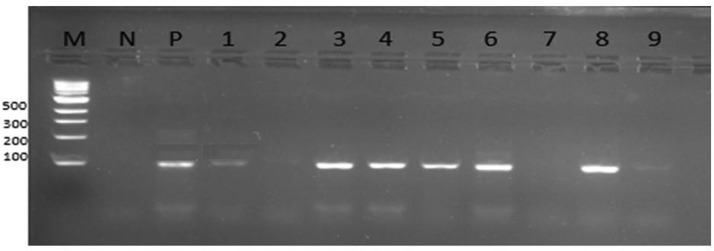
Methods: A cross-sectional study was conducted involving 227 archived urine samples from clinically diagnosed UTI patients with positive leucocyte esterase but negative urine culture results. The urogenital pathogens were detected using pathogen specific singleplex PCR. Data were cleaned and analyzed using STATA version 15.
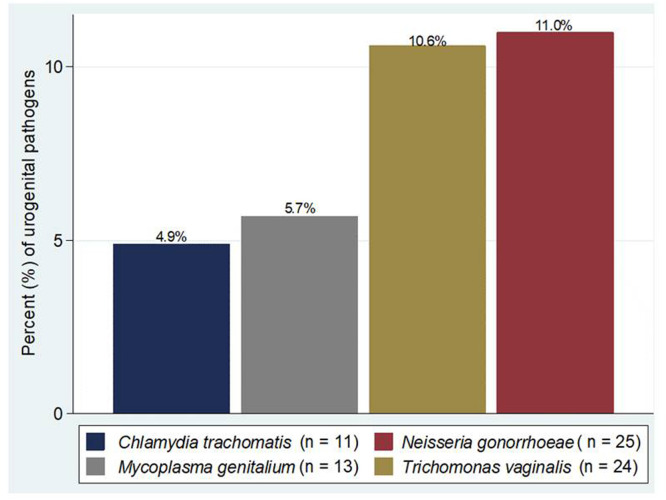
Results: The median age of patients was 31[IQR 23 - 51] years and the majority (174, 76.7%) were females. Two thirds of patients had history of antibiotic use two weeks prior to recruitment (154, 67.8%). A total of 62(27.3%) urine samples were positive for at least one urogenital pathogen. Of 62 positive samples, 9 had two urogenital pathogens and 1 had three urogenital pathogens. The most predominant urogenital pathogen detected was Neisseria gonorrhoeae 25(34.2%) and Trichomonas vaginalis 24(32.9%). Being female (aOR 2.4; 95% CI: 1.04 - 5.49; p-value 0.039) and having history of using antibiotics in the past two weeks (aOR 1.9; 95%CI: 1.04 - 3.60; p-value 0.036) was independently associated with the presence of urogenital pathogens.
Conclusion: More than a quarter of female patients with clinical symptoms of UTI and routine urine culture negative results were infected with urogenital pathogens mainly Neisseria gonorrhoeae and Trichomonas vaginalis. Further research with a larger sample set in a range of settings is required to understand the implications of these finding generally.
Keywords: Pyuria; Sexual transmitted infection; UTI culture negative; leukocyte esterase.
Crown Copyright © 2023 Published by Elsevier Ltd on behalf of International Society for Infectious Diseases.
Figures
References
-
- Olaru ID, Chisenga M, Yeung S, Mabey D, Marks M, Chonzi P, et al. Sexually transmitted infections and prior antibiotic use as important causes for negative urine cultures among adults presenting with urinary tract infection symptoms to primary care clinics in Zimbabwe: a cross-sectional study. BMJ Open. 2021;11 doi: 10.1136/bmjopen-2021-050407. - DOI - PMC - PubMed
Grants and funding
LinkOut - more resources
Full Text Sources
Miscellaneous
