


A Retrospective Database Study of Lyme Borreliosis Incidence in Poland from 2015 to 2019: A Public Health Concern
- PMID: 37071404
- PMCID: PMC10122228
- DOI: 10.1089/vbz.2022.0049
A Retrospective Database Study of Lyme Borreliosis Incidence in Poland from 2015 to 2019: A Public Health Concern
Abstract
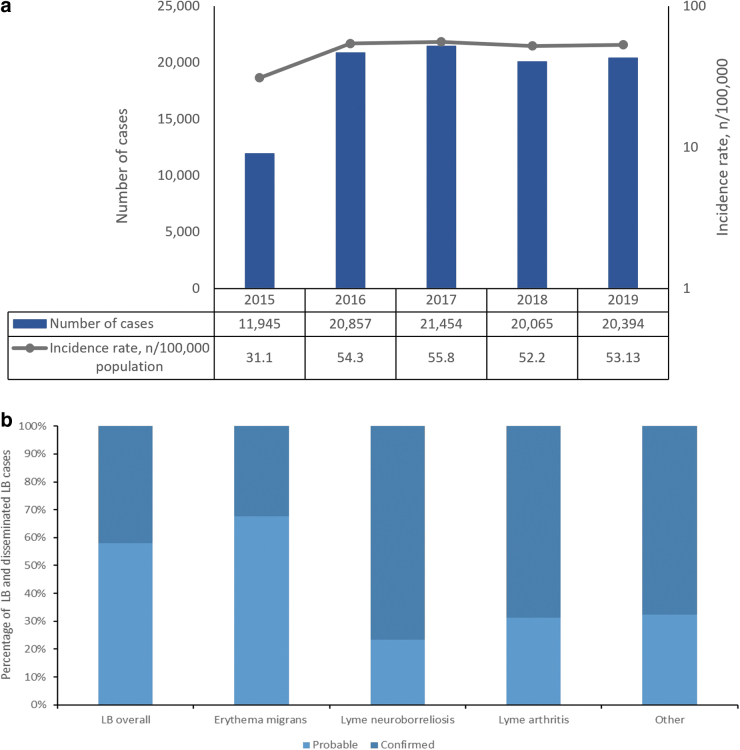
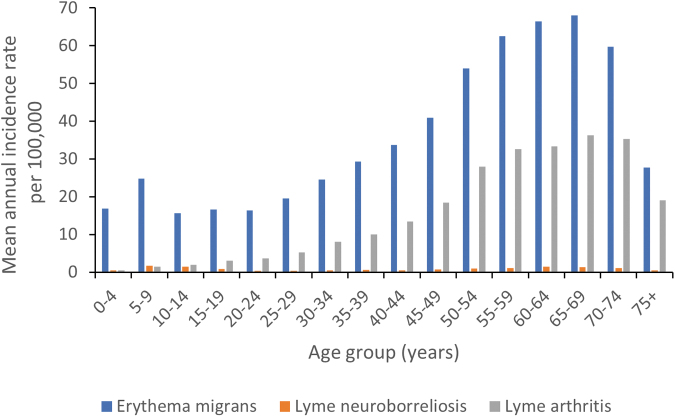
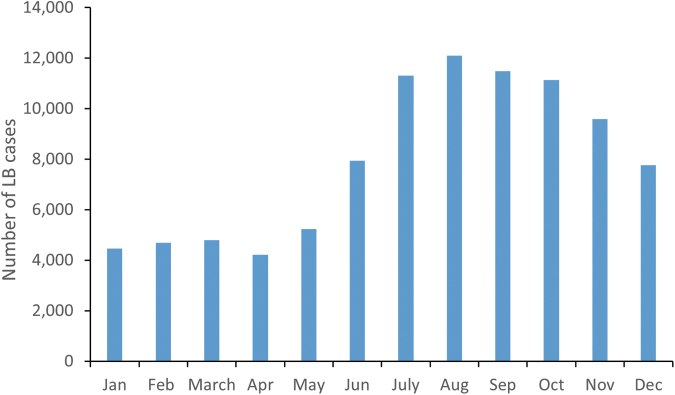
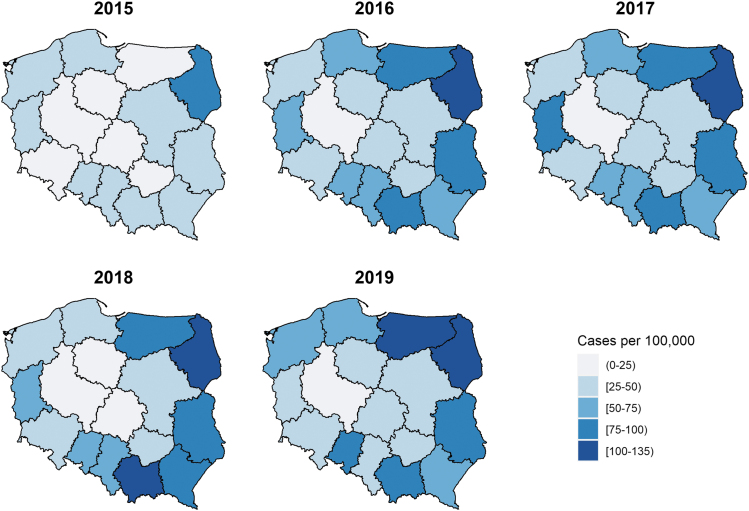
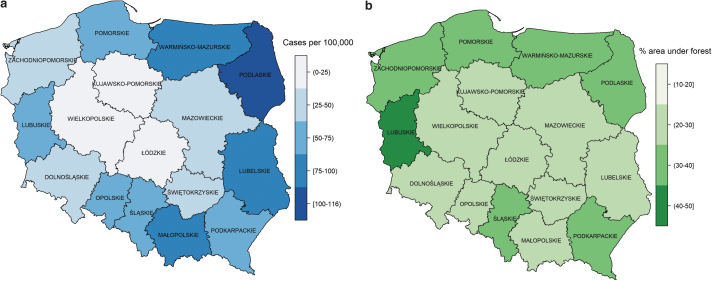
Background: In Poland, Lyme borreliosis (LB) has been subject to mandatory public health surveillance since 1996 and, in accordance with EU regulations, Lyme neuroborreliosis has been reported to the European Centre for Disease Prevention and Control since 2019. In this study, the incidence, temporal trends, and geographic distribution of LB and its manifestations in Poland are described for the period 2015-2019. Methods: This retrospective incidence study of LB and its manifestations in Poland was based on data sent to the National Institute of Public Health-National Institute of Hygiene-National Research Institute (NIPH-NIH-NRI) by district sanitary epidemiological stations using the electronic Epidemiological Records Registration System and data from the National Database on Hospitalization. Incidence rates were calculated using population data from the Central Statistical Office. Results: During 2015-2019, Poland reported 94,715 cases of LB with an overall average incidence of 49.3 cases per 100,000 population. Cases increased from 2015 (11,945) to 2016 (20,857) and then remained stable through 2019. Hospitalization due to LB also rose during these years. LB was more common among women (55.7%). Erythema migrans and Lyme arthritis were the most common manifestations of LB. The highest incidence rates occurred among >50-year-olds, with a peak in 65-69-year-olds. The highest number of cases was recorded in the third and fourth quarters of the year (July-December). Incidence rates in the eastern and northeastern regions of the country were higher than the national average. Conclusions: LB is endemic in all regions of Poland, and many regions reported high incidence rates. Large variations in spatially granular incidence rates highlight the need for targeted prevention strategies.
Keywords: 2015–2019; Lyme arthritis; Lyme borreliosis; Poland; epidemiology; surveillance.
Conflict of interest statement
P95 was contracted by Pfizer to conduct this study. J.S., A.N., M.B., and M.R.-M. declare no conflicts of interest. I.P.-S., J.Z., and P.O., employees of Poland's NIPH, declare no conflicts of interest. A.P., A.V., E.B., M.D., B.D.G., and J.H.S. are employees of Pfizer and may hold stock or stock options.
Figures
References
-
- Andreychyn M, Pańczuk A, Shkilna M, Tokarska-Rodak M, et al. Epidemiological situation of Lyme borreliosis and diagnosis standards in Poland and Ukraine. Health Probl Civiliz 2017; 11:190–194.
-
- Buczek A, Rudek A, Bartosik K, Szymanska J, et al. Seroepidemiological study of Lyme borreliosis among forestry workers in southern Poland. Ann Agric Environ Med 2009; 16:257–261. - PubMed
-
- Cardenas-de la Garza JA, De la Cruz-Valadez E, Ocampo-Candiani J, Welsh O. Clinical spectrum of Lyme disease. Eur J Clin Microbiol Infect Dis 2019; 38:201–208. - PubMed
Publication types
MeSH terms
LinkOut - more resources
Full Text Sources
Medical
