


Geolocation Patterns, Wi-Fi Connectivity Rates, and Psychiatric Symptoms Among Urban Homeless Youth: Mixed Methods Study Using Self-report and Smartphone Data
- PMID: 37071457
- PMCID: PMC10155082
- DOI: 10.2196/45309
Geolocation Patterns, Wi-Fi Connectivity Rates, and Psychiatric Symptoms Among Urban Homeless Youth: Mixed Methods Study Using Self-report and Smartphone Data
Abstract
Background: Despite significant research done on youth experiencing homelessness, few studies have examined movement patterns and digital habits in this population. Examining these digital behaviors may provide useful data to design new digital health intervention models for youth experiencing homelessness. Specifically, passive data collection (data collected without extra steps for a user) may provide insights into lived experience and user needs without putting an additional burden on youth experiencing homelessness to inform digital health intervention design.
Objective: The objective of this study was to explore patterns of mobile phone Wi-Fi usage and GPS location movement among youth experiencing homelessness. Additionally, we further examined the relationship between usage and location as correlated with depression and posttraumatic stress disorder (PTSD) symptoms.
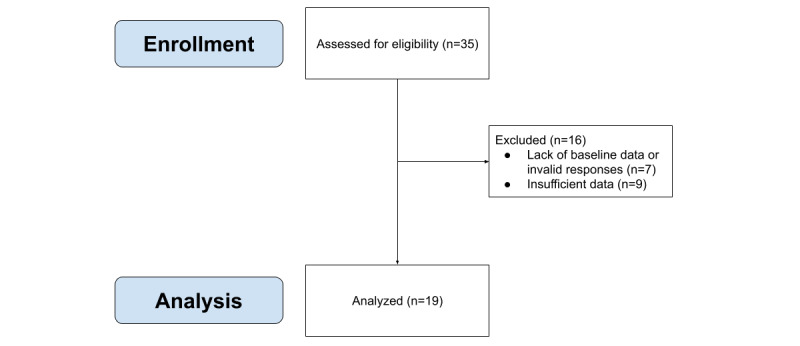
Methods: A total of 35 adolescent and young adult participants were recruited from the general community of youth experiencing homelessness for a mobile intervention study that included installing a sensor data acquisition app (Purple Robot) for up to 6 months. Of these participants, 19 had sufficient passive data to conduct analyses. At baseline, participants completed self-reported measures for depression (Patient Health Questionnaire-9 [PHQ-9]) and PTSD (PTSD Checklist for DSM-5 [PCL-5]). Behavioral features were developed and extracted from phone location and usage data.
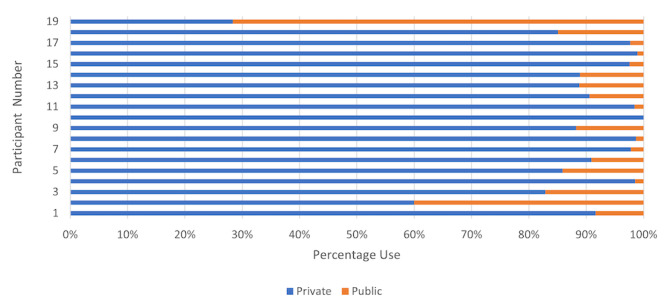
Results: Almost all participants (18/19, 95%) used private networks for most of their noncellular connectivity. Greater Wi-Fi usage was associated with a higher PCL-5 score (P=.006). Greater location entropy, representing the amount of variability in time spent across identified clusters, was also associated with higher severity in both PCL-5 (P=.007) and PHQ-9 (P=.045) scores.
Conclusions: Location and Wi-Fi usage both demonstrated associations with PTSD symptoms, while only location was associated with depression symptom severity. While further research needs to be conducted to establish the consistency of these findings, they suggest that the digital patterns of youth experiencing homelessness offer insights that could be used to tailor digital interventions.
Keywords: Wi-Fi; geolocation; homelessness; mHealth; mobile health; mobile phone; smartphones; youth; youth experiencing homelessness.
©Yousaf Ilyas, Shahrzad Hassanbeigi Daryani, Dona Kiriella, Paul Pachwicewicz, Randy A Boley, Karen M Reyes, Dale L Smith, Alyson K Zalta, Stephen M Schueller, Niranjan S Karnik, Colleen Stiles-Shields. Originally published in JMIR Formative Research (https://formative.jmir.org), 18.04.2023.
Conflict of interest statement
Conflicts of Interest: SMS serves on the Scientific Advisory Board for Headspace for which he receives compensation and has received consulting payments from K Health (Trusst) and Otsuka Pharmaceuticals for unrelated work
Figures
References
-
- Youth homelessness overview. National Conference of State Legislature. [2022-05-02]. https://www.ncsl.org/research/human-services/homeless-and-runaway-youth.... .
-
- Winiarski DA, Rufa AK, Bounds DT, Glover AC, Hill KA, Karnik NS. Assessing and treating complex mental health needs among homeless youth in a shelter-based clinic. BMC Health Serv Res. 2020;20(1):109. doi: 10.1186/s12913-020-4953-9. https://bmchealthservres.biomedcentral.com/articles/10.1186/s12913-020-4... 10.1186/s12913-020-4953-9 - DOI - PMC - PubMed
-
- Winiarski DA, Glover AC, Bounds DT, Karnik NS. Addressing intersecting social and mental health needs among transition-age homeless youths: a review of the literature. Psychiatr Serv. 2021;72(3):317–324. doi: 10.1176/appi.ps.201900498. https://europepmc.org/abstract/MED/33397145 - DOI - PMC - PubMed
-
- Bounds DT, Winiarski DA, Otwell CH, Tobin V, Glover AC, Melendez A, Karnik NS. Considerations for working with youth with socially complex needs. J Child Adolesc Psychiatr Nurs. 2020;33(4):209–220. doi: 10.1111/jcap.12288. https://europepmc.org/abstract/MED/32691491 - DOI - PMC - PubMed
