


L-Arginine in diabetes: clinical and preclinical evidence
- PMID: 37072850
- PMCID: PMC10114382
- DOI: 10.1186/s12933-023-01827-2
L-Arginine in diabetes: clinical and preclinical evidence
Erratum in
-
Correction: L-Arginine in diabetes: clinical and preclinical evidence.Cardiovasc Diabetol. 2023 May 18;22(1):117. doi: 10.1186/s12933-023-01852-1. Cardiovasc Diabetol. 2023. PMID: 37208744 Free PMC article. No abstract available.
Abstract
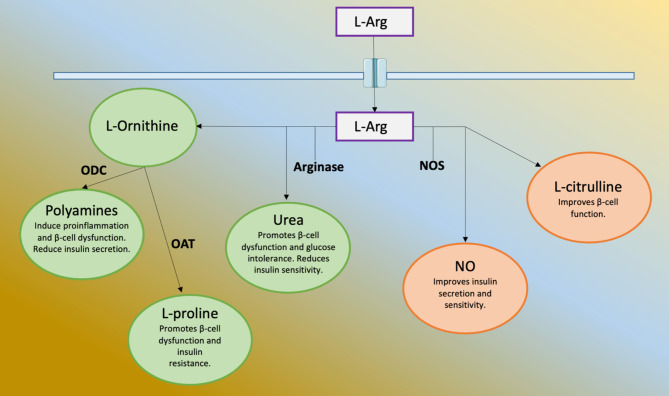
L-Arginine (L-Arg), is a semi-essential amino acid involved in the formation of nitric oxide. The functional relevance of L-Arg in diabetes mellitus has been evaluated both in animal models and in human subjects. In the literature there are several lines of evidence indicating that L-Arg has beneficial effects in diabetes and numerous studies advocate its administration to attenuate glucose intolerance in diabetic patients. Here we present a comprehensive overview of the main studies exploring the effects of L-Arg in diabetes, including preclinical and clinical reports on this topic.
Keywords: Diabetes mellitus; Endothelial dysfunction; GLP-1; Glucose metabolism; L-Arginine; NO.
© 2023. The Author(s).
Conflict of interest statement
The authors declare no competing interests.
Figures
References
Publication types
MeSH terms
Substances
Grants and funding
LinkOut - more resources
Full Text Sources
Other Literature Sources
Medical
