


Long-term treatment outcome of patients with complete bilateral cleft lip and palate: a retrospective cohort study
- PMID: 37073546
- PMCID: PMC10389451
- DOI: 10.1097/JS9.0000000000000406
Long-term treatment outcome of patients with complete bilateral cleft lip and palate: a retrospective cohort study
Abstract
Background: Patients with cleft lip and palate have functional and esthetic impairment and typically require multiple interventions in their life. Long-term evaluation following a treatment protocol, especially for patients with complete bilateral cleft lip and palate (BCLP), is important but was rarely reported in the literature.
Patients and methods: A retrospective review was conducted on all patients with complete BCLP born between 1995 and 2002 and treated at our center. Inclusion criteria were having adequate medical records and receiving continuous multidisciplinary team care at least until 20 years of age. Exclusion criteria were lack of regular follow-up and congenital syndromic abnormalities. The medical records and photos were reviewed, and facial bone development was evaluated using cephalometric analysis.
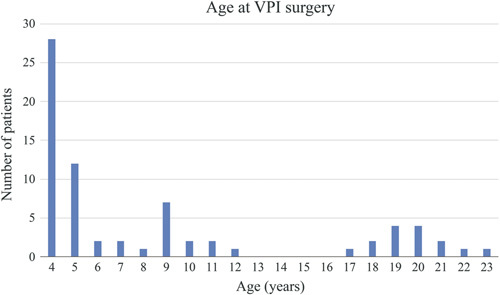
Results: A total of 122 patients were included, with a mean age of 22.1 years at the final evaluation in this study. Primary one-stage cheiloplasty was performed in 91.0% of the patients, and 9.0% underwent two-stage repair with an initial adhesion cheiloplasty. All patients underwent two-flap palatoplasty at an average of 12.3 months. Surgical intervention for velopharyngeal insufficiency was required in 59.0% of patients. Revisional lip/nose surgery was performed in 31.1% during growing age and in 64.8% after skeletal maturity. Orthognathic surgery was applied in 60.7% of patients with retruded midface, of which 97.3% underwent two-jaw surgery. The average number of operations to complete the treatment was 5.9 per patient.
Conclusion: Patients with complete BCLP remain the most challenging group to treat among the cleft. This review revealed certain suboptimal results, and modifications have been made to the treatment protocol. Longitudinal follow-up and periodic assessment help to establish an ideal therapeutic strategy and improve overall cleft care.
Copyright © 2023 The Author(s). Published by Wolters Kluwer Health, Inc.
Conflict of interest statement
There are no conflicts of interest.
Sponsorships or competing interests that may be relevant to content are disclosed at the end of this article.
Figures
References
-
- Mossey PA, Little J, Munger RG, et al. Cleft lip and palate. Lancet 2009;374:1773–1785. - PubMed
-
- Mulliken JB. Primary repair of bilateral cleft lip and nasal deformity. Plast Reconstr Surg 2001;108:181–194. - PubMed
-
- Mulliken JB, Wu JK, Padwa BL. Repair of bilateral cleft lip: review, revisions, and reflections. J Craniofac Surg 2003;14:609–620. - PubMed
-
- Fisher DM, Sommerlad BC. Cleft lip, cleft palate, and velopharyngeal insufficiency. Plast Reconstr Surg 2011;128:342e–360e. - PubMed
-
- Hopper RA, Tse R, Smartt J, et al. Cleft palate repair and velopharyngeal dysfunction. Plast Reconstr Surg 2014;133:852e–864e. - PubMed
Publication types
MeSH terms
LinkOut - more resources
Full Text Sources
Medical
